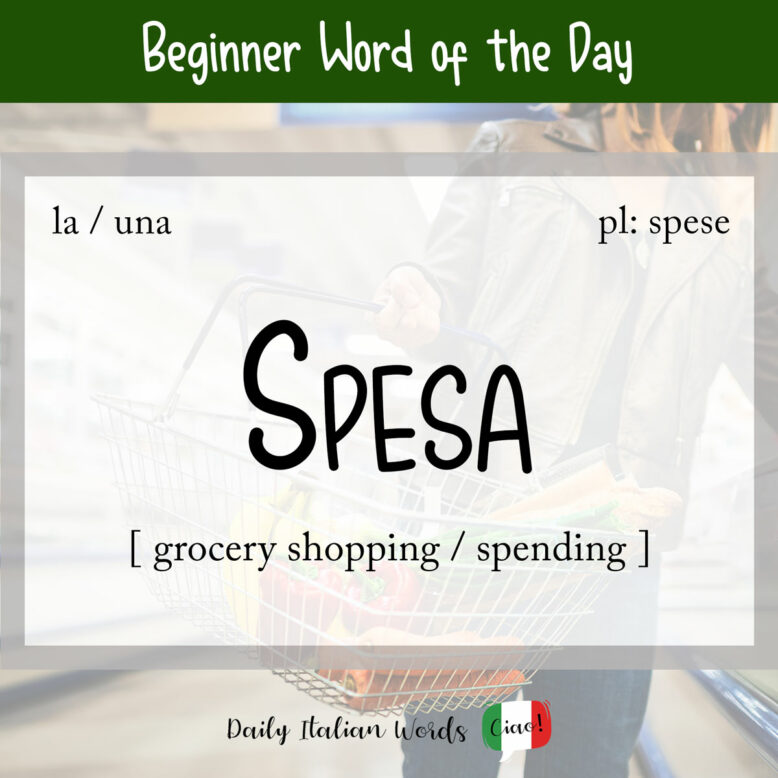
If you’ve ever visited a supermarket in Italy or casually chatted with locals about the cost of living, you’ve probably come across the word spesa. It’s a useful one to master because we use it a variety of everyday situations, from running grocery errands to talking about general expenses, and even in figurative ways.
spesa
grocery shopping / spending / expense
Grammatically, it’s a feminine noun (la spesa), and in the plural form it becomes le spese. Here are the definite and indefinite articles it takes:
- la spesa
- le spese
- una spesa
- delle spese
Here are the main meanings of spesa in Italian, with examples for each use:
1. SPESA = Grocery shopping (the activity)
In its most common, everyday use, spesa refers to the classic trip to the supermarket to buy groceries (not shopping for clothes, electronics, or other items). There are a couple of ways to talk about it:
- Fare la spesa: To do the grocery shopping
Devo fare la spesa per la cena di domani.
I need to do the grocery shopping for tomorrow’s dinner.
- Andare a fare la spesa: To go grocery shopping
Chi va a fare la spesa con la nonna domani?
Who’s going grocery shopping with grandma tomorrow?
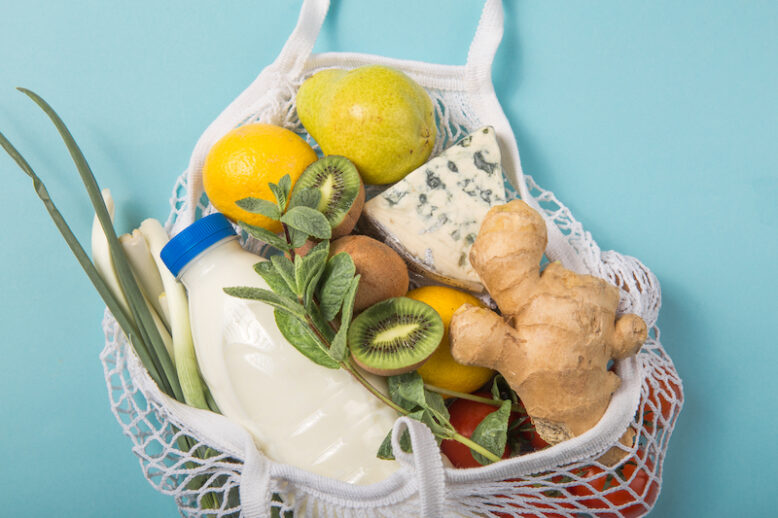
2. SPESA = Groceries (the items themselves)
We use the word spesa also to refer to the actual items we buy when we go grocery shopping – bread, milk, vegetables, and so on. In other words, those bags of food we carry home from the supermarket are la spesa.
Questa spesa è appena sufficiente per il fine settimana.
These groceries are just enough for the weekend.
Some related expressions include:
- Borsa della spesa: Shopping bag
Ho dimenticato le borse della spesa in macchina, vai a prenderle per favore
I forgot the shopping bags in the car, go get them please.
- Carrello della spesa: Shopping cart
Hai per caso un gettone per il carrello della spesa?
Do you happen to have a token for the shopping cart?
- Lista della spesa: Grocery list
Prima di andare al supermercato, facciamo sempre la lista della spesa.
Before going to the supermarket, we always prepare a grocery list.
- Spesa online / Spesa a domicilio: Online grocery shopping / grocery delivery
Preferisco fare la spesa online, così risparmio tempo.
I prefer to do my groceries online so I save time.
- Buono spesa: Food stamp
Ogni mese il sindaco mette a disposizione dei buoni spesa per le famiglie in difficoltà.
Every month, the mayor gives out food stamps to families who are struggling.
- Scaricare la spesa: To unload the groceries
Ragazzi, mi aiutate a scaricare la spesa dalla macchina?
Guys, can you help me unload the groceries from the car?
- Sistemare la spesa: To put away the groceries
Non ho voglia di sistemare la spesa, ci pensi tu?
I don’t feel like putting away the groceries, can you do it?
3. SPESA = Purchases in general
Spesa can also be any type of purchases or shopping in general: clothes, electronics, gifts, etc. When we use it this way, it’s usually in the plural form: spese. For example:
- Fare spese: To go shopping
Oggi pomeriggio esco a fare spese con mia mamma.
This afternoon I’m going shopping with my mum.
- Fare spese pazze: To go on a shopping spree
Durante i saldi abbiamo fatto spese pazze!
We went on a shopping spree during the sales!
Basically, when Italians say they’re going to fare la spesa , it means they’re heading to the supermarket. But if they’re going to fare spese, they’re hitting the shops for clothes, shoes, or whatever else they feel like buying.
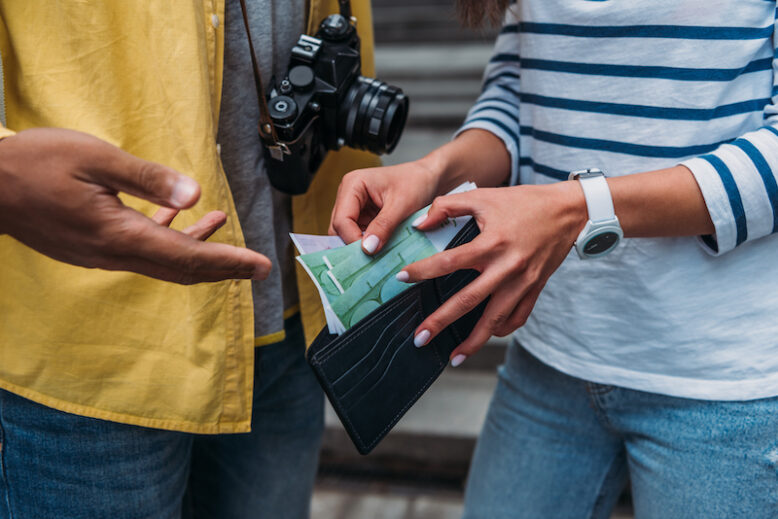
4. SPESA = Spending / expense
In a broader sense, spesa can also indicate the act of spending itself, whether by an individual or a company. Unlike the previous meanings, this one is a bit more abstract: it’s not about groceries or items in general, but about money flying out the door!
Questa spesa non ci voleva proprio!
We really didn’t need this expense!
Some expressions you might come across include:
- Affrontare / Sostenere una spesa: To face / cover an expense
Stiamo sostenendo diverse spese per avviare la nuova attività.
We are facing several expenses in order to start the new business.
- Limitare le spese: To limit expenses
Devi iniziare a limitare le spese se vuoi comprare casa.
You need to start limiting your expenses if you want to buy a house.
- Non badare a spese: To splash out
Per il loro matrimonio non hanno badato a spese.
They splashed out on their wedding.
- Spesa imprevista: Unexpected expense
Questo mese abbiamo dovuto affrontare una spesa imprevista per la macchina.
This month we had to deal with an unexpected expense for the car.
- Capacità di spesa: Spending capacity
La capacità di spesa dei giovani è spesso limitata.
Young people’s spending capacity is often limited.
- Voce di spesa: Expense item
Attualmente la voce di spesa più alta nel nostro budget mensile è l’affitto.
Currently, the biggest expense item in our monthly budget is rent.
- Spesa pubblica: Public spending
Il governo ha annunciato nuovi tagli alla spesa pubblica.
The government has announced new cuts to public spending.
Additionally, with this meaning of spesa comes the related verb spesare, which means “to pay for everything:
Questo fine settimana vado in montagna con i colleghi, tutto spesato dall’azienda!
This weekend I’m going to the mountains with my colleagues, all expenses covered by the company!
5. SPESA = Cost (amount paid)
Closely related, spesa describes the amount of money something costs. In this sense, it’s similar to “cost” or “expense.”
La spesa per riparare la caldaia è stata molto più alta del previsto.
The cost of repairing the boiler was much higher than expected.
Here are some ways you’ll hear it used:
- Spese di viaggio: Travel expenses
Durante la trasferta, le spese di viaggio sono a carico dell’azienda.
During the business trip, the travel expenses are covered by the company.
- Spese condominiali: Condo fees
Le spese condominiali qui sono piuttosto basse.
The condo fees here are pretty low.
- Rimborso spese: Expense reimbursement
Per ottenere il rimborso spese dobbiamo compilare un modulo online.
To get the expense reimbursement, we need to fill out an online form.
- Con poca spesa: At low cost, cheaply
Sono riusciti a sostituire i serramenti con poca spesa grazie a un amico artigiano.
They managed to replace the windows at low cost thanks to a friend who’s a craftsman.
6. SPESA = Spent
Spesa can also be the feminine singular past participle of spendere (to spend). In this case, it’s used to talk about something that has been spent, but only when the noun is feminine. For example:
La cifra spesa per questo progetto è stata enorme.
The amount spent on this project was huge.
Per Chiara, un’ora spesa bene è un’ora passata a scrivere.
For Chiara, an hour well spent is an hour spent writing.
Other common expressions with SPESA in Italian
Finally, spesa appears in a number of figurative expressions, where it’s not about money or groceries, but about effort, consequences, or costs in a more abstract sense. Here are some of the most common ones:
- Farne le spese: To bear/pay the consequences
Con la crisi economica, a farne le spese sono le famiglie più povere.
With the economic crisis, it’s the poorest families who bear the consequences.
- A spese di: Paid for by / at the expense of (someone else)
Il corso di formazione è a spese dell’azienda.
The training course is paid for by the company.
Lorenzo ha fatto carriera a spese del suo collega.
Lorenzo built his career at the expense of his colleague.
- A proprie spese: At your own expense / the hard way. This expression means that the person pays their own price, either with money or with personal consequences/lessons learned.
Chiunque desideri partecipare alla conferenza dovrà farlo a proprie spese.
Anyone who wants to attend the conference will have to do so at their own expense.
Sofia ha imparato a proprie spese che fidarsi è bene ma non fidarsi è meglio!
Sofia learned the hard way that it’s good to trust, but better not to!
- Minima spesa, massima resa: Low cost, high return / to get a lot for very little.
Questo cellulare costa pochissimo ma fa un sacco di cose. Come si dice, minima spesa, massima resa!
This phone costs next to nothing but does a ton of things. As they say, low cost, high return!
- Chi più spende, meno spende: It pays to spend a little more (literally, “the more you spend, the less you spend,” meaning that sometimes spending more at first saves money in the long run).
Questo vestito è un po’ caro, ma durerà anni. Come diceva mia nonna, chi più spende, meno spende!
This dress is slightly expensive, but it will last for years. As my grandma used to say, it pays to spend a little more!
- La spesa non vale l’impresa: It’s more trouble than it’s worth (literally, “the expense isn’t worth the undertaking”).
Ti sconsiglio di fare aggiustare questo computer. Sinceramente, la spesa non vale l’impresa.
I don’t recommend getting this computer fixed. Honestly, it’s more trouble than it’s worth.

Valentina Nicastro is a travel writer in love with her home country, Italy. Having travelled widely around the globe, she realised there was more to explore closer to home and decided to put the passport aside for a while. When she is not immersed in documenting Italy, you’ll find her donning her communication consultant hat, weaving words as a content writer and bridging linguistic divides as a translator.