Sale looks identical in Italian and English, so it’s easy to assume it means the same thing in both language. But actually, its meanings couldn’t be more different!
sale
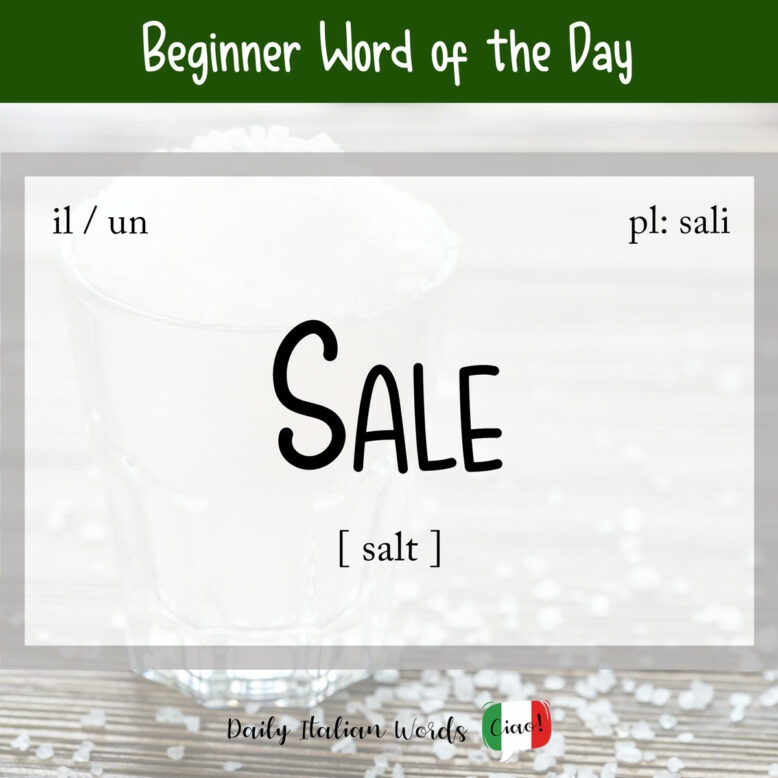
First of all, the grammar: sale is a masculine noun, and its plural form is sali (but we generally use it only in certain contexts, and we’ll get to that soon). Below are the definite and indefinite articles it takes:
- il sale
- i sali
- un sale
- dei sali
So, let’s dive into all the ways we use sale in Italian, including some idioms and a couple of related words.
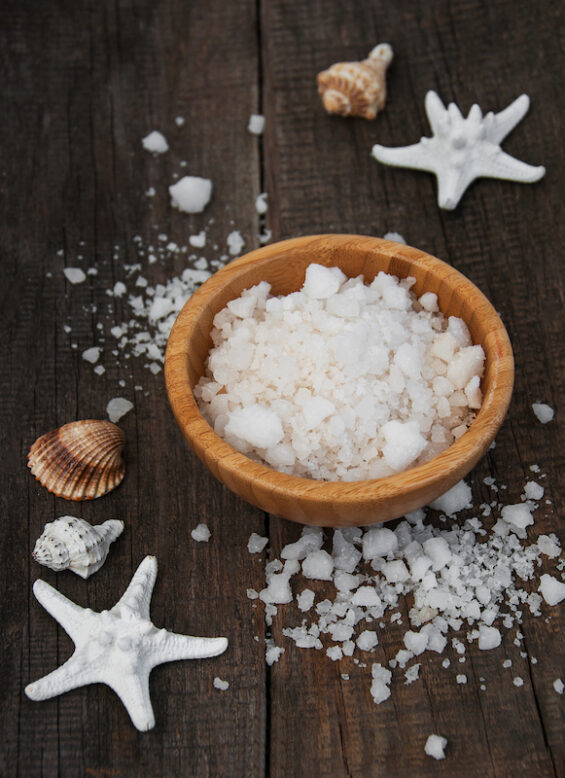
1. SALE = Salt
Salt is the most basic meaning of sale. Here are the two main varieties you should know:
- Sale grosso (coarse salt – you’ll need it for cooking pasta!)
- Sale fino (table salt)
And these are some common kitchen expressions with sale:
- Un pizzico di sale (a pinch of salt)
- Condire con olio, sale e pepe (season with oil, salt, and pepper)
- Aggiustare di sale (literally “to adjust the salt” – meaning to add some salt)
- Essere giusto/a di sale (to have the right amount of salt)
- Essere indietro di sale (to be lacking salt)
- Essere senza sale (to be bland or tasteless)
- Essere insipido/a (to be bland – we also use sciapo/a to describe food lacking salt)
- Essere salato/a (to be salty)
- Sotto sale (salted, preserved in salt)
Assaggia il sugo e dimmi se è giusto di sale, per favore. – È un po’ insipido. Che ne dici di aggiungere qualche cappero sotto sale che ci ha dato tua madre?
Please, taste the sauce and tell me if it has the right amount of salt. – It’s a bit bland. How about we add some of those salted capers your mom gave us?
Here’s a cultural tidbit: In Italy, spilling salt is basically a sure way to bring bad luck your way. If this ghastly tragedy happens to you, you must quickly grab a pinch of the salt with your right hand and toss it over your left shoulder (in the old belief, the right side represents Jesus, while the left belongs to the Devil).
And now for a bit of curious history: When travelling in Italy, you might still see old shop signs reading Sali e Tabacchi (literally, “Salts and Tobaccos”). Curious pairing, right? But back in 1862, in the newly unified Italy, salt became a government monopoly, sold only in tabaccherie (tobacco shops), with fixed prices and strict regulations. The thing is, since ancient times, salt had been so precious for its ability to preserve food long before frigoriferi (fridges) existed, fueling trade, sparking wars, and even earning the nickname oro bianco (white gold)! The monopoly ended in 1974, and today you can buy salt in any supermarket, in different varieties and brands.
2. SALE = Wit / Common sense
Sale in Italian can also mean “common sense.”
Here are two expressions that use sale with this meaning:
- Aver poco sale in zucca: Literally “to have little salt in your pumpkin.” It’s a playful way to say someone isn’t very smart or doesn’t have good judgment. By the way, zucca is a fun, informal word we use for “head.”
Se avessi un po’ di sale in zucca, non spenderesti tutti i tuoi soldi in cose inutili!
If you had any sense, you wouldn’t spend all your money on useless things!
- Cum grano salis: This Latin phrase literally means “with a grain of salt,” and is used figuratively to mean “with caution, ”with good judgment,” especially in formal contexts. Pliny the Elder first introduced it in his Naturalis Historia, referring to an antidote that only worked when combined with a grain of salt.
Le loro dichiarazioni vanno considerate cum grano salis in attesa di riscontri oggettivi.
Their statements should be taken with a grain of salt until there’s objective evidence.
3. SALI = Salts
When we switch to the plural, sali, we’re talking about those special preparations for bathing, replenishing minerals in our body, or even reviving someone who’s fainted:
- Sali: Smelling salts, the classic quick fix you’ve probably seen in old movies, when someone faints and a little bottle gets waved under their nose so they regain consciousness.
- Sali da bagno: Bath salts, those crystals we add to warm water to make the bath smell super nice.
- Sali minerali effervescenti: The fizzy mineral salt tablets we drop into water to restore the essential minerals in our body.
Dopo una giornata così stressante, niente batte un bel bagno caldo con i miei sali da bagno alla lavanda.
After such a stressful day, nothing beats a nice hot bath with my lavender-scented bath salts.
4. SALATO/A = Salty / Expensive
The adjective salato (or salata if you’re talking about something feminine) comes directly from sale and generally just means “salty.”
Questa pasta è troppo salata, quanto sale ci hai messo?
This pasta is way too salty, how much salt did you put in it?
But salato/a can also mean “expensive” in Italian. You’ll often hear it when someone is complaining about a bill, with the classic expression conto salato (literally, a “salty bill,” meaning the total is particularly high). This second meaning comes from history, when salt was a precious and expensive resource. And it’s not just about money: salato/a can also describe a steep cost in a broader sense, like serious consequences. This usage is especially common in journalism, for example:
Le scelte del governo presenteranno un conto salato nei prossimi anni.
The government’s decisions will come with a heavy price in the coming years.
5. SALARIO = Salary / wage
Salario is another word derived from sale and it has an interesting story. In ancient Rome, salt was so valuable that soldiers were often paid with it for their service. This practice gave rise to the word salario, which today still means the payment we receive in exchange for our work.
You’ll hear it a lot in politics and journalism, especially when discussing the salario minimo (legally guaranteed minimum wage). It’s also common to hear it in the plural form, salari, for example:
I prezzi aumentano, ma i salari degli italiani restano fermi.
Prices are going up, but Italians’ salaries are staying the same.
In everyday conversation, though, we tend to prefer other synonyms like retribuzione or stipendio, which mean the same as salario.
6. SALE in Italian idioms
Let’s finish with some popular expressions featuring sale in Italian:
- Sale e pepe: Literally “salt and pepper,” this phrase describes hair that’s starting to turn gray but still has some dark strands, creating a mix of black and gray just like salt and pepper mixed together (we also use the adjective brizzolato/a to mean turning gray).
Luca è così affascinante con quei capelli sale e pepe!
Luca looks so charming with that salt-and-pepper hair!
- Essere il sale della vita: Literally “to be the salt of life,” this expression means being the spark that makes life exciting and worth living.
Queste piccole avventure sono il sale della vita, altrimenti sai che monotonia!
These little adventures are what makes life exciting; without them, everything would be so boring!
- Essere il sale della terra: Literally “the sale of the earth,” this phrase comes from something Jesus said to his apostles. It means being precious and valuable to society, just like salt, which was essential not only for flavour but also for preserving food back in the day. Personally, I’ve never used this expression, but outside religious contexts, you might come across it in journalism and literature (it’s even the title of a song by the famous Italian singer Ligabue, listen here).
- Essere senza sale: I mentioned this earlier earlier as meaning “bland” or “tasteless,” but in everyday speech, it also describes something or someone dull, boring, and lacking any spark.
Che vita senza sale la tua: programmi sempre tutto, mai una sorpresa!
What a dull life you have: you always plan everything, never a surprise!
- Restare di sale: Literally “to remain of salt,” this means to be stunned or shocked, like the more common Italian expressions restare di stucco or restare di sasso. This phrase has religious roots too: it refers to the biblical story of Lot’s wife, who was turned into a pillar of salt for looking back at the destruction of Sodom and Gomorrah, despite the angels’ warnings.
Quando l’ha saputo, è rimasto di sale. Non si aspettava tanta cattiveria da parte di Simone.
When he found out, he was shocked. He didn’t expect Simone to be so mean.

Valentina Nicastro is a travel writer in love with her home country, Italy. Having travelled widely around the globe, she realised there was more to explore closer to home and decided to put the passport aside for a while. When she is not immersed in documenting Italy, you’ll find her donning her communication consultant hat, weaving words as a content writer and bridging linguistic divides as a translator.