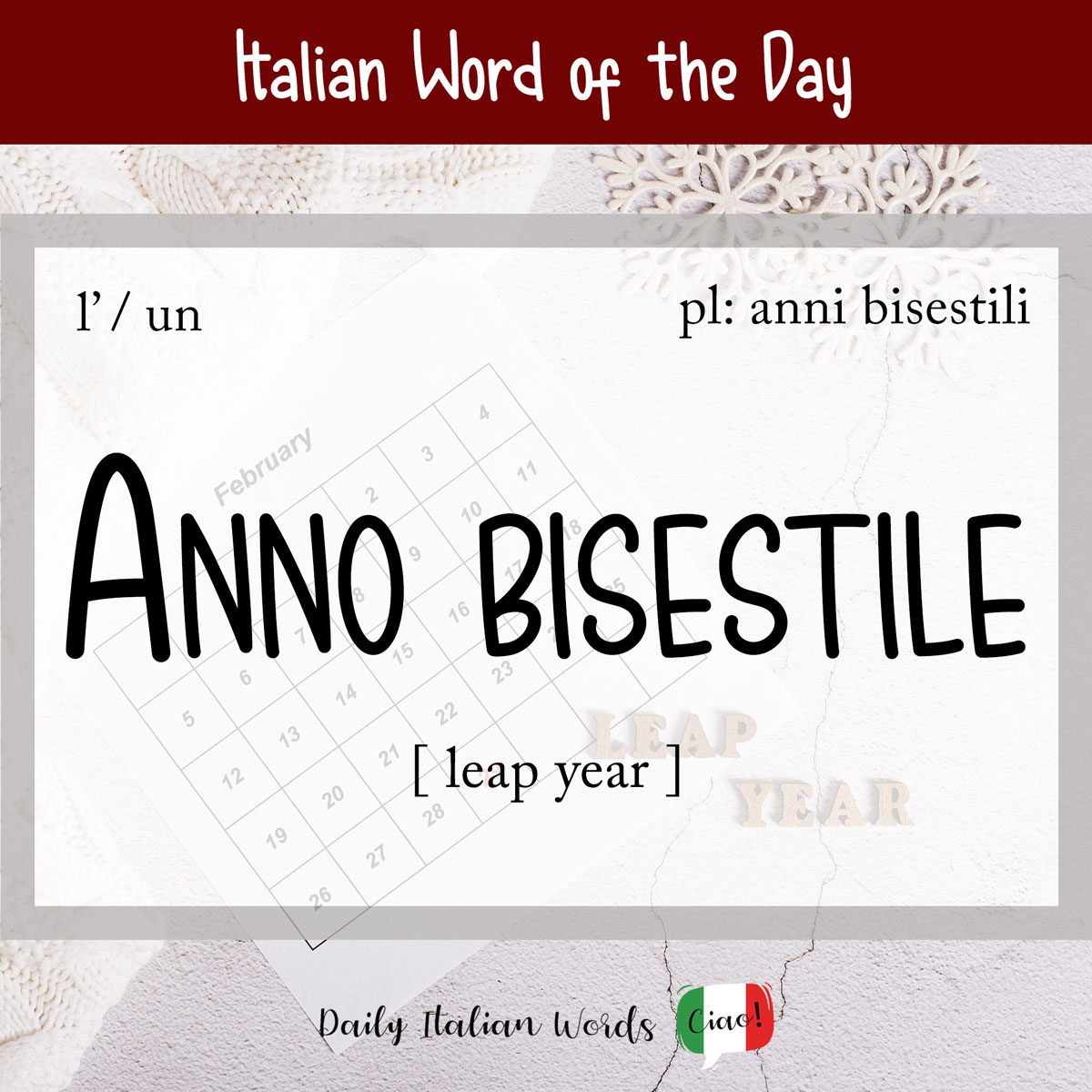
Italian Word of the Day: Anno bisestile (leap year)

Italian for "leap year"

The Italian word for leap year is anno bisestile, which should be easy to remember if you are already familiar with the term bissextile year, a synonym for leap year. anno bisestile leap year The word bisestile is derived from the Latin term “bissextilis (annus)” or “bissextilis (annus),” meaning ‘the year of the bissextus,’ which …

Read more

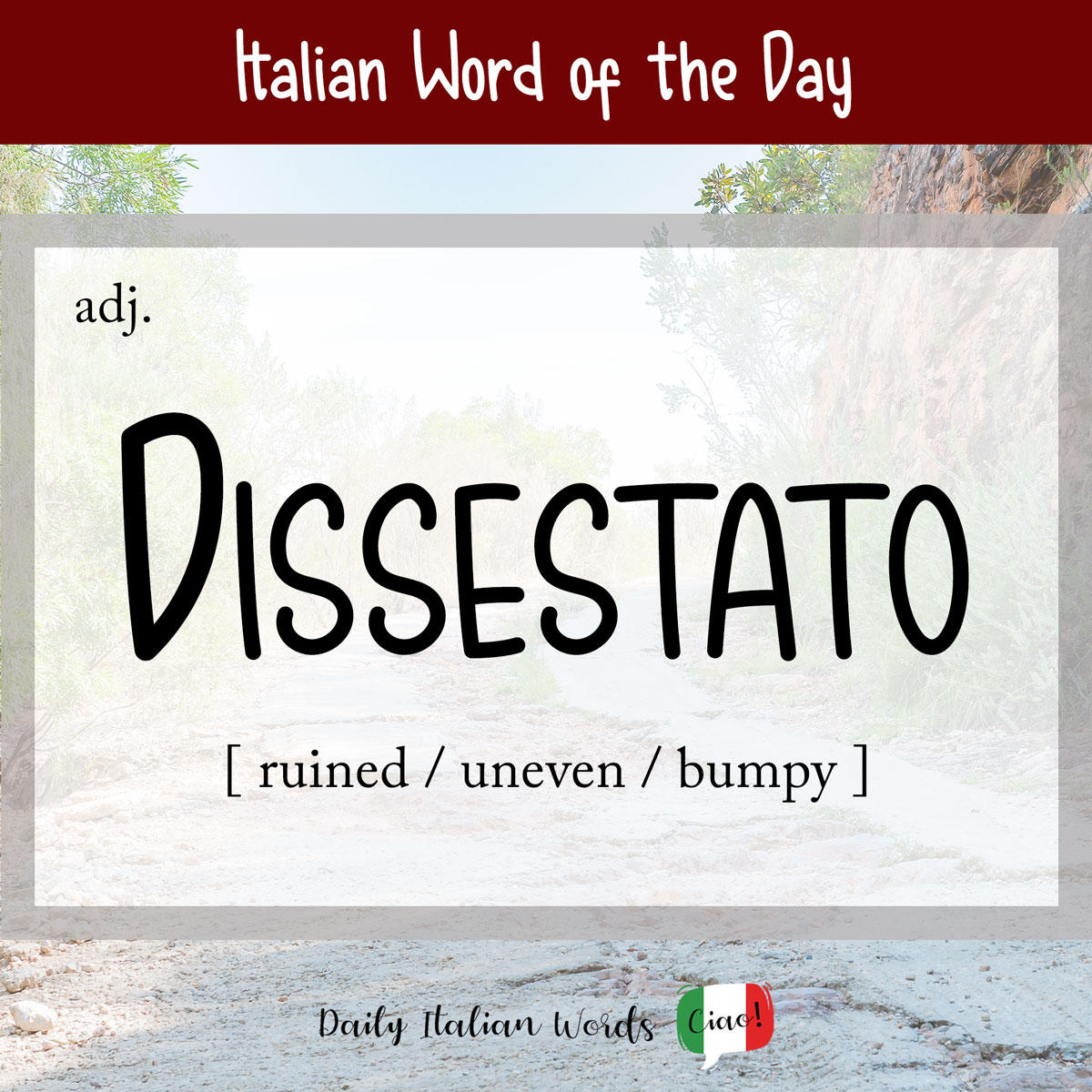
Italian Word of the Day: Dissestato (ruined / uneven / bumpy)

Italian word "dissestato"

Dissestato isn’t the kind of word you will come across in everyday Italian, but for those keen on expanding their vocabulary, it is one worth remembering. Because it is an adjective, the ending changes to correspond with the gender and/or plurality of the subject: First and foremost, it is used to describe things that have …

Read more

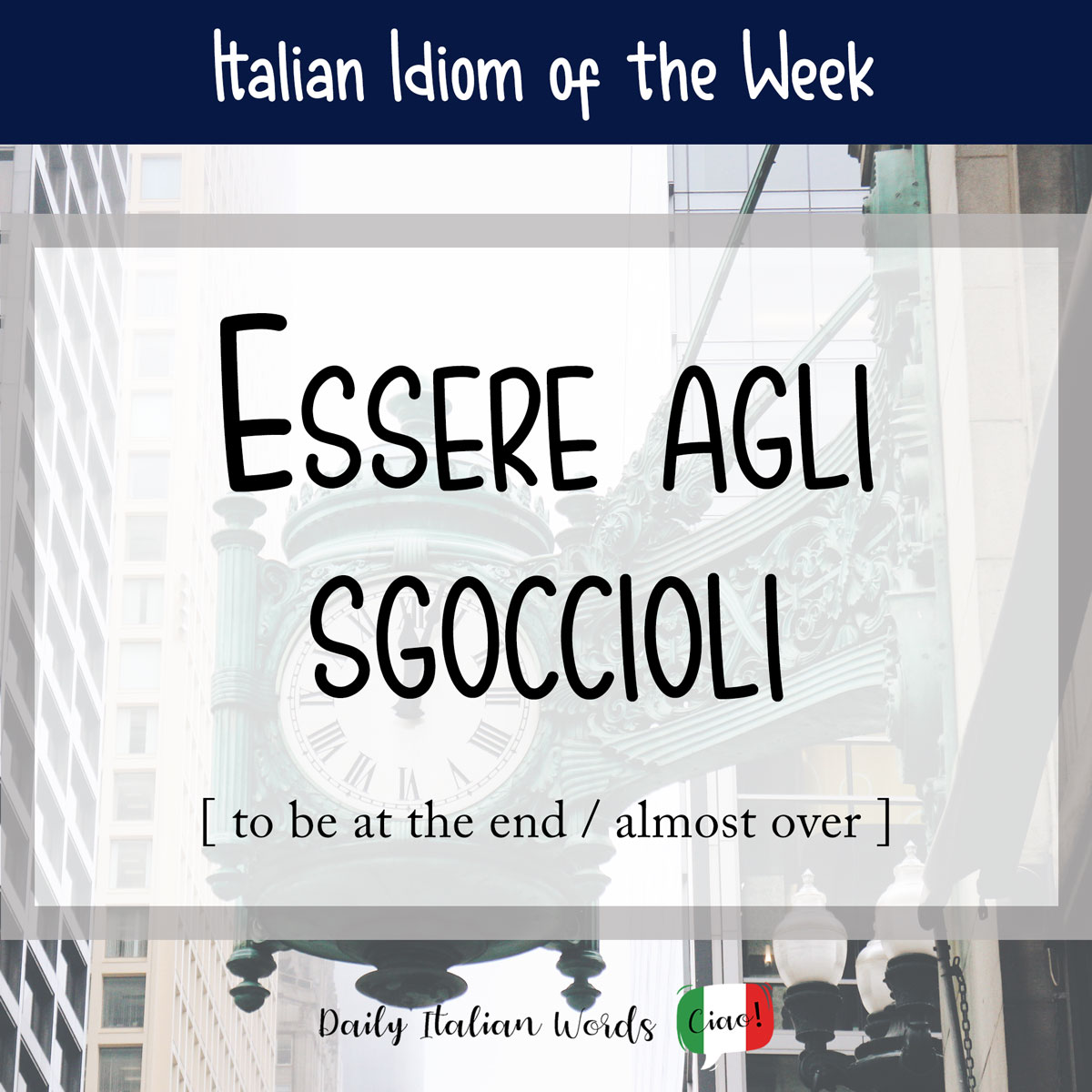
Italian Idiom: Essere agli sgoccioli (to be almost over)

Today, we’ll be delving into an idiom that I’ve been meaning to write about for quite some time, but only just remembered to jot down on my “to-do” list yesterday. This idiom is the delightful essere agli sgoccioli! Essere agli sgoccioli To be almost over / at the end Imagine when you take a sip …

Read more

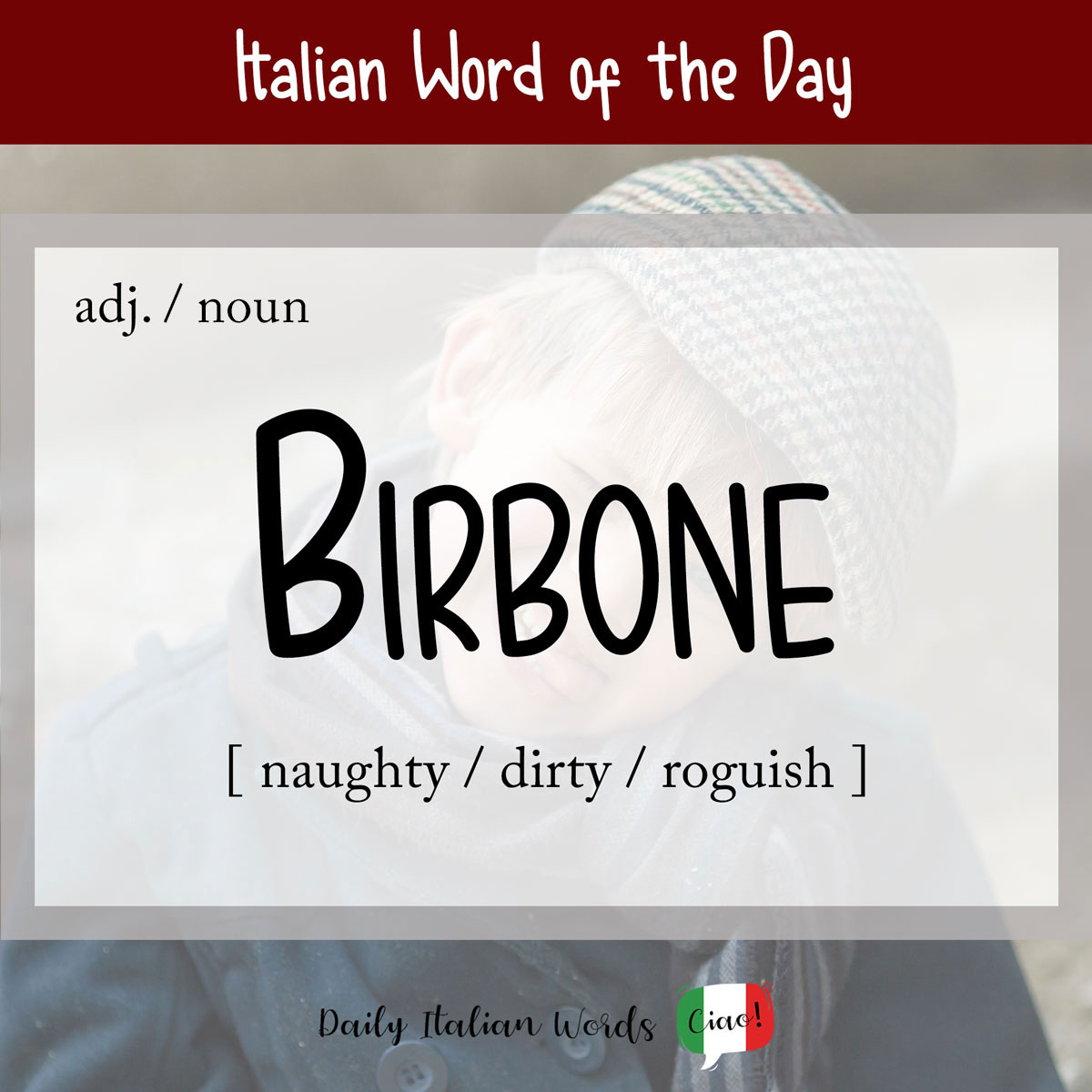
Italian Word of the Day: Birbone (naughty / dirty / roguish)

There are three words I consistently use to describe my three-year-old son in Italian: birichino, monello and today’s word, birbone. birbone When birbone conveys the meaning dirty or underhanded, it almost always appears in the expression (giocare) un tiro birbone (to play a dirty trick). Mi hai giocato un tiro birbone. You played a dirty …

Read more

Italian Word of the Day: Fango (mud)

When my son puts on his wellies, the first thing he does is look for a muddy puddle to jump into, just like his favourite character, Peppa Pig! The Italian word for mud is the fittingly sounding fango. It is derived from the Gothic term *fanigs, meaning muddy. Because it is a masculine noun, it …

Read more