How is the Immaculate Conception (Immacolata Concezione) celebrated in Italy?

The Immaculate Conception (Immacolata Concezione in Italian), observed as an Italian public holiday every December 8th, honours the Catholic dogma declared by Pope Pius IX in 1854. This doctrine affirms that the Virgin Mary was free from original sin from the moment of her conception, a belief rooted in Catholic tradition. The day holds significance …

Read more

Italian Phrase: Cosa vuoi? (What do you want?)

If you wish to inquire about someone’s desires or preferences in Italian, you can always turn to the phrase Cosa vuoi? This expression directly translates to “What do you want?” in English and is commonly used in casual or informal settings to seek information about someone’s wishes, needs, or choices. Cosa vuoi? What do you …

Read more

Italian Word of the Day: Divertente (fun / amusing / entertaining)

If you’re acquainted with the English words diverting and diversion, recalling the Italian word for ‘fun‘ or ‘entertaining‘ shouldn’t be too challenging – it’s divertente. It is the present participle of the verb divertire, meaning ‘to amuse‘ or ‘to entertain‘ but also ‘to have fun‘ in its reflexive form divertirsi (literally “to amuse oneself“). Divertire, …

Read more

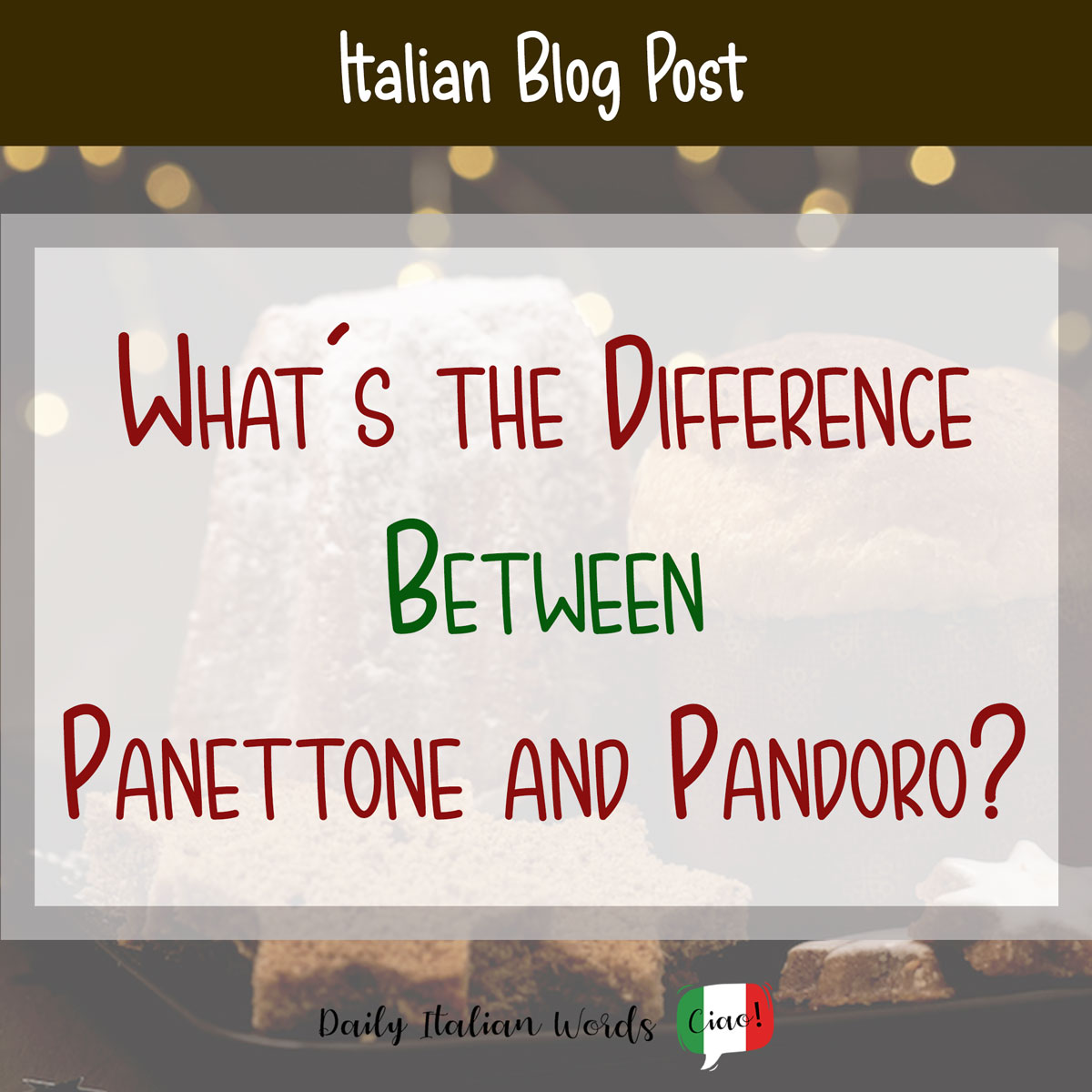
What’s the difference between Pandoro and Panettone?

As the holiday season approaches, Italy awakens with a symphony of festive flavours and time-honoured traditions. Among the many enchanting customs, the spotlight gleams brightly on two iconic Christmas treats: panettone and pandoro. These desserts not only grace Italian tables with their presence but also carry a rich cultural legacy that transcends generations. In this …

Read more

Italian Word of the Day: Carino (nice / pretty)

In Italian, a positive way to describe a person or an action is by using the adjective carino. Carino is the diminutive form of caro, which translates to dear. It can be used in its masculine form, carino, feminine form, carina, or in their respective plural forms, carini and carine. When referring to a deed …

Read more