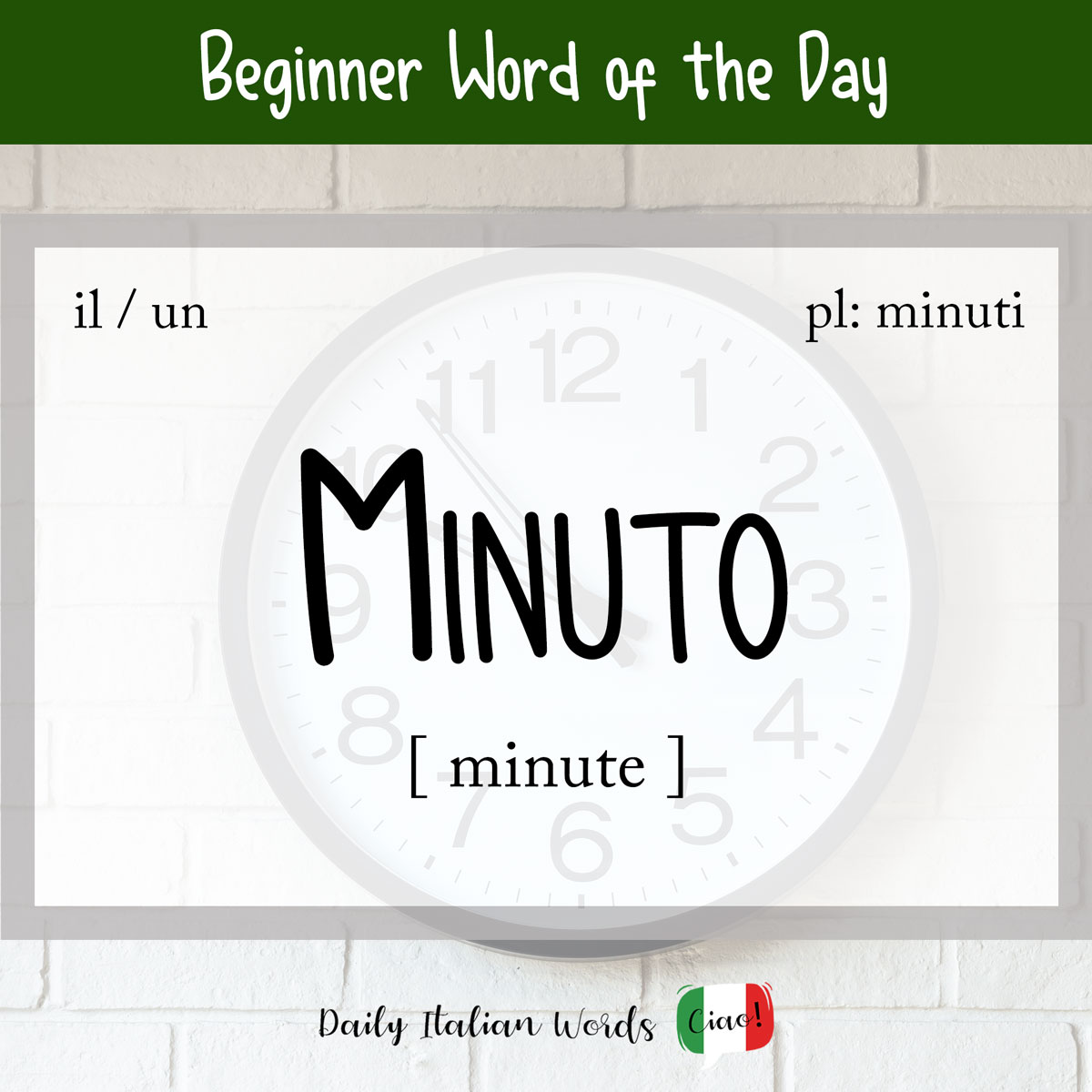
Italian Word of the Day: Minuto (minute)

Each hour (ora) of the day consists of sixty minutes, which in Italian are known as minuti (singular: minuto). It comes from the late Latin minutum, which means particle, and is the neuter noun form of the adjective minutus. minuto minute Because minuto is a masculine noun, it takes the following definite and indefinite articles: …

Read more

Italian Word of the Day: Stento (hardship)

The masculine noun stento in Italian is used to describe a situation of severe suffering or privation, much like the word hardship in English. stento hardship It derives from the verb stentare which translates as to struggle, to find difficult or to scrape by. Because stento begins with the letters st-, it takes the following …

Read more

Italian Word of the Day: Secco (dry)

Today we’re going to be looking at the Italian word secco, whose principal translation is dry in English. It comes from the Latin siccus of the same meaning. Because secco is an adjective, the ending changes in accordance with the gender and/or plurality of the subject: Broadly speaking, secco can refer to anything that lacks …

Read more

Italian Word of the Day: Svago (diversion / amusement)

Svago is a very useful Italian noun that refers the act of stepping away from a job or an occupation for the sole purpose of relaxation. Although we don’t have a noun in English that corresponds perfectly to svago, a few close translations include diversion, relaxation, distraction, recreation and leisure. The verb from which it …

Read more

Italian Word of the Day: Pelliccia (fur / pelt)

The Italian word for the fur or pelt of an animal is pelliccia. It derives from the late Latin pellicius (“of skin”), which in turn is a derivative of pellis (skin). pelliccia fur Pelliccia is a feminine noun, so it takes the following definite and indefinite articles: Similar to the English word, pelliccia can refer …

Read more

Italian Word of the Day: Spinta (push / incentive)

The Italian word spinta quite literally means push in English. It is the feminine form of spinto (pushed, compelled), which in turn comes from the verb spingere (to push). spinta push / incentive Because spinta is feminine, it takes the following definite and indefinite articles: Two of the most common verbs you will see used …

Read more