Italian Word of the Day: Solstizio (Solstice)

The word for solstice in Italian is extremely similar to its English equivalent: solstizio. It is a masculine noun, so it takes the following definite and indefinite articles: The word solstizio derives from the Latin solstitium, with sol meaning sole (sun) and sistere being the verb for fermare (to stop). This analogy stems from the …

Read more

Italian Word of the Day: Ponte (bridge)

Bridges are incredible structures that come in all shapes and sizes, from grandiose masterpieces spanning mighty rivers to humble planks of wood connecting two sides of a bubbling brook. But what is a bridge called in Italian? Let’s find out! The word for bridge in Italian is ponte, and its plural form is ponti. It …

Read more

Italian Word of the Day: Ritornello (chorus / refrain)

Have you ever caught yourself tapping your foot or nodding your head to the irresistible rhythm of a song’s memorable chorus? Perhaps you’ve felt that indescribable rush of energy when a crowd unites in singing the powerful refrain of an anthem like Fratelli d’Italia. Well, amici miei, let’s give a resounding applause to a charming …

Read more

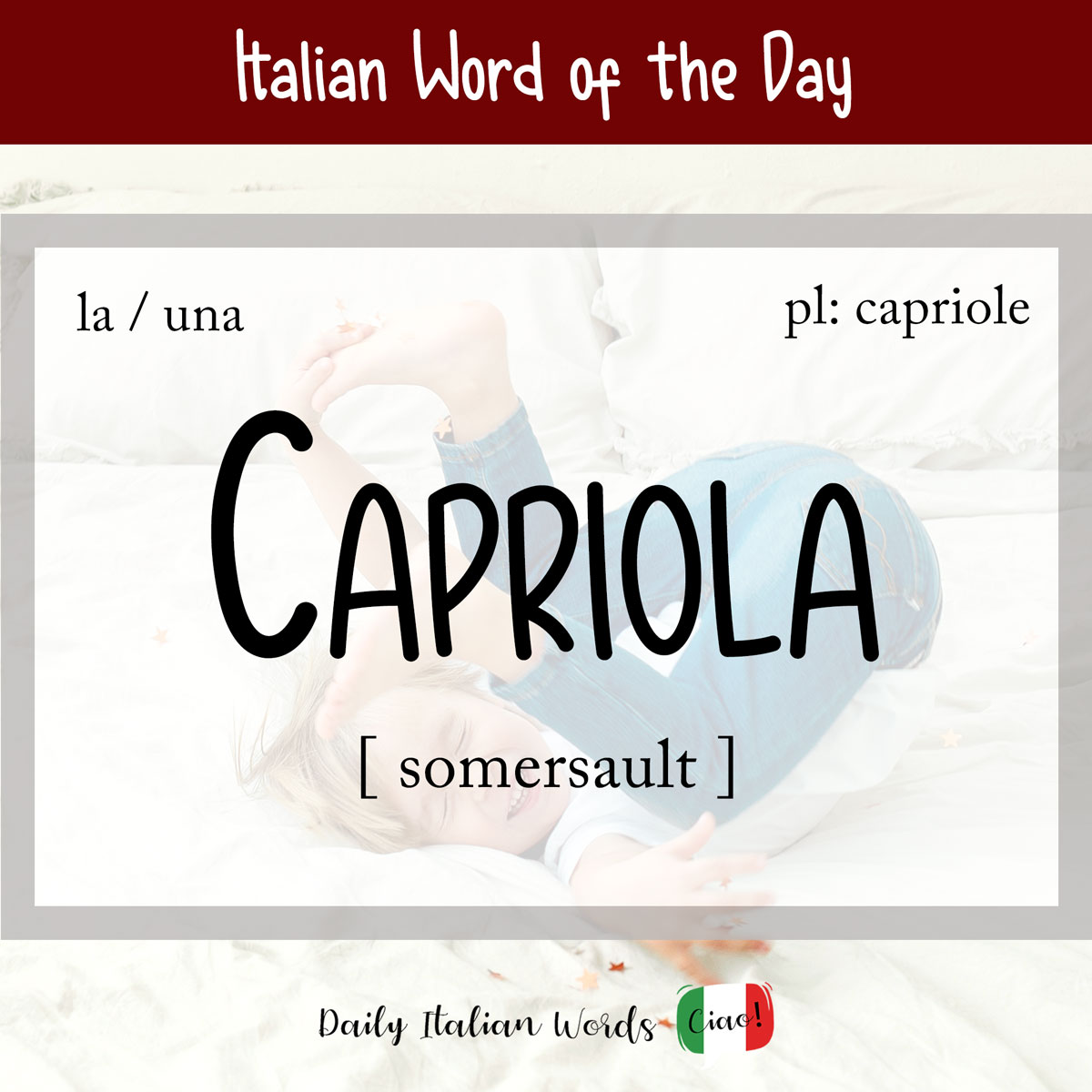
Italian Word of the Day: Capriola (somersault)

Today, we’re rolling head first into the fascinating world of one of the most acrobatic words in the Italian language: capriola. Calling to mind childhood summers spent somersaulting on the grass and daring circus acts that leave us in awe, the word itself seems to tumble off our tongues! Capriola is a feminine noun whose …

Read more

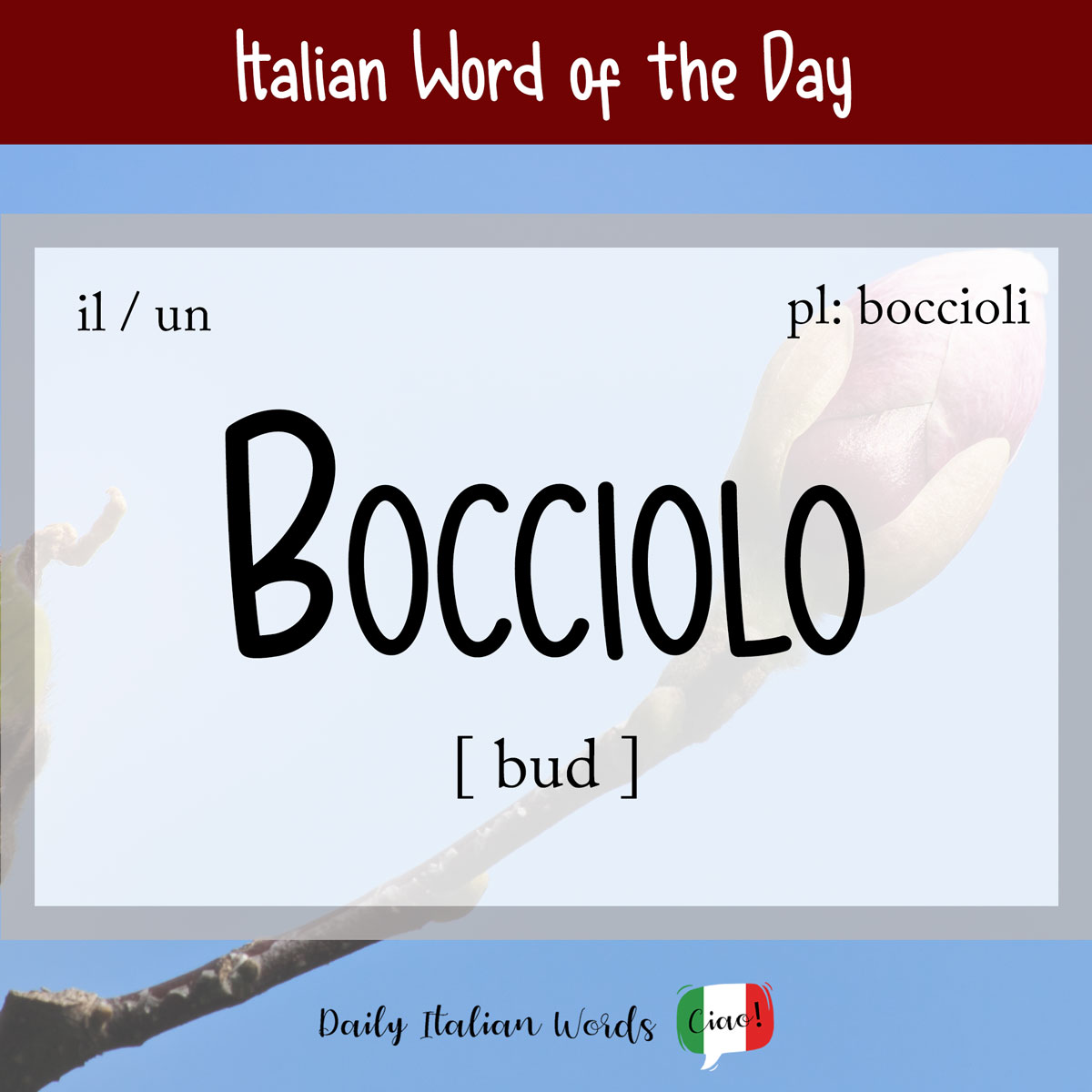
Italian Word of the Day: Bocciolo (bud)

One of the first sights of primavera (spring) is the odd bocciolo (bud) growing on bushes and trees. Bocciolo is a masculine noun whose plural form is boccioli. You can see which direct and indirect articles it takes below: Sotto casa mia c’è un albero pieno di boccioli. In front of my house there is …

Read more

Italian Word of the Day: Soqquadro (disarray / confusion / mess)

Today’s Italian word is soqquadro (masculine, plural: soqquadri), which can translate in a number of ways in English including upside-down, disarray, mess, shambles, cluttered and topsy-turvy, just to name a few! It comes from the expression sotto quadro (lit. under square), which was used by builders to refer to off-kilter or crooked structural elements that …

Read more