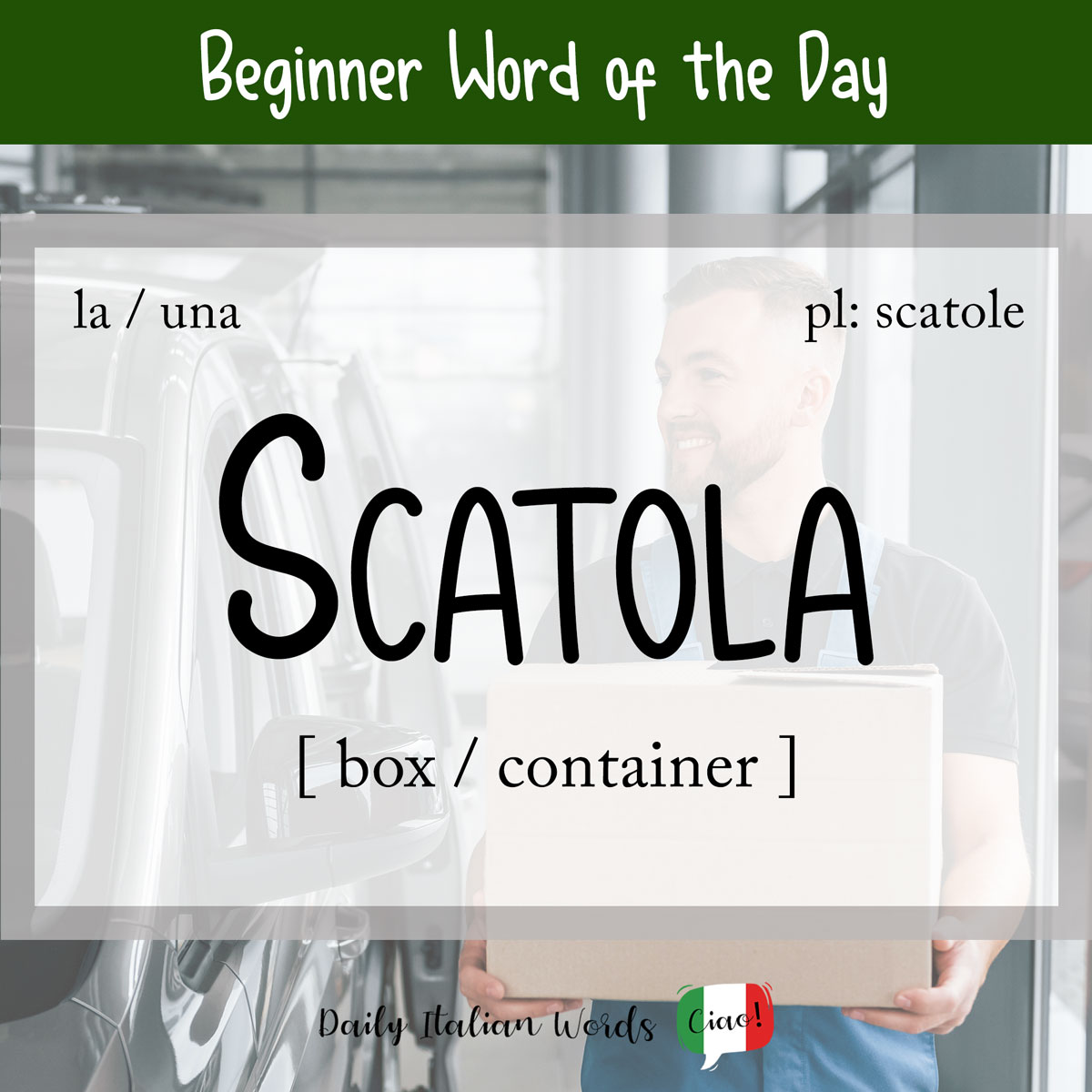
Italian Word of the Day: Scatola (box / container)

The generic word for any box or container equipped with a lid, used for storing or transporting goods, is scatola (feminine, plural: scatole) in Italian. Learn with our video and podcast The video is also available on our YouTube channel. The podcast episode can be found on Podbean, Apple Podcast and Spotify. Keep scrolling for …

Read more

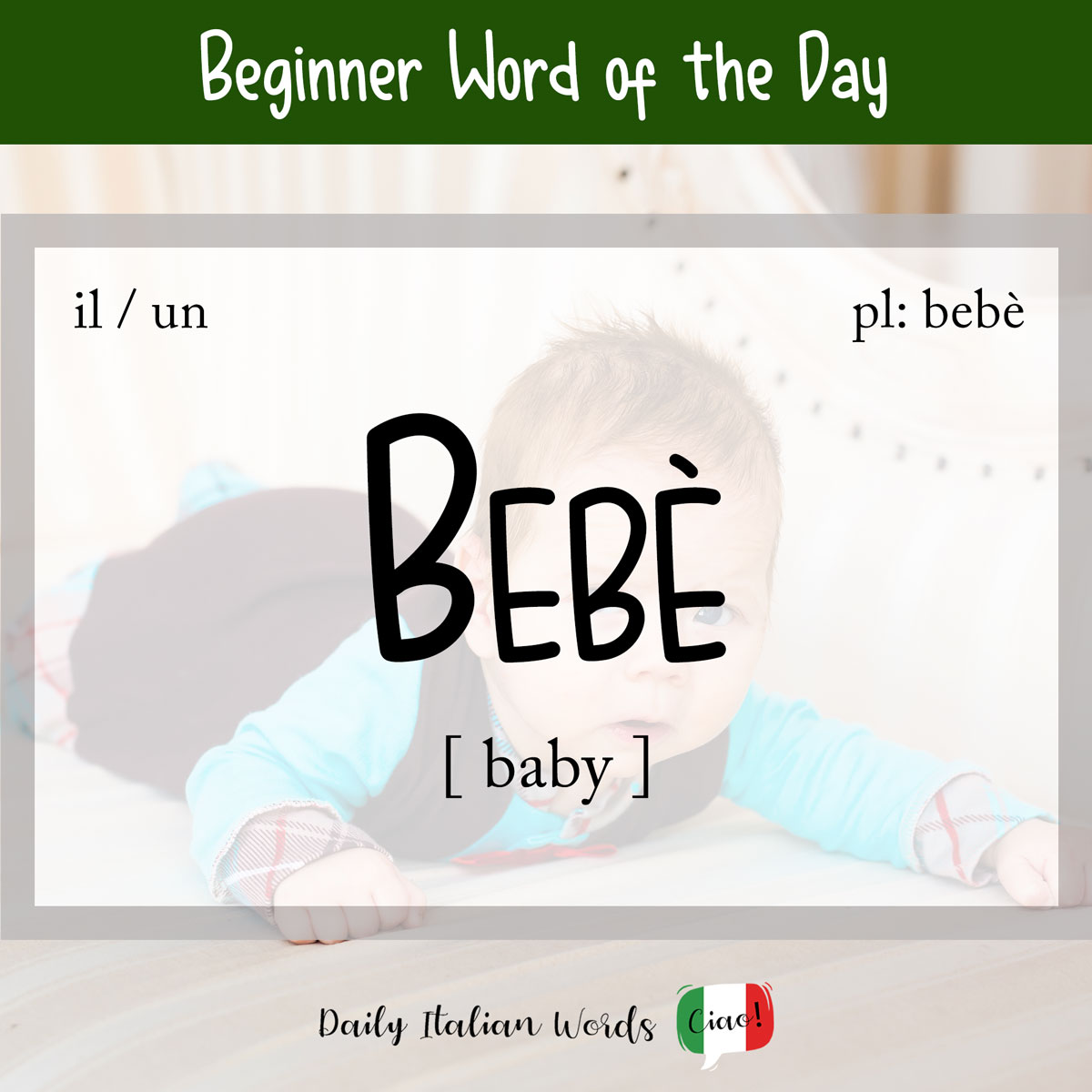
Italian Word of the Day: Bebè (baby)

The word bebè (masculine, invariable) is an affectionate way of saying baby or infant in Italian. It entered the language via the French bébé which itself comes from the English baby. Although the most commonly used terms for baby are bambino for a boy and bambina for a girl, they are somewhat problematic as they …

Read more

Italian Word of the Day: Sfida (challenge)

Sfida (feminine, plural: sfide) is the Italian word for challenge. It refers to the act of challenging someone to a battle, duel, race or any other kind of competition to decide who is superior in terms of ability or strength. It comes from the verb sfidare which means to challenge or to defy. Some verbs …

Read more

Italian Word of the Day: Allarme (alarm / alert)

The word for alarm in Italian is allarme (masculine, plural: allarmi). It derives from the military expression All’arme! (To arms!) which was, and still is, a command to soldiers to take up their weapons and be ready to fight. Arme was the ancient plural of arma (weapon) but it has since been replaced by armi. …

Read more

Italian Word of the Day: Rottame (wreck / piece of junk)

Ever since we began feeling the first aches and pains of age, my husband and I have jokingly started calling each other rottame (masculine, plural: rottami). It derives from rotto, the past participle of the verb rompere (to break), and the suffix -ame whose purpose is to form collective nouns from simple nouns, often with …

Read more

Italian Word of the Day: Balzo (bounce / leap)

The Italian word balzo (masculine, plural: balzi) refers to the sudden movement of an object (usually a ball or something elastic) after it rebounds off the ground or any hard surface. Possible translations in English include bounce, leap, spring, and jump. It derives from the verb balzare meaning to bounce. The expression fare un balzo …

Read more