Italian Word of the Day: Cuscino (pillow / cushion)

In English, we have two separate terms to describe a cloth bag stuffed with soft material used as a comfortable support. The kind we use to support the head while sleeping or lying down is called a pillow whereas the kind placed on chairs and sofas is called a cushion. In Italian, both are referred …

Read more

Italian Word of the Day: Macchina (machine / car )

The words machine in English and macchina (feminine, plural: macchine) in Italian both derive from the Latin “machina”, which in turn comes from the Greek “mekhos” meaning contrivance. Both refer to a mechanical apparatus with several parts, which together perform a particular task. Hanno costruito una macchina complicata con semplici materiali domestici. They built a …

Read more

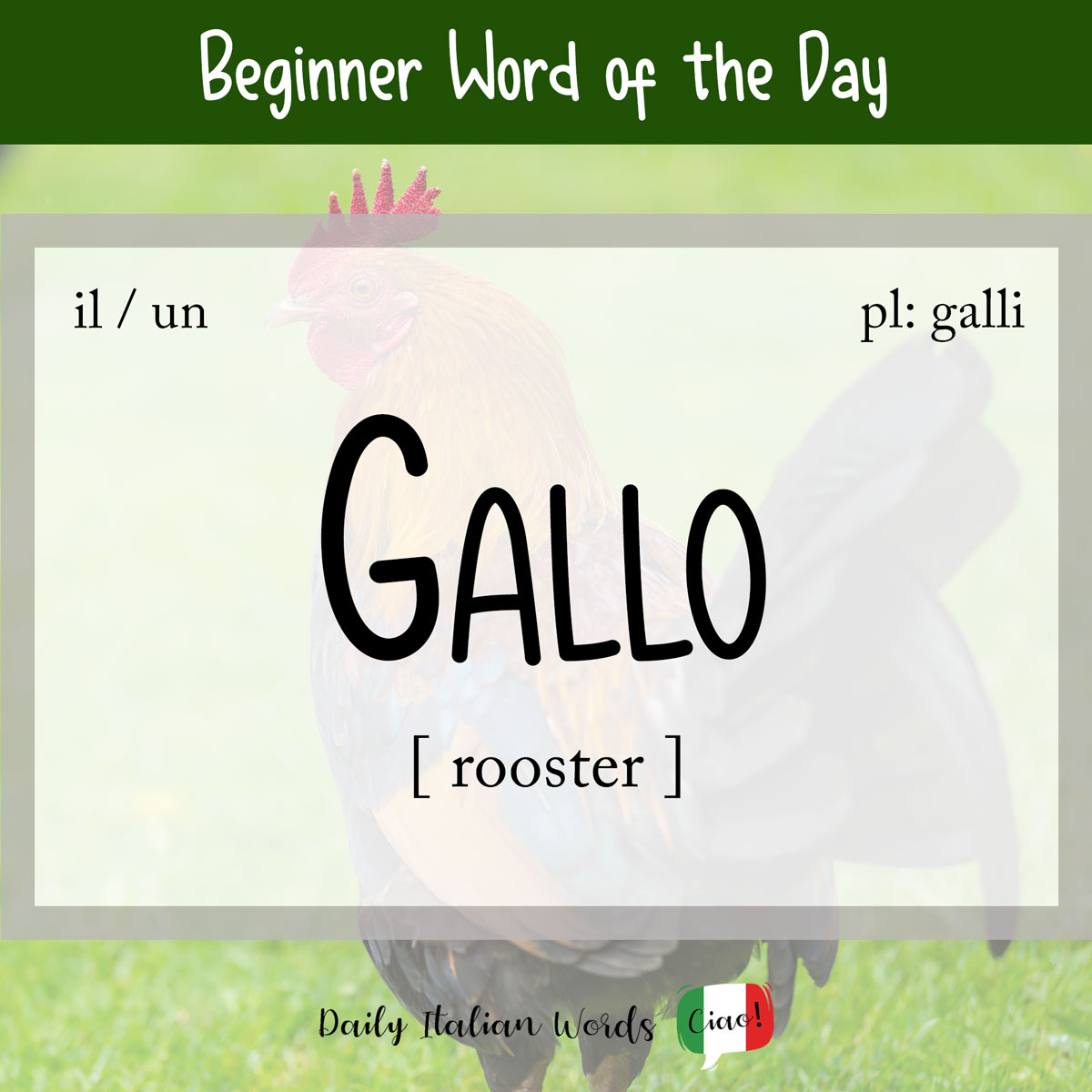
Italian Word of the Day: Gallo (rooster)

The male counterpart to a gallina (chicken / hen) in Italian is a gallo (masculine, plural: galli). It comes from the Latin word gallus. Some of the most distinctive characteristics of the rooster are its red crest (cresta), dangling wattle (bargigli), puffed-up tail (coda) and most importantly, its crow (canto) which is represented by the …

Read more

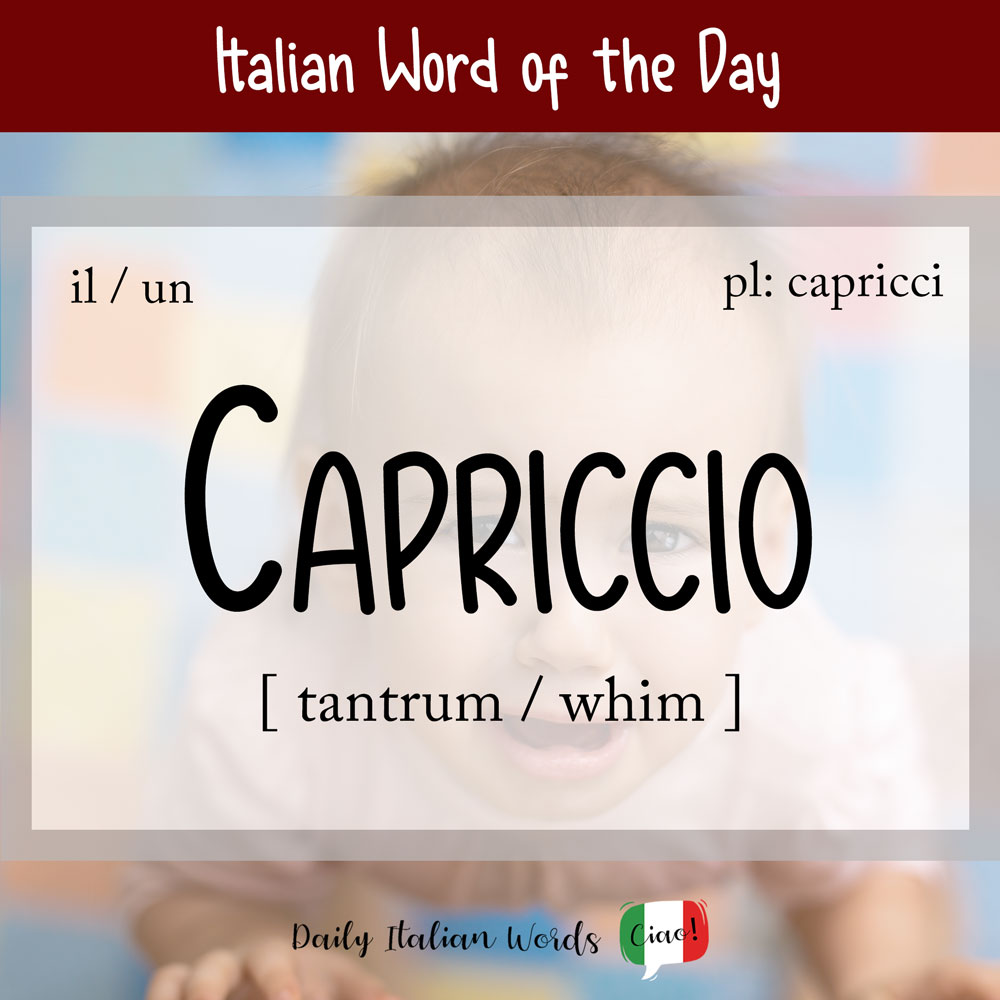
Italian Word of the Day: Capriccio (tantrum / whim)

The words tantrum and whim both translate as capriccio in Italian. Derived from the antiquated form caporiccio, meaning fright or sudden start, it shares the same origin as the English word caprice. Capriccio is a masculine noun that takes the following definite and indefinite articles: In the former sense of the word, it is often …

Read more

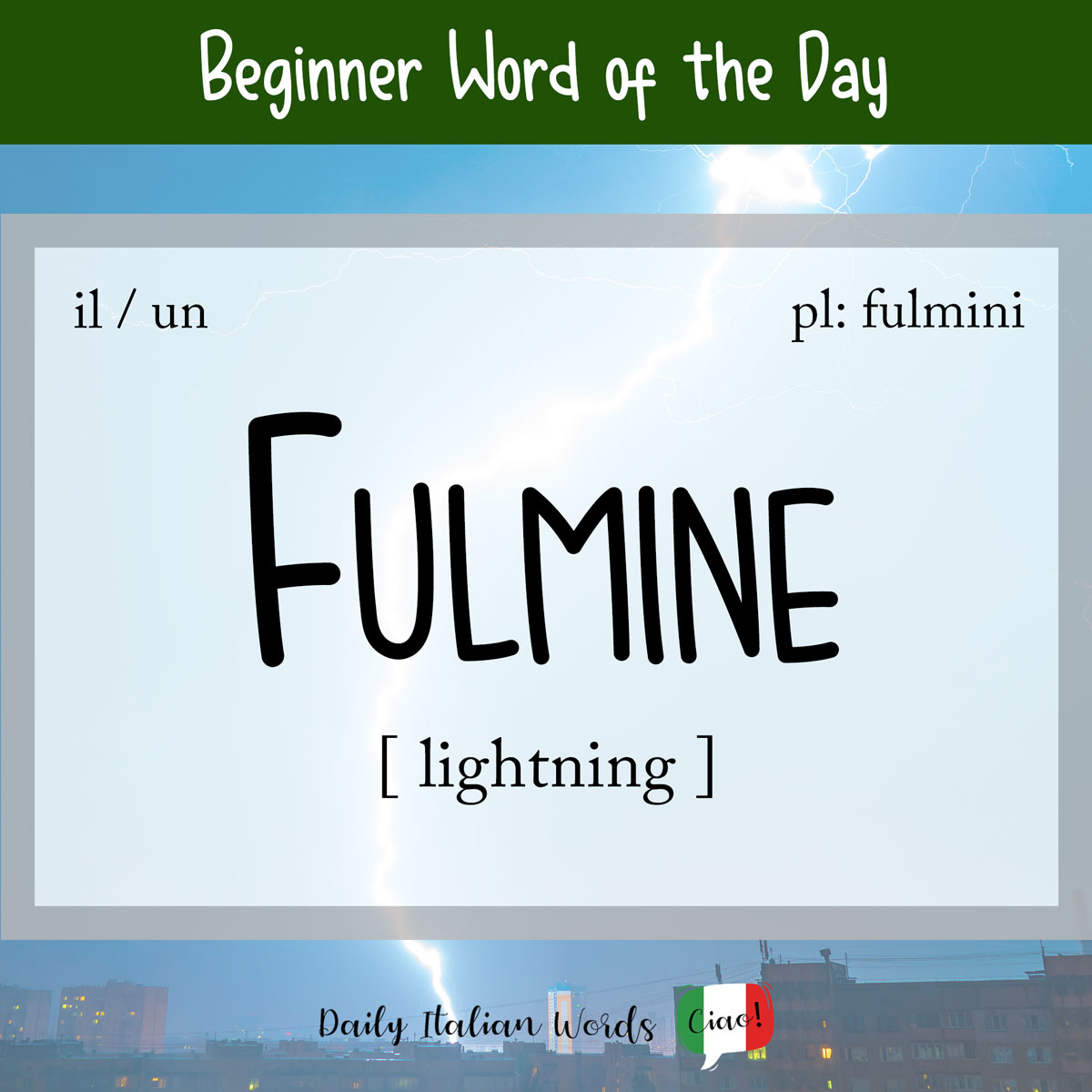
Italian Word of the Day: Fulmine (lightning)

Lightning, known as fulmine (masculine, plural: fulmini) in Italian, is a key element of a thunderstorm, along with thunder (tuono) and heavy rain (pioggia). Another word that translates as lightning is lampo. Whereas fulmine refers to the occurrence of a natural electrical discharge between a cloud and the ground or within a cloud (or in …

Read more

Italian Word of the Day: Spazzola (brush)

The word for brush in Italian is spazzola (feminine, plural: spazzole). It comes from the verb spazzare meaning to sweep or to mop. The diminutive spazzolina literally means little brush whereas the masculine equivalent spazzolino is what Italians call a toothbrush. The augmentative spazzolone on the other hand specifically denotes a scrubbing brush / broom. …

Read more