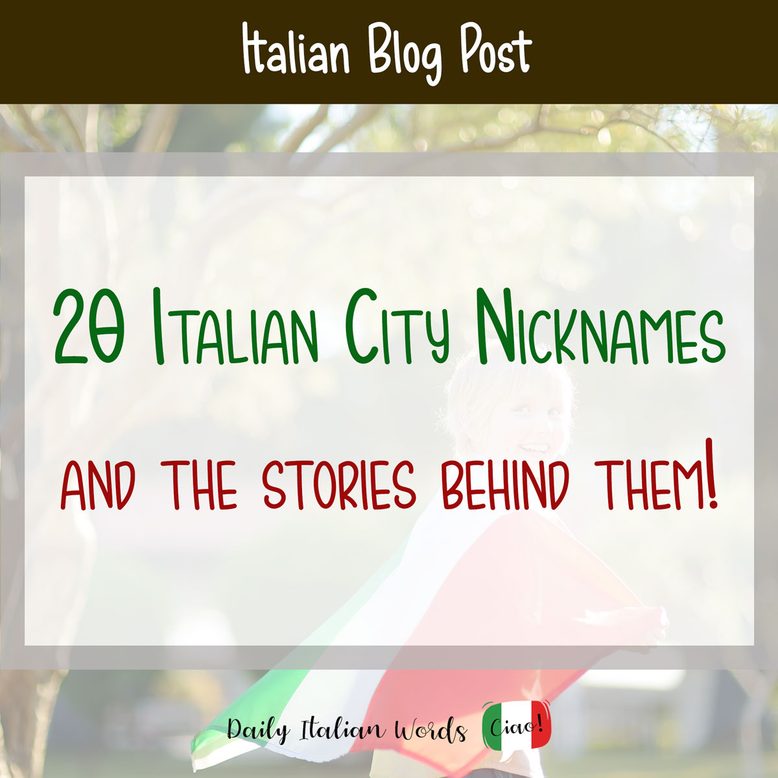
We all have some kind of soprannome (nickname) and so do our cities! Some come from historic events, others from local traditions or just a bit of playful local wit, but they all reveal something about a city’s character.
Below you’ll find some of the most interesting ones, the kind that will teach you a bit of history, perhaps offer a new way of looking at these cities, and, why not, maybe even introduce you to a few new words. Buona lettura (Happy reading)!
1. Roma – La Città Eterna
The Eternal City
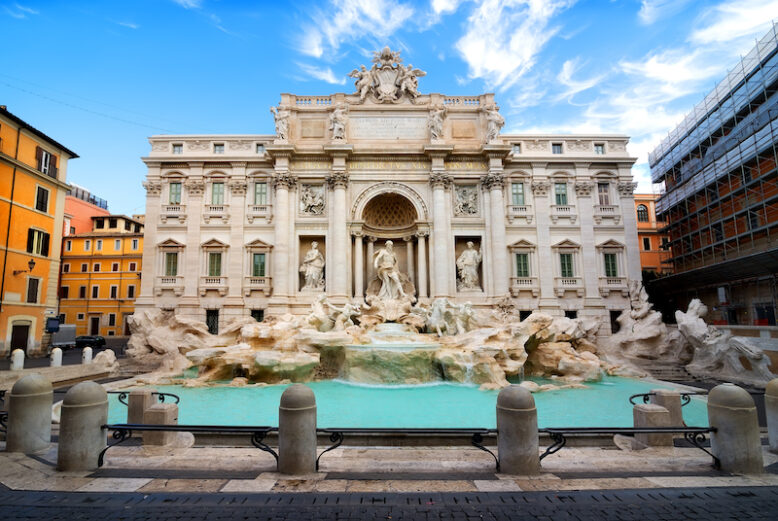
Rome’s nickname is probably the most famous of this list, but perhaps not everyone knows where it comes from. The first known person to call Rome “eternal” was Albius Tibullus, a Latin poet from the first century BC whose particular specialty was, well, erotic writing.
This idea of Rome as a city untouched by the passage of time proved enduring, and over the centuries plenty of writers used it, from English poet Percy Bysshe Shelley to American author Nathaniel Hawthorne. It’s not hard to see why: just look out over the Roman Forum from the belvedere on via Monte Tarpeo or walk inside the Colosseum and “eternal” feels like the only word that fits such beauty.
2. Gubbio – La Città dei Matti
The Town of the Crazy Ones
Matto means “crazy” in Italian, but before you picture streets full of wildly unhinged locals, don’t worry, it’s nothing like that. The nickname of this delightful town in Umbria is really about the locals’ famously playful and easygoing spirit – although, if you visit on May 15th, you might start to wonder if ‘playful’ is a bit of an understatement.
That’s the day of the spectacular Festa dei Ceri, when locals race three enormous wooden structures (each about 5 metres tall and weighing around 300 kilos) on their shoulders, through 4 kilometres of narrow medieval streets, from Piazza Grande all the way up to the Basilica of Sant’Ubaldo on Mount Ingino. Crazy indeed!
And hey, when visiting Gubbio, you can even get certified crazy: head to the 16th-century fountain on Via dei Consoli, walk around it three times, get “baptized” with its water by a local, and you’ve officially earned your patente del matto, the “crazy person’s license” and honorary citizenship!
3. Piobbico – Il Paese dei Brutti
The Town of the Ugly People
After the crazy ones, the ugly ones… and they’re practically neighbours! Piobbico sits in Le Marche region, still central Italy, and it’s been proudly home to the Club dei Brutti (the “Ugly People’s Club”) since 1879.
The club was founded by the town’s mayor, priest, and notary to help the local zitelle (spinsters) find a husband, because staying unmarried wasn’t just a romantic inconvenience, and could cause some serious financial trouble.
Today, the club takes a much more light-hearted approach. Every year, on the first weekend of September, Piobbico hosts the Festival dei Brutti, where the new club President is elected and the “No-bel” prize (a pun on no + bello/a — literally, “not + beautiful”) is awarded.
4. Taranto – La Città dei Due Mari
The City of the Two Seas
Taranto is a fascinating Apulian city with a rather special connection to the sea — or, more accurately, two seas. Yes, the city is beautifully wrapped around two distinct bodies of water, each with its own character. There’s the Mar Grande (Big Sea), home to a resident population of dolphins, and the Mar Piccolo (Little Sea), an inland basin with underground freshwater springs, where the famous cozze tarantine (Taranto mussels, and proudly a Slow Food Presidium) are farmed.
While we’re at it, another interesting thing is that Taranto’s historic centre sits on a small island, connected to the newer part of the city by a swing bridge, an engineering marvel from the 19th century. And here’s a literary curiosity: you know Alexandre Dumas, author of The Count of Monte Cristo? Well, his father was imprisoned for sixteen months inside Taranto’s Aragonese Castle, and it’s said that this episode helped inspire Alexandre when writing his famous novel!
5. Venezia – La Serenissima
The Most Serene
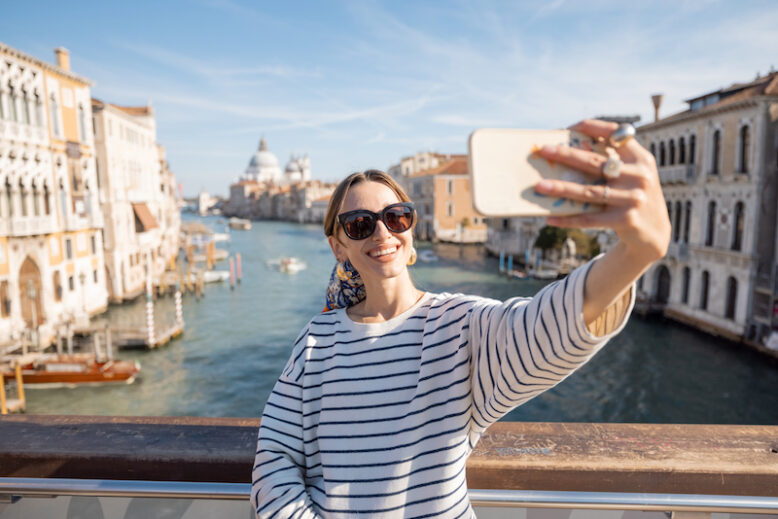
Serenissima comes from serena (serene, peaceful) plus the superlative suffix -issima, basically meaning “the most serene.” And there’s more than one reason behind this nickname.
The first goes back to the Doge, the head of the Venetian Republic for over a thousand years. Officially, he was called Serenissimo Principe (the most serene prince), a grand title that reflected his prestigious position and the stability he represented. And over time, the title came to be associated not just with the Doge but with Venice itself, hence La Serenissima (notice the ending changes to agree with the gender of the noun — il principe is masculine, while Venezia is feminine since la città, the city, is implied).
Another explanation points to Venice’s reputation as a powerful and prosperous maritime republic. For centuries, the city dominated trade across the Mediterranean, accumulating enormous wealth, and becoming a welcoming, cosmopolitan hub for merchants, travellers, and people from different cultures. A truly serenissima atmosphere!
6. Genova – La Superba
The Superb One
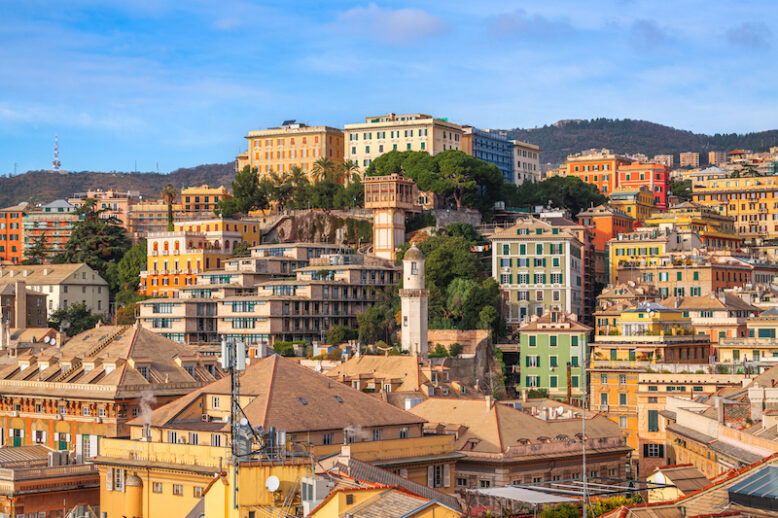
Back in the 14th century, Italian poet Francesco Petrarca was so impressed by Genova’s commanding position over the sea and the sheer grandeur of its palaces that he needed just one word to describe it: superba. He used the word in his Itinerarium Syriacum, a sort of travel guide for pilgrims travelling from Genova to the Holy Land.
Here’s a little linguistic note: in Italian, the adjective superbo can mean magnificent, superb but also haughty, proud, or downright arrogant. In Genova’s case, both meanings seem to fit: this was a wealthy and powerful maritime republic with plenty of reasons to hold its head high. It was even home to the Banco di San Giorgio, founded in the 15th century and one of the world’s earliest institutions resembling a modern bank.
7. Brindisi – La Porta d’Oriente
The Gateway to the East
Take a look at a map and Brindisi’s nickname explains itself. This Apulian port town sits in the heel of Italy’s boot, facing east across the Adriatic, and for centuries, its geography has made it a natural gateway between Italy and the eastern shores.
Under the Romans, Brindisi became a strategic port for trade with the East (and, on a side note, the ending of the famous Appian Way, no less). Centuries later, the port continued to serve as a departure point for knights and pilgrims heading to the Holy Land, including Emperor Frederick II, who set sail from Brindisi to lead the Sixth Crusade.
Then, in the 19th century, Brindisi cemented its nickname by becoming one of the key stops on the Valigia delle Indie (Indian Mail), a long-distance route connecting London to Bombay. The journey was so iconic that Brindisi even appeared in Jules Verne’s Around the World in Eighty Days!
8. Reggio Emilia – La Città del Tricolore
The Tricolour’s Town
Il Tricolore is what we call our Italian flag, since it’s got three colours — green, white, and red. Now, you might assume that something as quintessentially Italian as the national flag was born in Rome, our capital city. But no, its birthplace is Reggio Emilia, one of the birthplaces of the delicious Parmigiano Reggiano cheese, between Parma and Bologna.
Even more surprising? The flag is older than Italy itself. The country was unified in 1861, but the first Tricolore was raised in Reggio Emilia way back in 1797. It was created for the Cispadane Republic, a small state made up of Reggio, Modena, Ferrara, and Bologna, established under the protection of Napoleon’s France.
So, technically, our national flag was already on the scene some 64 years before the country it represents even existed. If you’re ever in Reggio Emilia, make sure to visit the Tricolour Flag Museum to learn more about the political and historical context behind the birth of our three-coloured bandiera (flag).
9. Brescia – La Leonessa d’Italia
The Lioness of Italy
Brescia earned this nickname the hard way. Back in 1849, the city rose up against Austrian rule in what became known as the Dieci Giornate di Brescia (the Ten Days of Brescia).
Despite being heavily outnumbered, the Brescians resisted for ten long days before being forced to surrender. Needless to say, the aftermath was brutal, with the city subjected to violent reprisals and executions.
From then on, Brescia became known as La Leonessa d’Italia, a tribute to the courage and resilience its people showed during those ten days. Funnily enough, Brescia’s coat of arms had featured a lion long before the uprising, so perhaps the city was waiting for the chance to prove it wasn’t just all roar!
10. Viterbo – La Città dei Papi
The City of the Popes
Wasn’t that supposed to be the Vatican? Technically yes, but during the 13th century, Viterbo briefly stole the spotlight. With Rome caught up in political turmoil, the then Pope decided to move the papal seat to Viterbo, a much safer base thanks to its fortified walls and strong support for the papacy.
Today, the Palazzo dei Papi (Popes Palace) remains the city’s most important landmark. Plus, it was in Viterbo that the first proper conclave took place in 1268. Here’s what happened: the cardinals couldn’t agree on a candidate and after nearly three years, the exasperated locals locked them all inside the palace and removed the roof, hoping a little divine intervention might finally fall on them (or, failing that, just some refreshing rain to wash away the stalemate). It worked and a Pope was finally elected shortly after. This episode gave us the word conclave, from the Latin cum clave (“with a key”), referring to the cardinals being locked in until they picked the new Pope.
11. Torino – La Città Magica
The Magical City
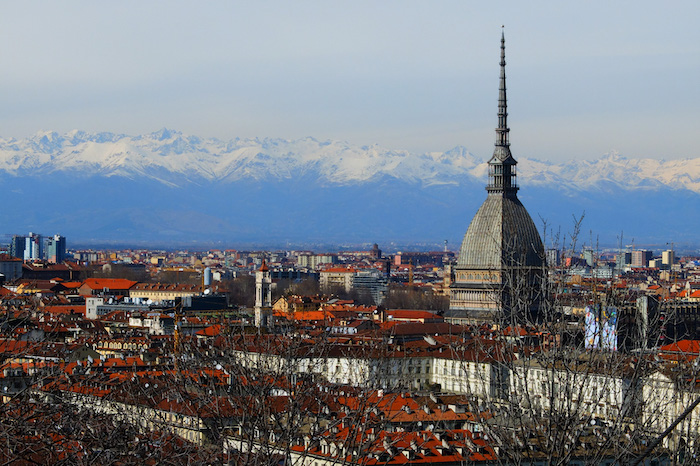
Turin is magical in all the obvious ways: elegant boulevards, historic cafés (with delicious tramezzini sandwiches!), grand architecture. But that’s not the kind of magic we’re talking about here.
Some believe that Turin sits on a powerful centre of mystical energy and is supposedly part of two magical triangles at once: the triangle of white magic, alongside Lyon and Prague, and the triangle of black magic, with London and San Francisco. Quite a double life for a city that looks this respectable!
I’m no expert in esotericism, but I’ll admit this makes Turin even more intriguing. If you want to investigate for yourself, you could start with a visit to the Witchcraft Museum, followed by a hunt for the mysterious, demonic-looking eyes said to be hidden on Via Lascaris.
12. Padova – La Città dei Tre Senza
The City of the Three “Withouts”
Padova’s nickname comes from a popular old saying about three local landmarks, each famous for missing something you’d expect it to have.
The first “without” is the prato senza erba (meadow without grass), better known as Prato della Valle. Despite the name, this isn’t a meadow at all, but one of Europe’s largest public squares. Sure, there is plenty of greenery, but not enough to match the very definition of a prato.
The second is the santo senza nome (saint without a name). This is Saint Anthony of Padua, the Franciscan friar originally from Lisbon who spent his final years in Padova. Locals are so devoted to him that they simply call him il Santo (the Saint) — no surname, no first name, everyone just knows who he is.
And finally, the caffè senza porte (café without doors), referring to the historic Caffè Pedrocchi, famous for its mint coffee among other things. The doors do exist of course, but the establishment stayed open 24/7 in the past, giving rise to its reputation as a café without doors to close.
13. Milano – La Città Meneghina
The Meneghina City
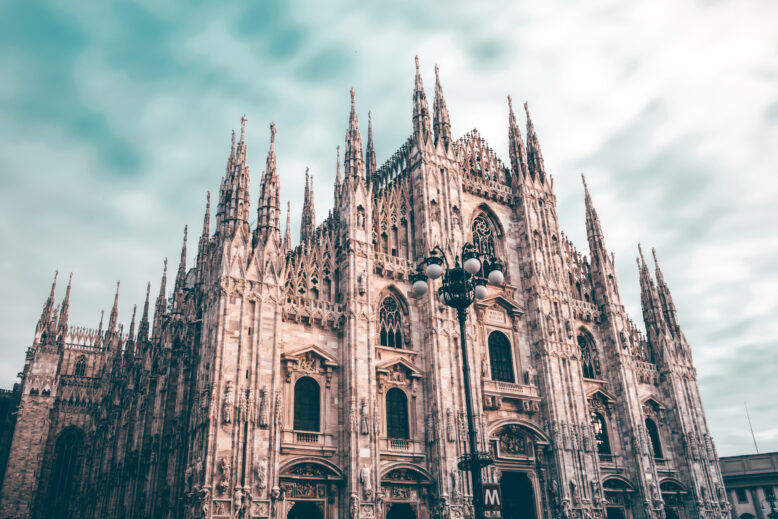
The adjective meneghina comes from Meneghino, the Milanese diminutive form of the name Domenico and a popular 17th-century Milanese theater character portrayed as a servant.
At the time, families who couldn’t afford full-time staff would often hire temporary servants just for the day, often on Sundays. And since Sunday is domenica in Italian, these day workers came to be known as Domenichini (“Little Domenicos”), which translated to Meneghini In Milanese dialect.
The theatre character became such a familiar figure that Meneghino eventually came to be used as a synonym for anything or anyone Milanese.
14. Benevento – La Città delle Streghe
The City of the Witches
Down south, not far from Naples, Benevento has one of the spookier nicknames on this list. According to local legend, the city was a favourite gathering place for witches, who were said to meet at night beneath a walnut tree on the banks of the Sabato River to perform their mysterious rituals.
These witches were known as janare, a name possibly derived from the Latin ianua, meaning “door,” which sounds fitting for figures believed to move between the world of the living and the supernatural. This legend remains an important part of Benevento’s identity today, and at the Janua – Museo delle Streghe di Benevento you can dive into the city’s fascinating witch folklore.
And the witchcraft connection extends to the town’s famous spirit, which is named, unsurprisingly, Liquore Strega (“Witch Liqueur”). It’s a bright yellow drink made from around 70 herbs and spices, but the exact recipe remains a closely guarded secret.
15. Sulmona – La Città dei Confetti
The City of Confetti
Confetti here doesn’t mean those colourful paper shreds we throw in the air at a party. In Italy, confetti are the sugar-coated almonds we traditionally hand out to guests at weddings, baptisms, and other special celebrations — dangerously addictive if you have a sweet tooth like me.
Sulmona has been making these treats since ancient times, but the tradition truly blossomed in the 15th century. That’s when the nuns at the Monastery of Santa Chiara began crafting the confetti into intricate floral bouquets, which were given as gifts to noble brides.
Today, the town’s shops are filled with beautifully colourful displays made from confetti, rivaling Sulmona’s historic landmarks as a reason to visit.
16. Bergamo – La Città dei Mille
The City of the Thousand
This nickname goes back to a major chapter in Italian history: la Spedizione dei Mille (Expedition of the Thousand), the campaign led by Garibaldi that brought down the Bourbon rule in Sicily, marking a crucial step toward Italy’s unification.
But about that number… It wasn’t exactly 1,000 volunteers from Bergamo who joined the cause, it was more like 180, which, admittedly, makes the nickname The City of the Thousand sound a little ambitious. Still, compared with the numbers contributed by other towns, 180 was an impressive show of enthusiasm for the cause, hence this name.
If you love cinema with a historical backdrop, add L’Abbaglio (The Illusion) to your watchlist. It’s a charming film that tells the story of the Expedition of the Thousand in Sicily in 1860, blending historical events with a touch of humour.
17. Ancona – La Città dei Due Soli
The City of the Two Suns
Ancona is an intriguing port city in Le Marche, on Italy’s Adriatic coast, and will be Italy’s Capital of Culture in 2028. It’s the kind of place where curious travellers will find plenty of character, history and stories along the way. And one of its fascinating features doesn’t require a museum visit; it’s the city’s geography.
Ancona sits on a promontory that juts into the Adriatic in the shape of an elbow, which is where its name comes from: the ancient Greeks called it Ankon, meaning “elbow.” Now, an elbow may not be the most glamorous image to be named after, but this distinctive curve makes it possible to watch both the sunrise and the sunset over the Adriatic from here, a little geographical quirk that has earned Ancona its poetic nickname La Città dei Due Soli.
18. Campobasso – La Città dei Misteri
The City of Mysteries
No paranormal activity, don’t worry. The nickname comes from a striking religious event held every year in June, on the feast of Corpus Domini.
It’s a beautiful procession of thirteen Misteri (Mysteries), which are essentially living tableaux where locals portray saints and angels, perched on ingenious 18th-century wooden machines. These massive structures are carried through the streets of Campobasso on the shoulders of local men, accompanied by a marching band that sets the rhythm of the procession.
The machines themselves are extraordinary pieces of engineering, with children appearing to float magically above the crowds. Having seen this event in person, I can safely say it’s absolutely worth planning a trip around it.
19. Piacenza – La Primogenita
The Firstborn Daughter
Primogenita translates to “firstborn daughter” (quick grammar note: primogenito is the masculine form, but this nickname uses the feminine ending -a because it refers to la città, the city, a feminine noun).
Piacenza earned this nickname because of something that happened in 1848, when Italy was not yet one country but rather a patchwork of separate kingdoms and territories. One of them was the Kingdom of Sardinia, which was leading the charge toward unification. In May of that year, the people of Piacenza were the first to vote on whether to join it, and the result was a resounding “yes.”
Then, when Italy officially united in 1861, the new nation essentially adopted the Kingdom of Sardinia’s core structure: its monarch, Vittorio Emanuele II, became the first King of Italy, Turin was retained as the capital, and many of the kingdom’s laws and institutions were carried over into the new state.
So, that pioneering vote 13 years earlier gave Piacenza a unique place in Italy’s unification story, earning the city the affectionate title la Primogenita d’Italia — Italy’s Firstborn Daughter.
20. Bologna – La Dotta, la Grassa e la Rossa
The Learned one, the Fat one, and the Red one
Let’s wrap up with a city that couldn’t settle for just one nickname, it’s got three!
La Dotta (the Learned one) refers to the University of Bologna, founded in 1088 and considered the oldest university in the Western world. Over the centuries, its lecture halls have welcomed figures who left their mark on history, like Laura Bassi, the first woman to teach in a university.
Next, Bologna is the home of tortellini, tagliatelle al ragù, panini con la mortadella, and countless other culinary temptations that make its second nickname — La Grassa (the Fat one) — feel entirely justified. Going home with tighter pants is quite simply part of the visit (though, to be fair, eating well is one of the great pleasures of travelling anywhere in Italy!).
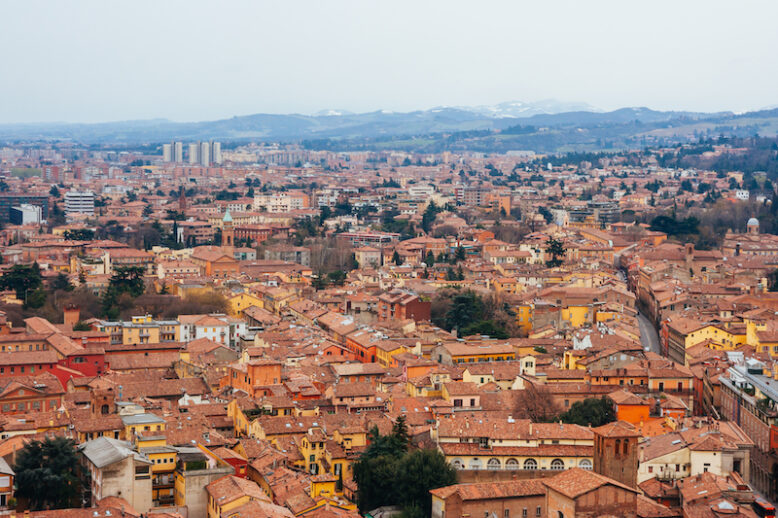
And then there’s La Rossa (the Red one). The name refers partly to the distinctive terracotta palette that gives Bologna’s center its signature look. But it’s also a nod to the city’s strong left-wing political tradition, a movement historically associated with the colour red.

Valentina Nicastro is a travel writer in love with her home country, Italy. Having travelled widely around the globe, she realised there was more to explore closer to home and decided to put the passport aside for a while. When she is not immersed in documenting Italy, you’ll find her donning her communication consultant hat, weaving words as a content writer and bridging linguistic divides as a translator.