Passo is a masculine noun that refers to steps, rhythm, and movement – both in literal walking and in a wider, figurative sense.
passo
step / move
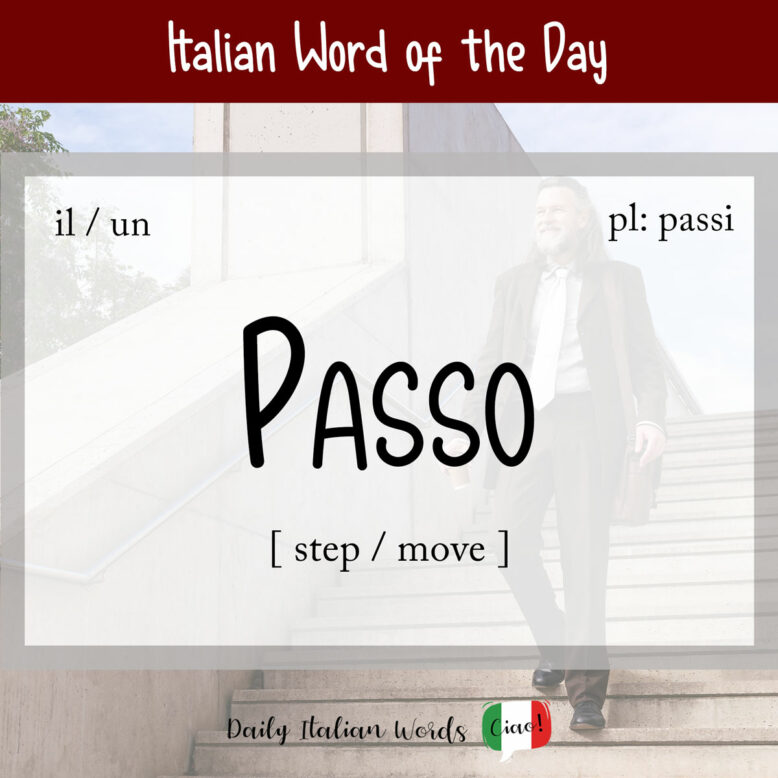
It is a masculine noun whose plural form is passi. It takes the following definite and indefinite articles:
- il passo
- i passi
- un passo
- dei passi
Here are its main meanings in Italian:
1. PASSO = Step
The most literal meaning of passo in Italian is a physical “step.”
Hai sentito anche tu dei passi dietro la porta?
Did you hear footsteps behind the door, too?
Some common expressions where you’ll hear it include:
- Avere il passo pesante: To walk heavily or noisily
Il signore del piano di sopra ha il passo davvero pesante; ogni volta che si sposta si sente tutto!
The gentleman above us walks so heavily; every time he moves, you can hear everything!
- Avere un passo felpato: To have a quiet step, to walk on tiptoes
Hai proprio un passo felpato, mi hai spaventato!
What a quiet step you have, you startled me!
- Passo di danza: Dance step
Stefania ha incantato tutti con i suoi passi di danza.
Stefania amazed everyone with her dance moves.
- Muovere i primi passi: Take the first steps (both physically and figuratively to mean starting something)
Andrea ha iniziato a muovere i primi passi intorno ai 12 mesi.
Andrea started taking his first steps at around 12 months old.
2. PASSO = Move
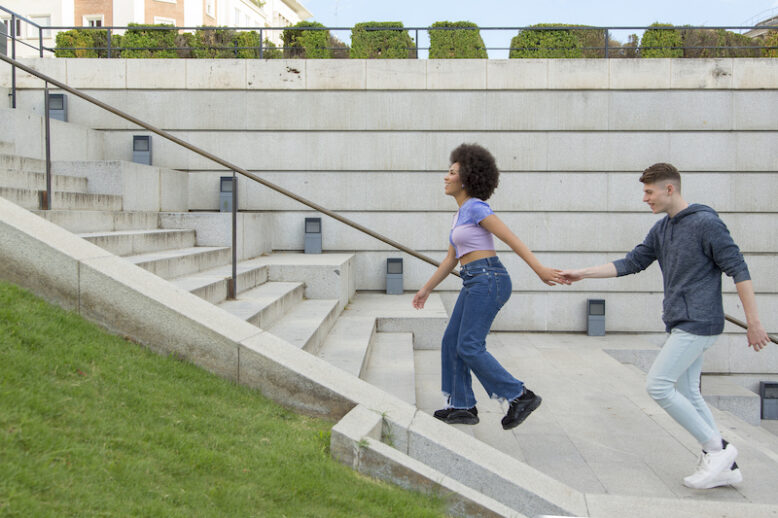
Passo can also mean a figurative step (like an action or initiative), conveying the sense of making progress.
Here are a few expressions using passo in this sense:
- Fare il primo passo: To make the first move
Finalmente si è deciso a fare il primo passo e mi ha chiesto di uscire!
At last, he made the first move and asked me out!
- Fare un passo falso: To make a wrong move
In questo momento non possiamo permetterci passi falsi sul lavoro
Right now, we can’t afford to make any wrong moves at work.
- Fare un passo avanti / indietro: To take a step forward / back
Con questo nuovo farmaco, la ricerca medica ha fatto un grande passo avanti.
With this new drug, medical research has taken a big step forward.
- Il passo successivo: The next step
Dopo aver completato questa fase del progetto, dobbiamo decidere i passi successivi.
After finishing this phase of the project, we need to decide on the next steps.

3. PASSO = Pace
Another meaning of passo in Italian refers to one’s pace, both in walking and in life.
Some frequently used expressions in Italian are:
- A passo spedito: Briskly
Dai, dobbiamo camminare a passo spedito se vogliamo arrivare in tempo!
Come on, we need to walk briskly if we want to get there on time!
- A passo d’uomo: Very slowly (literally, “at man’s pace”)
I ragazzi sono bloccati in autostrada, stanno andando a passo d’uomo per il traffico.
The guys are stuck on the highway, moving super slowly because of the traffic.
- A passo di lumaca: At a snail’s pace
I lavori di ristrutturazione procedono a passo di lumaca. Chissà quando finiranno!
The renovations are moving at a snail’s pace. Who knows when they’ll be done!
- Cambio di passo: Change of pace
Il nuovo direttore ha portato un cambio di passo nella gestione del museo.
The new director has brought a change of pace to the way the museum is managed.
- Di buon passo: At a good pace
Il gruppo sta procedendo di buon passo verso la prima tappa della giornata.
The group is moving at a good pace toward the first stop of the day.
- Accelerare il passo: To speed up your pace
Dobbiamo accelerare il passo se vogliamo arrivare al rifugio prima che faccia buio.
We need to speed up the pace if we want to get to the hut before it gets dark.
- Andare di pari passo: To go hand in hand
La crescita del turismo culturale va di pari passo con la valorizzazione dei siti storici.
The growth of cultural tourism goes hand in hand with the promotion of historical sites.
4. PASSO = Pass
In a geographical context, passo refers to a mountain pass. Some famous passi in Italy are:
- Passo dello Stelvio between Lombardy and Alto Adige
- Passo del Brennero at the boarder between Italy and Austria
- Passo dello Spluga at the border between Italy and Switzerland
Vorrei fare un’escursione al Passo Sella domani, vieni con me?
I’m thinking of going for a hike at Sella Pass tomorrow, want to come?
5. PASSO = Excerpt / passage
Passo can also indicate a passage from a book:
Durante il funerale, il prete ha letto un bellissimo passo della Bibbia.
During the funeral, the priest read a beautiful passage from the Bible.
6. PASSO = Dried / Withered
Passo is also an adjective meaning dried or withered. You see this most often in uva passa, which literally means “dried grape” and refers to a raisin (we also call it uvetta in Italian)
Mia nonna metteva sempre un po’ di uva passa nella pasta.
My grandma always used to add a few raisins to the pasta.
Other expressions with PASSO in Italian
There are lots of expressions with passo in Italian. Here are a few additional ones, but you’ll come across many more (I don’t want to drown you in a sea of passi!)
- Essere / Restare al passo coi tempi: To keep up with times
Anche se è molto anziano, il signor Giacomo è sempre al passo coi tempi grazie a internet!
Even though he’s very old, Mr Giacomo always keeps up with the times thanks to the internet!
- Fare il grande passo: To take the leap
Dopo vent’anni insieme, hanno deciso di fare il grande passo: si sposeranno a giugno!
After twenty years together, they decided to take the big step: they’re getting married in June!
- Fare il passo più lungo della gamba: To bite off more than you can chew (literally, “to take a step longer than your leg”)
Pensaci bene prima di accettare, rischi di fare il passo più lungo della gamba.
Think carefully before saying yes, you risk biting off more than you can chew.
- Segnare un passo importante: To mark an important step
Questa nuova legge segna un passo importante nella lotta contro la discriminazione di genere.
This new law marks an important step forward in the fight against gender discrimination.
- Essere a un passo da: To be very close to / to be on the verge of
L’azienda è a un passo dal fallimento. Temo ci saranno licenziamenti.
The company is on the verge of bankruptcy. I’m afraid there will be layoffs.
- Andare di pari passo: To go hand in hand
Etica e innovazione devono andare di pari passo.
Ethics and innovation have to go hand in hand.
- Di questo passo: At this rate
Andando avanti di questo passo, non finiremo mai!
If we continue at this rate, we’ll never finish!
- Un passo alla volta: One step at a time
Vedrai che si risolve tutto, un passo alla volta.
You’ll see, it will all get sorted out, one step at a time.
- Passo dopo passo: Step by step, little by little
Sto seguendo i nuovi clienti nel percorso iniziale, passo dopo passo.
I’m taking the new clients through the onboarding, step by step.
- Passo carrabile / carraio: Driveway, vehicular access
Non possiamo parcheggiare qui, c’è un passo carrabile.
We can’t park here, there’s a driveway.

Valentina Nicastro is a travel writer in love with her home country, Italy. Having travelled widely around the globe, she realised there was more to explore closer to home and decided to put the passport aside for a while. When she is not immersed in documenting Italy, you’ll find her donning her communication consultant hat, weaving words as a content writer and bridging linguistic divides as a translator.