The Italian expression Tanta roba! began as a slang phrase used among the younger generations but has now spread to the lingo of all Italians, both young and young-at-heart. I’ve even heard my suocera (mother-in-law) say it every now and then, and she’s 82!
tanta roba
Tanta is the feminine form of tanto, meaning many or a lot. Roba, on the other hand, is a singular feminine noun that equates to things or stuff in English. This means tanta roba can literally be translated in a couple of ways – many things or a lot of stuff – and you will hear this literal usage in everyday Italian. For example:
Ho tanta roba nell’armadio che non mi serve.
I have a lot of stuff in my closet that I don’t need.
But we’re not here to focus on the literal meaning of tanta roba but rather the figurative one.
The first possible meaning is something similar to Wow! or Amazing! in English. For example, if your friend tells you that he is going to live in Italy for a year, you could respond with an enthusiastic Tanta roba! – even if you are a little jealous.
Ho superato il mio esame di guida! – Tanta roba, complimenti!
I passed my driving test! – Wow, congratulations!
The second possible meaning is molto bello/a, which means very nice/beautiful, or molto buono/a, meaning very good/tasty. In this case, you are referring to the physical attractiveness or high quality of someone or something. For example:
Hai visto la nuova macchina di Carlo? – Sì, tanta roba!
Did you see Carlo’s new car? – Yeah, it’s fantastic!
L’amica di Enrica è tanta roba.
Enrica’s friend is very beautiful.
Caspita, questa pizza è tanta roba.
Wow, this pizza is so good.
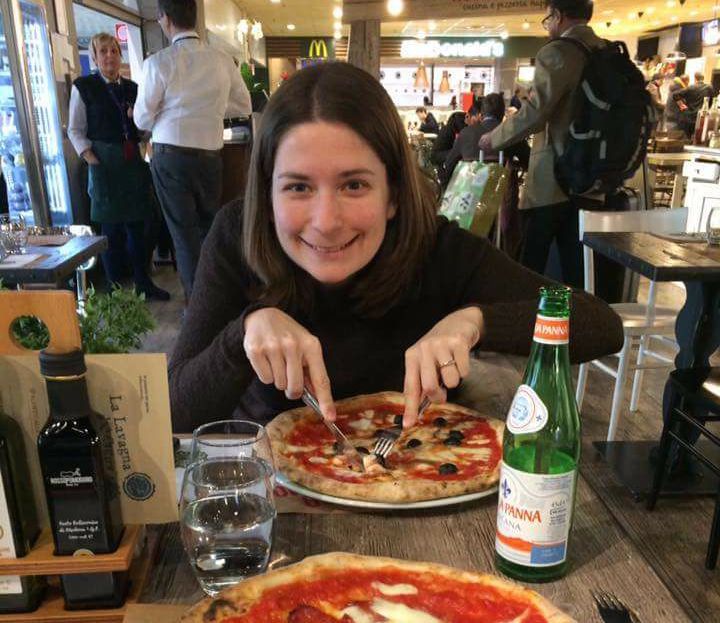

Heather Broster is a graduate with honours in linguistics from the University of Western Ontario. She is an aspiring polyglot, proficient in English and Italian, as well as Japanese, Welsh, and French to varying degrees of fluency. Originally from Toronto, Heather has resided in various countries, notably Italy for a period of six years. Her primary focus lies in the fields of language acquisition, education, and bilingual instruction.