Nobody wants to be called un pistola in certain parts of Italy. And no, it has nothing dangerous attached to it, even if the word does sound suspiciously like the English pistol. Which, as it turns out, is also one of its meanings. But only one. Let’s find out the rest!
pistola
pistol
1. PISTOLA = Pistol (firearm)
Pistola is primarily an arma da fuoco (firearm), compact and light enough to shoot with one hand.
It’s a feminine noun:
- la pistola: the gun
- le pistole: the guns
Some believe the name pistola derives from Pistoia, the Tuscan town where the pistol was supposedly invented back in the 1500s. Is that actually true? Probably not, but it gives you another good excuse to visit this charming town and investigate for yourself.
Speaking of the pistol itself, if you want to sound like you actually know what you’re talking about, here’s a quick breakdown of the main parts:
- il calcio: the grip, the part we hold
- il caricatore: the magazine, which holds i proiettili (the bullets)
- il grilletto: the trigger
- la canna: the barrel
- la sicura: the safety lock
- il calibro: the caliber
- la fondina: the holster
And when it comes to types, una pistola can be for instance:
- rivoltella: revolver classic rotating cylinder type
- automatica: fully automatic
- semiautomatica: semi-automatic
But also:
- una pistola scacciacani: a blank gun (literally, “a gun to chase away dogs”)
- una pistola d’ordinanza: a service pistol, the kind carried by police officers and military personnel
- una pistola giocattolo: a toy gun
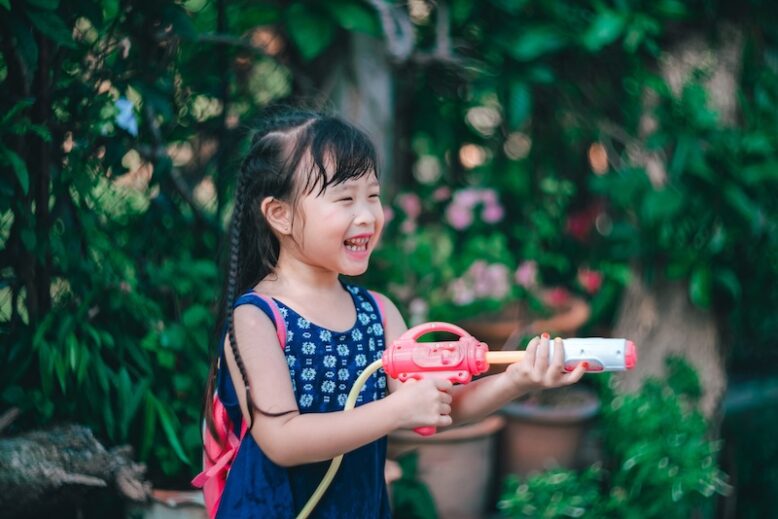
- una pistola ad acqua: a water gun
The verbs we use the most with pistola include:
- impugnare una pistola = to hold/grip a gun
- estrarre una pistola = to pull out a gun
- caricare / scaricare una pistola = to load / unload a gun
- puntare una pistola (contro qualcuno) = to aim / point a gun at someone
Now, when someone shoots, that’s un colpo di pistola, meaning a gunshot (literally “a blow of the pistol”)
And how do we call someone holding a gun? That would be un pistolero (a gunslinger). It’s a word that belongs to the world of westerns. I’ll spare you a movie recommendation, but I will leave you with a song instead: Pistolero by Elettra Lamborghini – yep, that Lamborghini family!
2. PISTOLA = Pistol (everyday tool)
The word pistola also covers any object or device that shares the gun’s shape or mechanism. Basically, if it fits in our hand and something shoots out of it when we pull a trigger, we will probably call it a pistola.
Here are some examples:
- la pistolalanciarazzi: the flare gun
- la pistolasparachiodi: the nail gun
- la pistola per silicone: the caulking gun
- la pistola della benzina: the fuel pistol at the petrol station
- la pistola per colla a caldo: the hot glue gun
- la pistola a spruzzo: the spray gun
3. PISTOLA = A bit of a fool
Now we get to the meaning I mentioned at the beginning of this article. Forget weapons, real or fake: in casual speech, especially in Northern Italy, calling someone pistola means they’re a bit of a fool.
It’s not really a harsh insult, more like being told you’re naive or a little clueless. It’s all a matter of tone: it can be affectionate or it can be a scolding, but in general, it’s not exactly a compliment either.
In other parts of Italy, you might hear variants like pirla, tonto/a, or allocco/a, just to name a few. Strictly speaking, none of these are parolacce (swear words), but they’re still not exactly nice things to be called. They all roughly translate to “fool” or “idiot.”
When used this way, pistola stays feminine in spelling no matter who you’re talking about, but the article changes depending on gender.
- una pistola for a woman
- un pistola for man
- delle pistola for women
- dei pistola for men
Quei due sono proprio dei pistola!
Those two are absolute fools!
Non hai portato una giacca? Sei proprio una pistola, tornerai a casa congelata!
You didn’t bring a jacket? You’re such an idiot, you’ll go home frozen!
Here are the main ways you’ll hear pistola used with this meaning:
- Essere un pistola: to be a fool
Ma tu gli credi? Sei una pistola, guarda che ti sta solo prendendo in giro.
Do you really believe him? You’re a fool, he’s just messing with you.
- Fare il / la pistola: to act like a fool, an idiot
Dai non fare il pistola, vieni alla festa con noi stasera!
Come on, don’t be an idiot, come to the party with us tonight!
- Che figura da pistola: what an embarrassing blunder
Che figura da pistola! Ho salutato uno per strada pensando fosse Andrea, e invece era un perfetto sconosciuto.
What an embarrassing blunder! I greeted someone on the street thinking it was Andrea, and instead, it was a complete stranger.
4. PISTOLINO = Willy
By adding the diminutive suffix -ino to la pistola, the word changes from feminine to masculine and becomes il pistolino.
In Italian children’s language, it’s simply a playful term parents use with little boys, very much like “willy” in English. Just as common, if not more so, is pisellino, which literally means “little pea.”
Quick tip: if you ever need to mention a small handgun around Italian adults, avoid using pistolino unless you want to cause some embarrassed giggles. To keep your conversation on track, just stick to the standard phrase una piccola pistola (a small pistol).

Valentina Nicastro is a travel writer in love with her home country, Italy. Having travelled widely around the globe, she realised there was more to explore closer to home and decided to put the passport aside for a while. When she is not immersed in documenting Italy, you’ll find her donning her communication consultant hat, weaving words as a content writer and bridging linguistic divides as a translator.