Il pane (bread) is one of those things that’s never missing from an Italian table. Even when there are already enough carbs on the plate and it’s clearly not needed for the meal. It doesn’t matter, it’s just there: in a basket, still inside the bakery bag, or scattered across the set table, quietly waiting its turn.
We eat it with butter and jam on lazy mornings, toasted with garlic and oil for a deliciously crunchy bruschetta, stuffed with prosciutto as a quick snack, a piece in hand to herd the salad leaves that won’t sit still on our fork or mop up the sauce in the famous scarpetta move. Really, with pretty much anything except pasta or rice (and even then, once the plate is empty, we’ll still reach for a piece). My dad would happily eat bread even with an orange or a slice of anguria (watermelon)!
There’s also a bit of superstition tied to bread here: you should never place it upside down on the table, as it’s said to portare sfortuna (bring bad luck). So, given such a central role in our lives, let’s get into the vocabulary of pane in Italian. It will come in handy a lot when you visit.
Grammatically, it’s a masculine, uncountable noun (il pane). We rarely use the plural form i pani, so if we want to say that we need only a couple of pieces of bread, we’d say something like Mi servono solo un paio di panini (I only need a couple of rolls).
The main types of bread
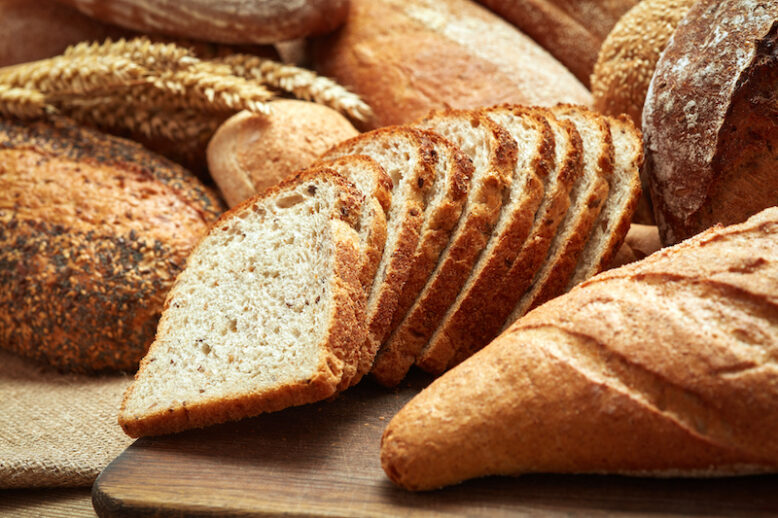
Pane is the general word for bread in Italy, but underneath this term hides dozens of shapes, often tied to a specific region (because heaven forbid bread be that simple).
Here are some of the most common types of bread you will find in Italy:
- Panino: literally “small bread,” this word can indicate both a plain roll or a sandwich.
- Panino al latte: literally “small bread with milk,” this is a small bread roll with a super fluffy texture and a slightly sweet taste. Panini al latte are the undisputed stars of every Italian kids’ party, usually lined up on a table and filled with different types of cured meats (though we adults hardly manage to walk past that table without “just trying one”).
- Pagnotta: a round, rustic loaf. Curiously, it’s also Italian slang for the money we earn to support ourselves. So, if you hear an Italian say porto a casa la pagnotta (I bring home the pagnotta), they don’t necessarily mean they stopped by the bakery on the way home.
- Ciabatta: an elongated, slightly flat bread with a crunchy crust and an airy, holey interior. The word literally means “slipper,” a nod to this bread’s resemblance to a flat, well-worn shoe.
- Baguette: yep, the French one. We liked it so much we didn’t even bother giving it an Italian name. You’ll find it in pretty much every supermarket.
- Sfilatino: thin and elongated, similar to a baguette, but with a crunchier crust and a denser interior.
- Filone: a long loaf, typically bigger than the sfilatino, with a thin crispy crust and a soft interior.
- Michetta: a hollow bread roll with barely any mollica (soft interior) inside, and a shape that looks like a little star or flower. La michetta is a staple of Milanese food culture, while in other parts of Italy, similar bread rolls go by rosetta (“little rose”) instead.
- Bocconcino: literally “little mouthful,” this is a small, round bread roll with lots of soft mollica inside.
- Tartaruga: literally “turtle,” this bread roll gets its name from the distinctive pattern on the top that looks like a little turtle shell.
- Mafalda: a Sicilian bread with a beautiful braided shape and a delicious layer of sesame seeds on top.
- Pan focaccia: this is what we buy when we simply can’t decide between regular bread and focaccia. Someone, very sensibly, came up with this fusion of the two, resulting in something fragrant like bread and soft like focaccia. So good!
- Pancarré: this is what you’d call “sandwich bread” in English. The very French-sounding name actually comes straight from pain carré (“square bread” in French), a nod to the shape of each slice. It’s also known as pane in cassetta, since it’s baked in a mold shaped like a cassetta (little crate) before being sliced up.
- Pane pugliese: a large, rustic, round loaf made with durum wheat semolina, giving it that distinctive pale-yellow interior. It’s typically eaten sliced, and it’s especially long-lasting.
- Pane di Altamura: a specific type of pane pugliese, made exclusively from wheat grown in the Altamura area. It also holds a pretty impressive title: it’s the first bread in Europe to be awarded DOP (Protected Designation of Origin) status. Altamura itself is a gorgeous town in Puglia, and if you ever find yourself there, make sure to visit Antico Forno Santa Chiara, a historic bakery in operation since the 14th century.
- Pane carasau: originally from Sardinia (though you’ll find it in supermarkets pretty much everywhere in Italy), it consists of ultra-thin, super crunchy, circular sheets of bread. Its name comes from the Sardinian word carasadura, referring to the second baking process that gives the bread that unique crunch.
- Coppia ferrarese: a bread made of two strips of dough twisted together like a spiral, then joined at the center to form two pairs of “horns.” The part in the middle stays soft, while the horns are dry and crunchy. Surely one of the most fun-shaped breads to look at!
Beyond shapes, bread also varies by what’s actually in it. There’s pane bianco, the classic white bread, and pane integrale, whole wheat bread, perfect for convincing ourselves that eating half the loaf is a healthy choice. Pane all’olio has olive oil in the dough, resulting in a very soft interior, while pane di segale offers a darker, denser rye flavour. If you’re after some texture, pane ai cereali comes packed with a mix of seeds and grains, and if you’re skipping wheat entirely, look for pane senza glutine (gluten-free bread).
How to describe bread in Italian
Now let’s see how to discuss the bread’s state and texture using some key adjectives:
- Pane fresco: fresh bread. If it’s still caldo (warm), even better!
- Pane raffermo (also called pane posso): stale bread. It might be hard and dry, but it makes for a great ingredient in many dishes. The most famous example is polpette (meatballs), but my mum also uses it for torta di pane e latte, a rustic bread and milk cake that is hands-down one of my favourite treats.
- Pane croccante: crunchy bread, the kind that makes that satisfying crack when we break it, leaving crumbs everywhere on the table.
- Pane morbido: soft bread — essentially, the opposite of the above.
- Pane sciocco: literally “silly bread,” this is the unsalted bread typical of Tuscany and other parts of central Italy. It is said to date back to a salt tax imposed centuries ago, to which locals responded by eliminating salt from bread. If salt was going to cost extra, their bread simply wouldn’t need it!
- Pane condito: ok, this one is pretty niche, but it’s too good not to mention it. Literally a “seasoned bread” (or pane cunzato in the local dialect), this Sicilian bread is stuffed with simple ingredients like tomatoes, oregano, anchovies, and cheese, but the result is incredibly flavourful.
Some bread-related actions & verbs
Bread doesn’t just sit there waiting to be eaten — it gets sliced, dunked, crumbled, and occasionally put to work chasing down every last drop of sauce on the plate. Here are some key verbs we use to describe everything we do with it:
- Affettare il pane / Tagliare il pane a fette: to slice the bread.
- Spezzare il pane: to break the bread.
- Passare il pane: to pass the bread.
- Abbrustolire il pane: to toast the bread.
- Ammorbidire il pane: to soften the bread (what we do to yesterday’s pane raffermo before it’s ready to become something else, like a batch of polpette).
- Sbriciolare il pane: to crumble the bread.
- Inzuppare il pane: to dip or dunk the bread (dunking bread into hot milk for breakfast is another great use for pane raffermo, especially if you add a spoonful of cocoa!)
- Fare la scarpetta: literally “to make the little shoe,” this is the famous practice of using a piece of bread to mop up a particularly delicious sauce left on our plate (a very informal gesture, so save it for family meals).
Some Italian words deriving from pane
Given how central bread is to Italian life, it’s no surprise there are many words built around pane.
For example, let’s start with the people who bake it: il panettiere (male baker) or la panettiera (female baker). They work at the panetteria (bakery) and wake up at dawn to panificare (make bread) while the rest of us are still asleep.
If we want a quick sandwich, we’ll head to a paninoteca (sandwich place). Instead, if we’re cooking at home and making a cotoletta (breaded cutlet), we’ll use pangrattato (breadcrumbs) for the panatura (the coating).
We might even hear bread-related words on the news. Like il paniere (literally “the basket”) is the word economists use to mean the mix of goods and services tracked to measure consumer price trends and inflation. And i paninari (literally “sandwich sellers”) refer to a famous 1980s youth subculture in Milan, known for wearing designer clothes and hanging out at fast-food joints.
Common expressions and idioms with pane in Italian
It’s equally no surprise that pane is used in a number of Italian sayings and proverbs, all very useful to know since we use them a lot in everyday conversation.
- Essere buono come il pane / Essere un pezzo di pane: “to be as good as bread” / “to be a piece of bread.” It’s what we say about someone who’s genuinely good, kind, and trustworthy.
Il prof di matematica sembra severo, ma in realtà è un pezzo di pane.
The math teacher seems strict, but he’s actually a real sweetheart.
- Andare via come il pane: “to go away like bread,” meaning something sells out incredibly fast because it’s in high demand, just like, well, bread.
Conviene prenotare i biglietti con un po’ di anticipo, perché vanno sempre via come il pane.
It’s best to book the tickets early, because they always sell like hot cakes.
- Chi ha i denti non ha il pane e chi ha il pane non ha i denti: “those who have teeth don’t have bread, and those who have bread don’t have teeth.” A slightly bittersweet proverb pointing out life’s irony: sometimes we have the ability to do things but not always the means, and sometimes we have the means but not the ability to use them.
Mio cugino è ricco e potrebbe viaggiare tutto l’anno, eppure preferisce stare sempre a casa a guardare la TV. Io invece vorrei girare il mondo ma non ho un euro. È proprio vero che chi ha i denti non ha il pane e chi ha il pane non ha i denti!
My cousin is rich and could travel all year round, yet he prefers to stay home watching TV. Meanwhile, I’d love to travel the world but don’t have a single euro. It really is true: those who have teeth don’t have bread, and those who have bread don’t have teeth!
- Rendere pan per focaccia: “to give bread back for focaccia,” meaning to give someone tit for tat, usually to get even after being wronged. Some trace the expression back to medieval times, when travelers carried hard, dry bread that needed soaking before it could be eaten, while focaccia was seen as the better, more valued option.
Dopo che mi ha rubato l’idea durante la riunione, oggi gli ho reso pan per focaccia e mi sono preso io il merito del progetto.
After he stole my idea during yesterday’s meeting, today I gave him tit for tat and took credit for the project myself.
- Mangiare pane e volpe: “to eat bread and fox.” The fox is notoriously cunning, which is what makes this saying so wonderfully sarcastic: we use it to describe someone who is naive and not particularly sharp.
Hai lasciato le chiavi dentro la macchina? Stamattina hai proprio mangiato pane e volpe, eh!
You left the keys in the car? Someone wasn’t exactly at their sharpest this morning, huh?
- Mettere a pane e acqua: “to put someone on bread and water,” used to talk about punishment or being really short on money. It comes from the old practice of feeding prisoners the bare minimum to survive.
Dopo questo weekend, il mio conto in banca è praticamente azzerato. Mi toccherà mettermi a pane e acqua fino al prossimo stipendio.
After this weekend, my bank account is basically empty. I’ll be living on bread and water until payday.
- Pane al pane e vino al vino: “bread to bread and wine to wine,” used as an invitation to speak plainly and honestly, similar to the English saying “call a spade a spade.”
Pane al pane e vino al vino, non giriamoci intorno.
Let’s call a spade a spade, stop beating around the bush.
- Se non è zuppa, è pan bagnato: “if it’s not soup, it’s soaked bread,” referring to something that might look different on the surface, but deep down it’s basically the same as something else. The word zuppa (soup) comes from the Gothic word suppa, which originally just meant a slice of bread soaked in liquid, so the phrase is basically saying: call it soup, call it soaked bread, it’s still the same wet bread situation either way.
Hanno abbassato il prezzo, ma hanno anche ridotto la quantità nella confezione. Alla fine, prima pagavamo di più per una quantità maggiore, adesso paghiamo meno ma riceviamo meno: se non è zuppa è pan bagnato.
They cut the price, but they also made the package smaller. So basically, we used to pay more and get more, now we pay less and get less: same difference.
- Guadagnarsi il pane: “to earn one’s bread,” meaning to work in order to support oneself.
Mio nonno si guadagnava il pane lavorando in fabbrica.
My grandfather earned his living working in a factory.
- Trovare pane per i propri denti: “to find bread for one’s own teeth,” meaning to come up against someone (or something) that’s just as capable as we are, if not more. For instance, it’s what happens when someone who’s used to winning easily suddenly runs into real competition.
Giovanna è una campionessa a scacchi, ma contro Andrea ha trovato pane per i suoi denti.
Giovanna is a chess champion, but against Andrea she met her match.
- Essere il pane di qualcuno: “to be someone’s bread,” used to describe something that’s extremely familiar to us, the thing we know inside out.
Se ti servono consigli per le vacanze chiedi pure: organizzare viaggi è il mio pane!
If you need holiday advice, just ask me: organising trips is my specialty!
- Togliersi il pane di bocca: “to take the bread out of one’s own mouth,” meaning to make big sacrifices to help someone. The image here is very literal: taking bread right out of our own mouth, so that someone else can have it instead.
Lucia e Salvatore si sono tolti il pane di bocca per far studiare i figli all’università.
Lucia and Salvatore made huge sacrifices so their children could go to university.

Valentina Nicastro is a travel writer in love with her home country, Italy. Having travelled widely around the globe, she realised there was more to explore closer to home and decided to put the passport aside for a while. When she is not immersed in documenting Italy, you’ll find her donning her communication consultant hat, weaving words as a content writer and bridging linguistic divides as a translator.