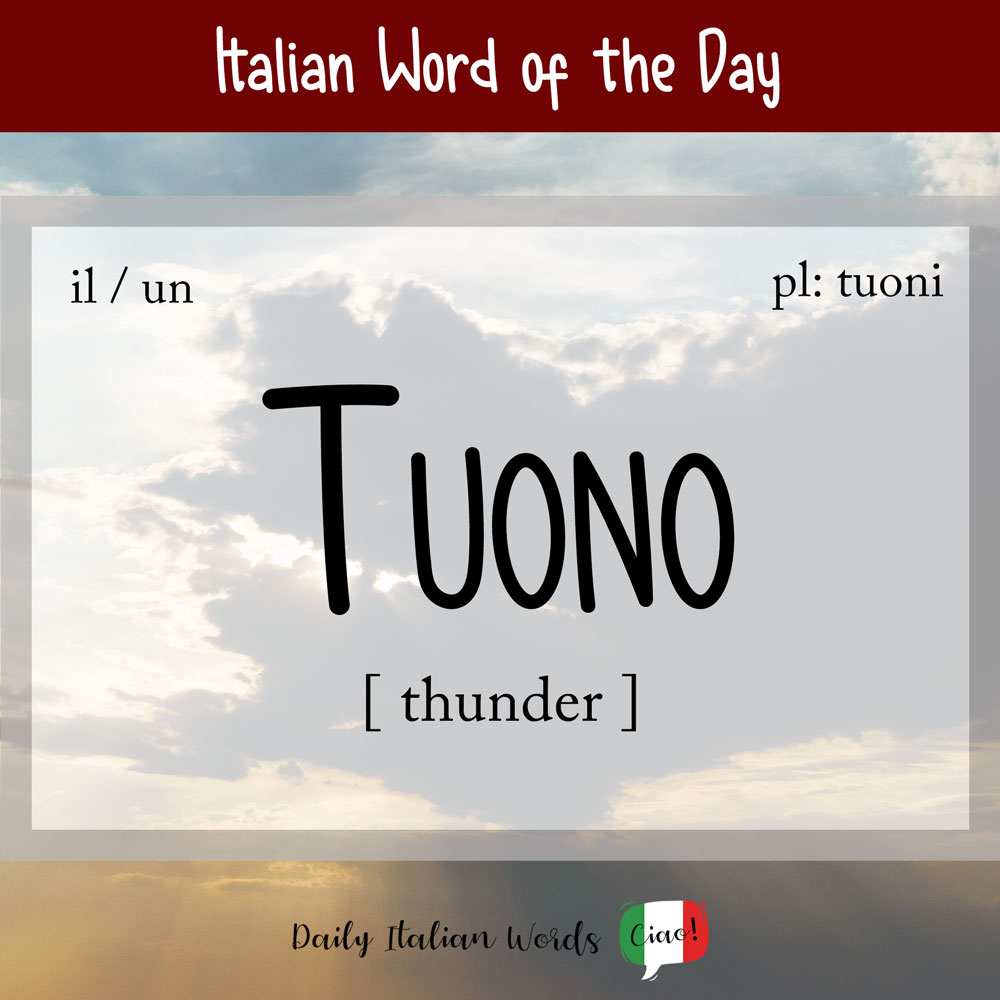
Italian Word of the Day: Fulmine (lightning)

Lightning, known as fulmine (masculine, plural: fulmini) in Italian, is a key element of a thunderstorm, along with thunder (tuono) and heavy rain (pioggia). Another word that translates as lightning is lampo. Whereas fulmine refers to the occurrence of a natural electrical discharge between a cloud and the ground or within a cloud (or in …

Read more

Italian Word of the Day: Spazzola (brush)

The word for brush in Italian is spazzola (feminine, plural: spazzole). It comes from the verb spazzare meaning to sweep or to mop. The diminutive spazzolina literally means little brush whereas the masculine equivalent spazzolino is what Italians call a toothbrush. The augmentative spazzolone on the other hand specifically denotes a scrubbing brush / broom. …

Read more

Italian Word of the Day: Colmo (brimming / peak)

A barrel brimming with beer. A plate overflowing with pasta. A heart bursting with joy. Anything that is full to the brim, be it physical or metaphorical, can be described using a simple adjective in Italian: colmo. Because it is an adjective, the ending changes depending on the gender and number of the person or …

Read more

Italian Phrase of the Week: La vita è bella! (Life is beautiful!)

The phrase « Life is beautiful » translates as « La vita è bella » in Italian. It is made up of the following components: La (feminine form of definite article ‘the‘) + vita (life) + è (third person of essere ‘to be‘) + bella (feminine form of bello ‘beautiful‘). It’s important to note that …

Read more

Italian Word of the Day: Migliore amico (best friend)

They say that sometimes, being with your best friend is all the therapy you need when the world gets you down, and I couldn’t agree more! The word for best friend in Italian is migliore amico in reference to a male or migliore amica for a female. The plural forms are migliori amici and migliori …

Read more

Italian Word of the Day: Osso (bone)

The Italian word for bone is osso (masculine). It derives from the Latin os. Like many parts of the body, this word has two plural forms: ossa (feminine) and ossi (masculine). The masculine plural, formed from the singular osso, refers to individual bones considered separately, or to the bones of an animal. The feminine plural …

Read more