Italian Word of the Day: Mamma (mom / mum)
The name almost all children call their mother (madre) in Italian, no matter their age, is mamma, which translates as mom / mommy in American English or mum / mummy in British English. Three possible variations are the affectionate diminutives mammi, mami and mammina. When using a possessive adjective like mia (my), you have the …
Read more

Italian Word of the Day: Fede (faith)

Faith, or fede in Italian, can be defined as either the strong belief in something based on spiritual conviction rather than hard proof, or the complete trust in someone or something. The word can be traced back to the Latin fidem, which ultimately comes from the Proto-Indo-European *bʰeydʰ-. Fede is a feminine noun that takes …

Read more

10 Italian Quotes & Sayings about Mothers for Mother’s Day

The second Sunday of May is Mother’s Day in Italy, known as La Festa della Mamma in Italian. In addition to being a celebration honouring the mothers (mamme) in our lives, it is also a time to commemorate motherhood, maternal bonds, and the significant influence of mothers in our society. In recognition of this special …

Read more

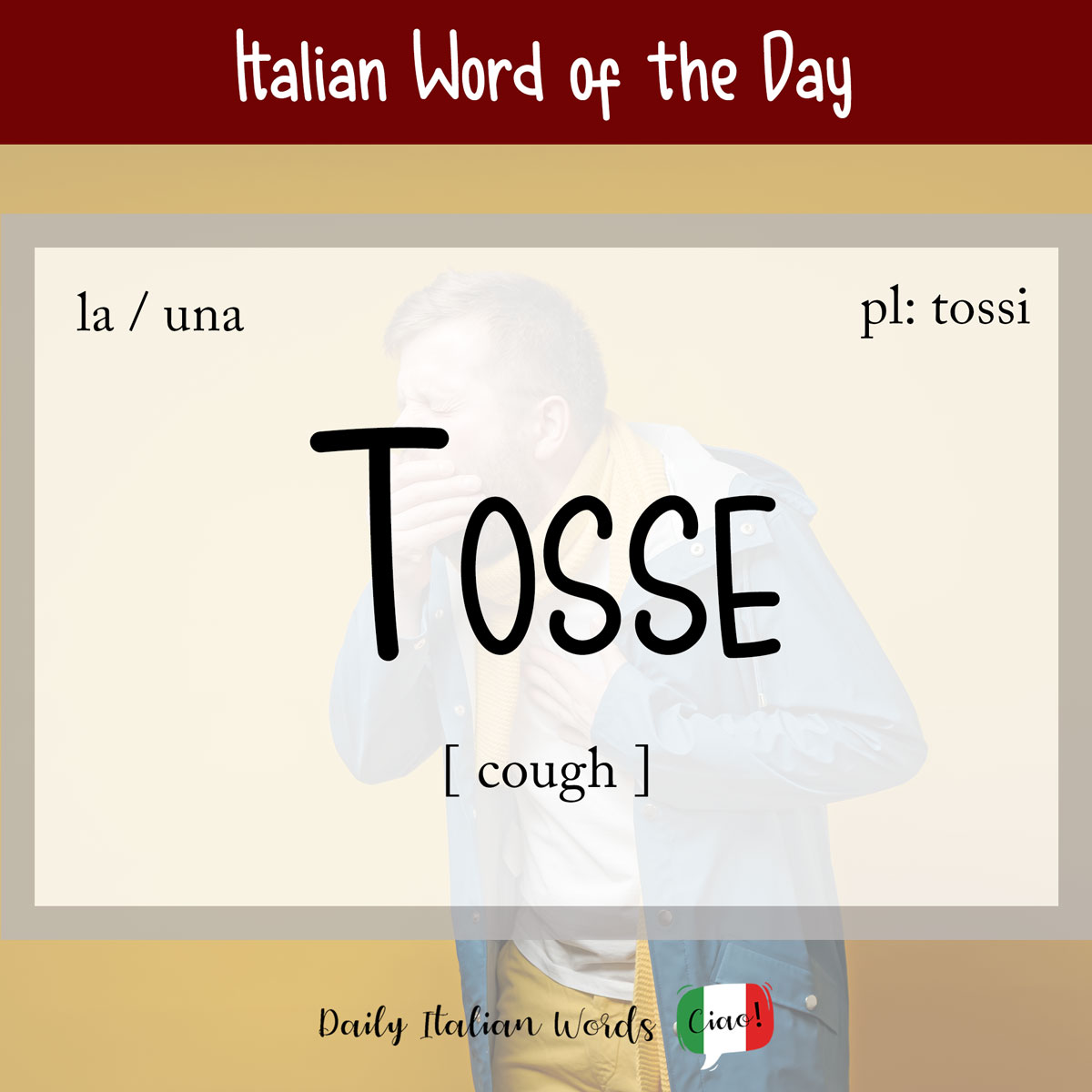
Italian Word of the Day: Tosse (cough)

A useful word to know in Italian if you’re feeling a bit under the weather is tosse which means cough. It comes from the Latin tussim from which the verb tossire (to cough) also derives. Tosse is a feminine noun that takes the following definite and indefinite articles: Ho una brutta tosse e il mal di …

Read more

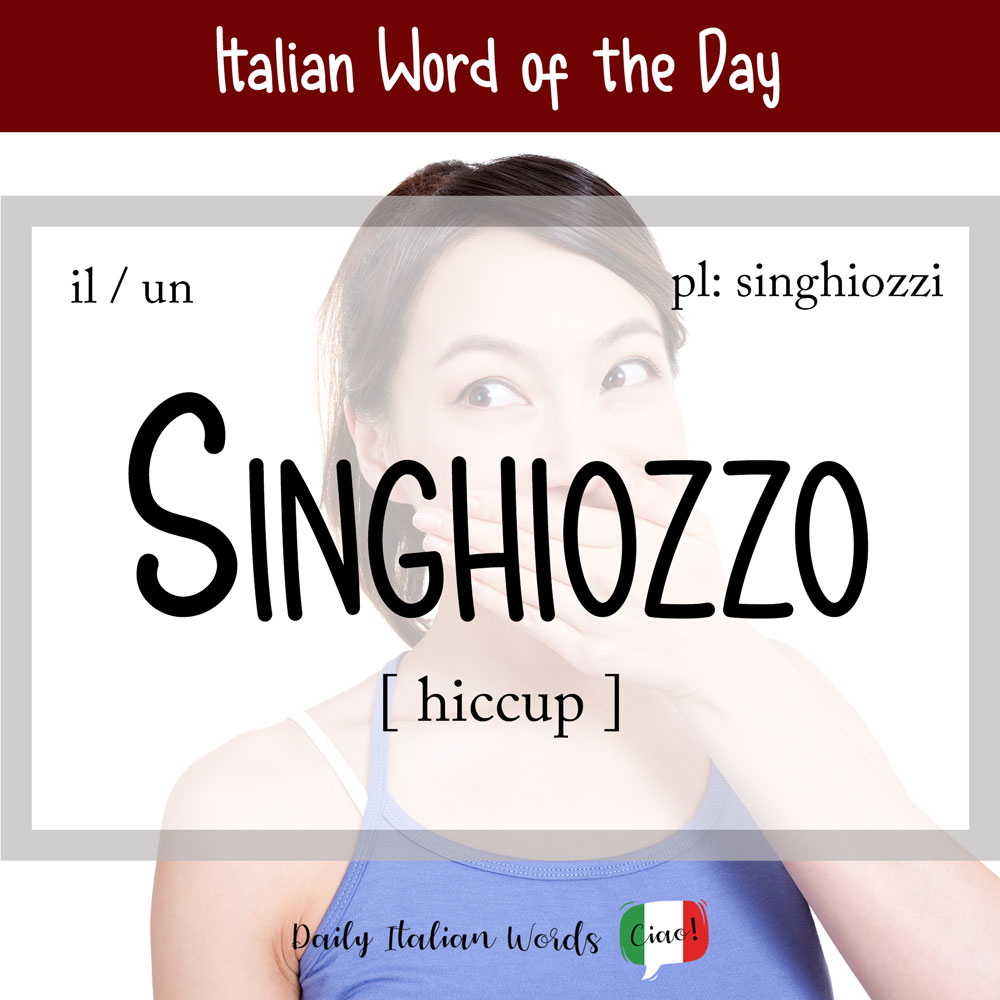
Italian Word of the Day: Singhiozzo (hiccup)

Today’s word of the day is something extremely annoying and sometimes quite hard to get rid of: the hiccups (also spelled hiccoughs) which in Italian translates as singhiozzo (masculine, plural: singhiozzi). It comes from the verb singhiozzare meaning to hiccup (when referring to a human being) or to go by fits and starts (when talking …

Read more

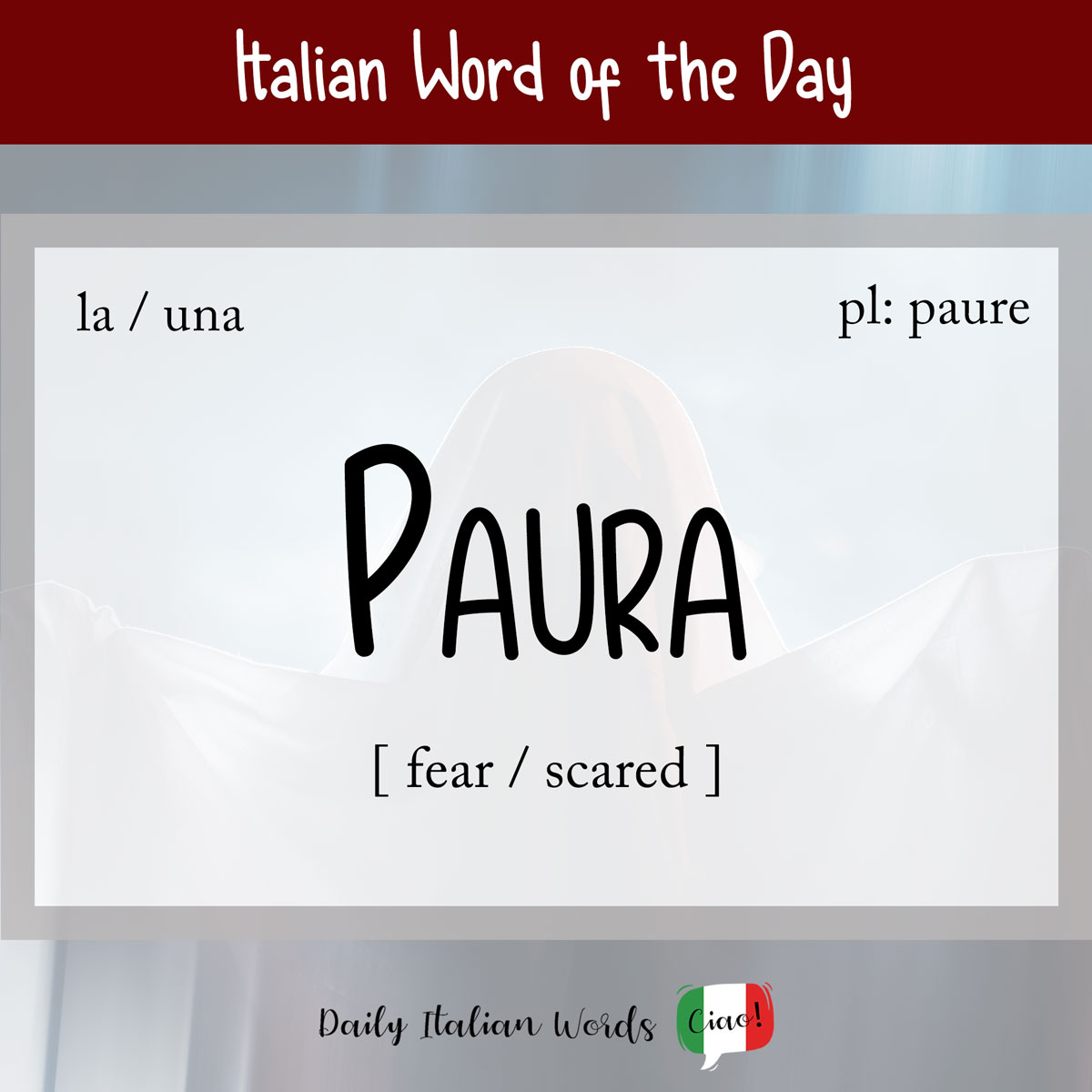
Italian Word of the Day: Paura (fear)

The word for fear in Italian is paura and it derives from the Latin pavor meaning fear or fright. paura fear / fright / scared Being a feminine noun, it takes the following definite and indefinite articles: It can be combined with the verbs avere (to have), fare (to do/make) and prendere (to take/get) to …

Read more