Italian Word of the Day: Schiera (ranks / group)
Today we’re going to be looking at the Italian word schiera, which can be traced all the way back to the Franconian skara. It entered the language via the ancient French eschiere and the Provençal esquiera. schiera Schiera is a feminine noun whose plural form is schiere. It takes the following definite and indefinite articles: …
Read more

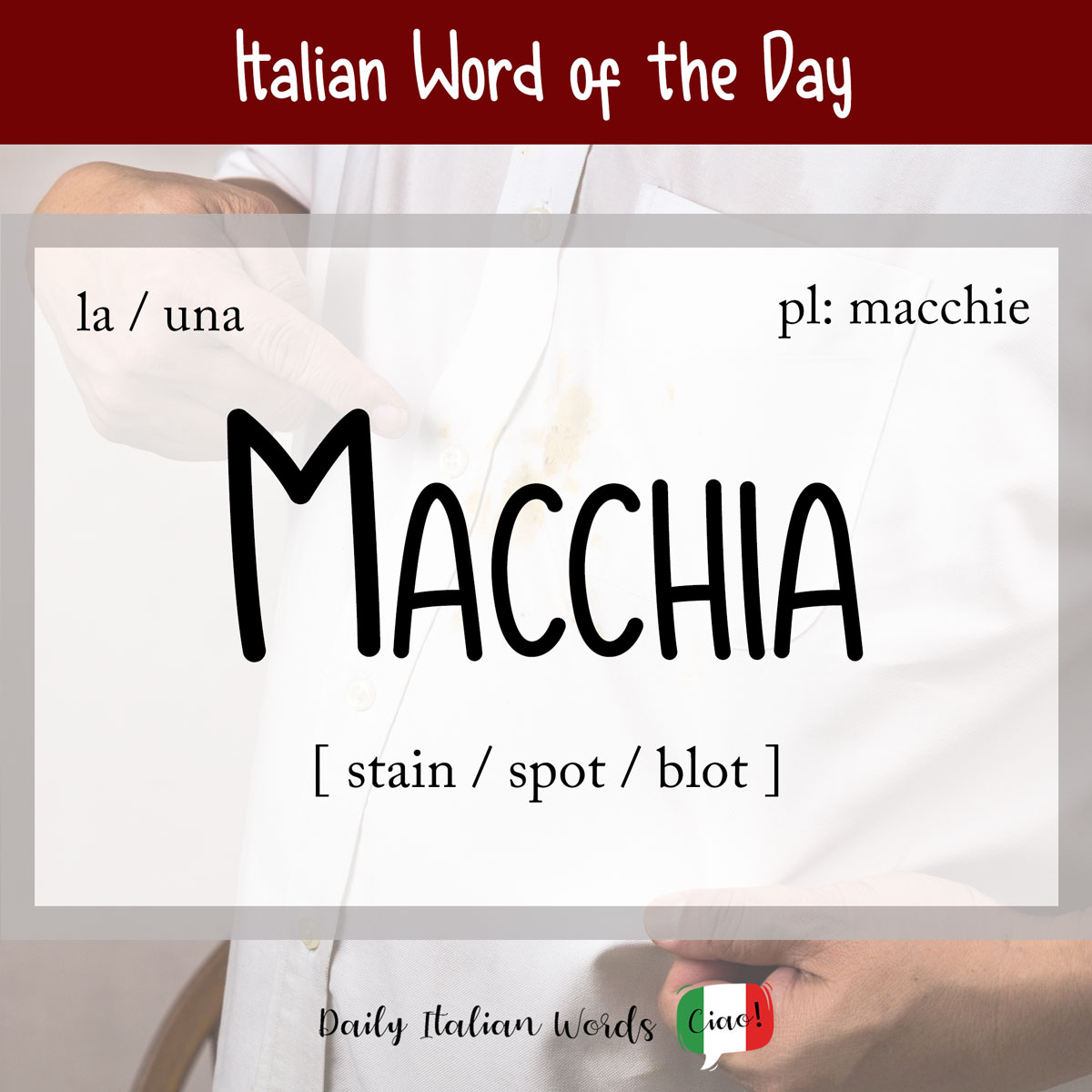
Italian Word of the Day: Macchia (stain / spot / blot)

The Italian word macchia is used to describe any stain, spot, or blot caused by ink, paint, dirt, or liquid, whether created intentionally or not. It directly derives from the Latin macŭla. macchia Because it is a feminine noun, it takes the following definite and indefinite articles: Perché questa macchia non va via? Why won’t …

Read more

Italian Idiom: Toccata e fuga (very brief / short)

Last weekend, we had some Italian friends over who, due to various reasons, could only stay from Friday to Monday, with two of those days dedicated to travel. In total, they had just two full days to spend with us and explore our little corner of Wales. In Italian, there’s a common idiomatic expression to …

Read more

Italian Word of the Day: Pozzanghera (puddle)

The Italian word pozzanghera describes a muddy or dirty puddle or pool of water on the ground. pozzanghera /poz·zàn·ghe·ra/ -[potˈtsangera] It is a feminine noun, so it takes the following definite and indefinite articles: It is derived from the noun pozza (puddle / pool), with a double diminutive suffix, and can be traced back to …

Read more

Italian Word of the Day: Tonfo (thud / clunk / plop)

When something large and heavy falls on the ground or into the water, it’s likely to produce a thudding sound, a phenomenon that in Italian can be described using the noun tonfo. tonfo It is derived from the Lombardic *tumpf meaning the sound of a fall, and has an onomatopoeic origin. Tonfo is a masculine …

Read more

Italian Idiom: Tanto di cappello! (Hats off!)

Italian idiom "Tanto di cappello"

The origin of the phrase tanto di cappello, which equates to the English idiomatic expression hats off, can be traced back to the old custom of removing one’s hat as a sign of respect or courtesy. tanto di cappello hats off Cappello means hat, and tanto, in this case, is being used emphatically to mean …

Read more