Italian Word of the Day: Allegria (cheerfulness)
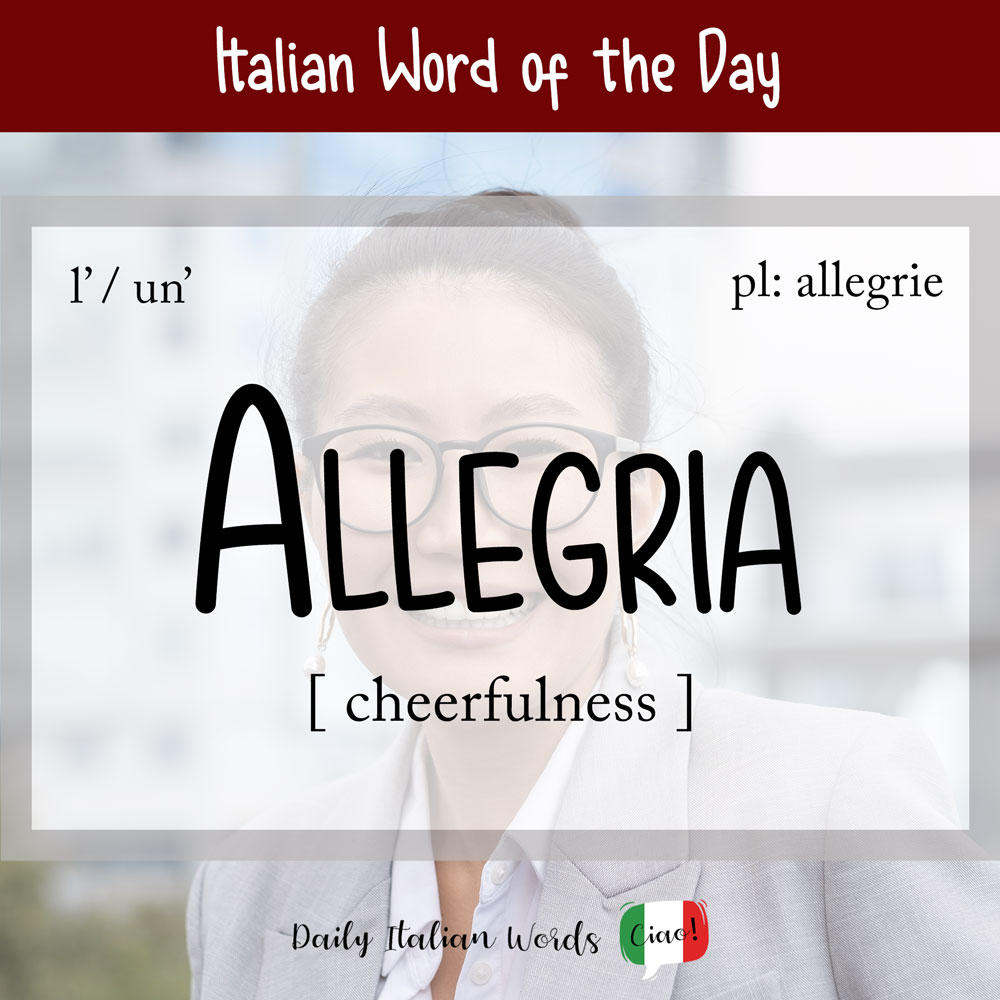
Today’s word of the day is bound to raise your spirits if you’re feeling glum! Allegria (feminine, plural: allegrie) is how you would say cheerfulness, joy or merriment in Italian. If you have trouble remembering this word, it might help to associate it with the musical term allegro, the name given to a lively musical …

Read more

Italian Word of the Day: Entusiasta (enthusiastic)

An interesting adjective in Italian is entusiasta which, given its resemblance to the English, you might have guessed means enthusiastic. Unlike many other Italian adjectives, which have a masculine form ending in -o and a feminine form ending in -a, the final letter of entusiasta does not change according to the gender. So, for example, …

Read more

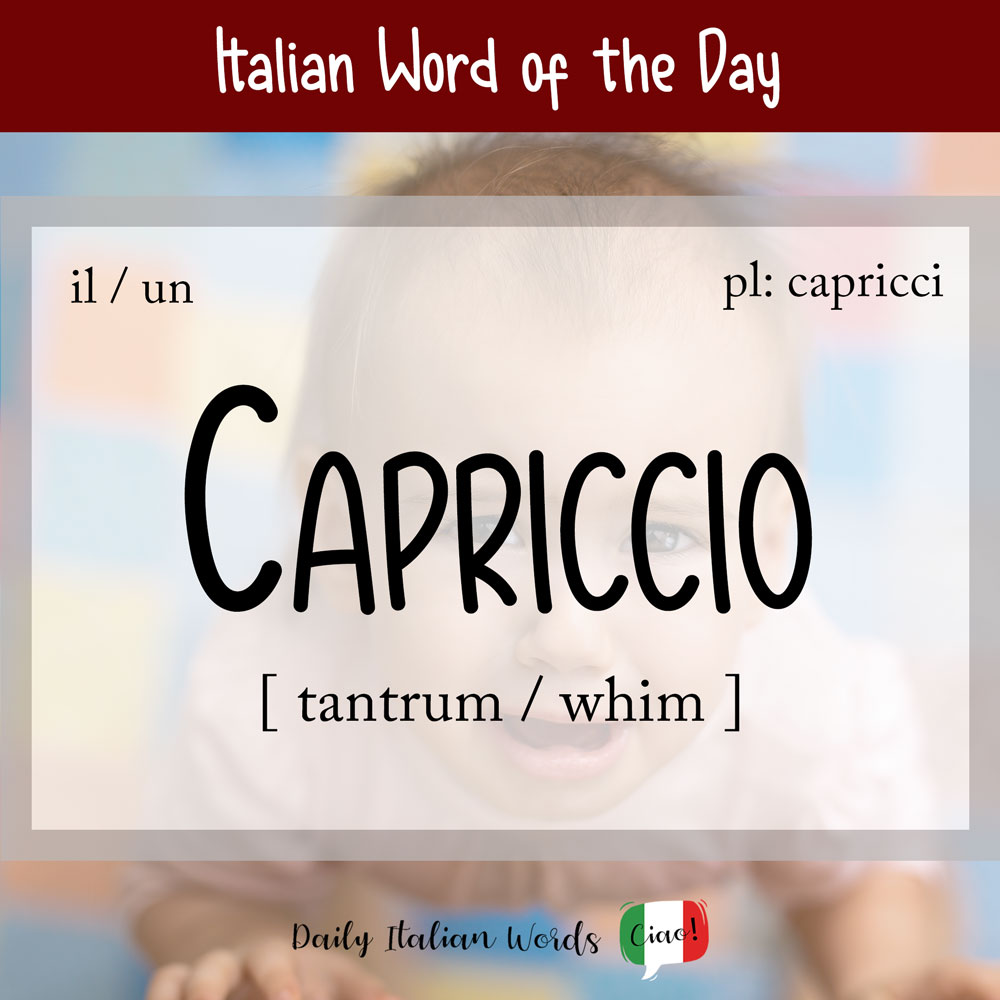
Italian Word of the Day: Capriccio (tantrum / whim)

The words tantrum and whim both translate as capriccio in Italian. Derived from the antiquated form caporiccio, meaning fright or sudden start, it shares the same origin as the English word caprice. Capriccio is a masculine noun that takes the following definite and indefinite articles: In the former sense of the word, it is often …

Read more

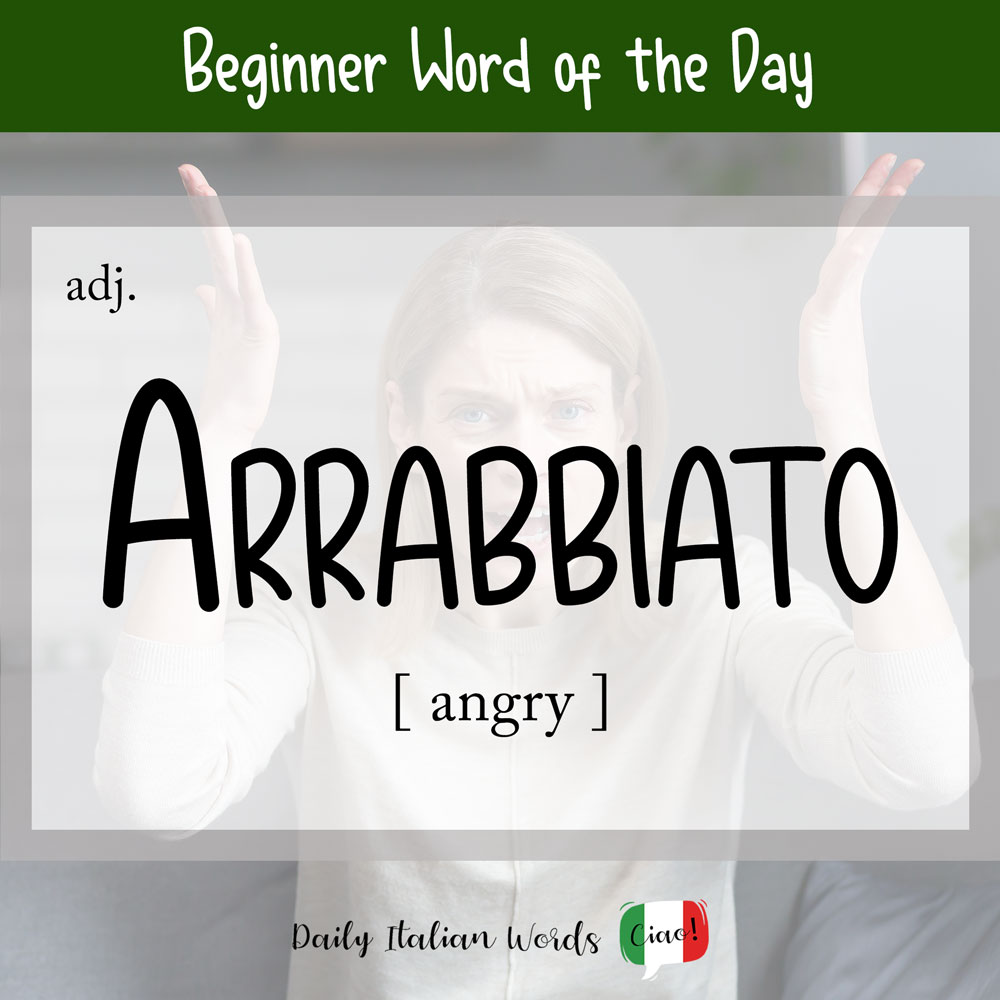
Italian Word of the Day: Arrabbiato (angry)

The word for angry in Italian is arrabbiato. It is also the past participle of the verbs arrabbiarsi (to get angry) and far(e) arrabbiare (to anger). Because it is an adjective, the ending of arrabbiato changes depending on whether you are talking about a solitary male (arrabbiato), a solitary female (arrabbiata), a group of males …

Read more

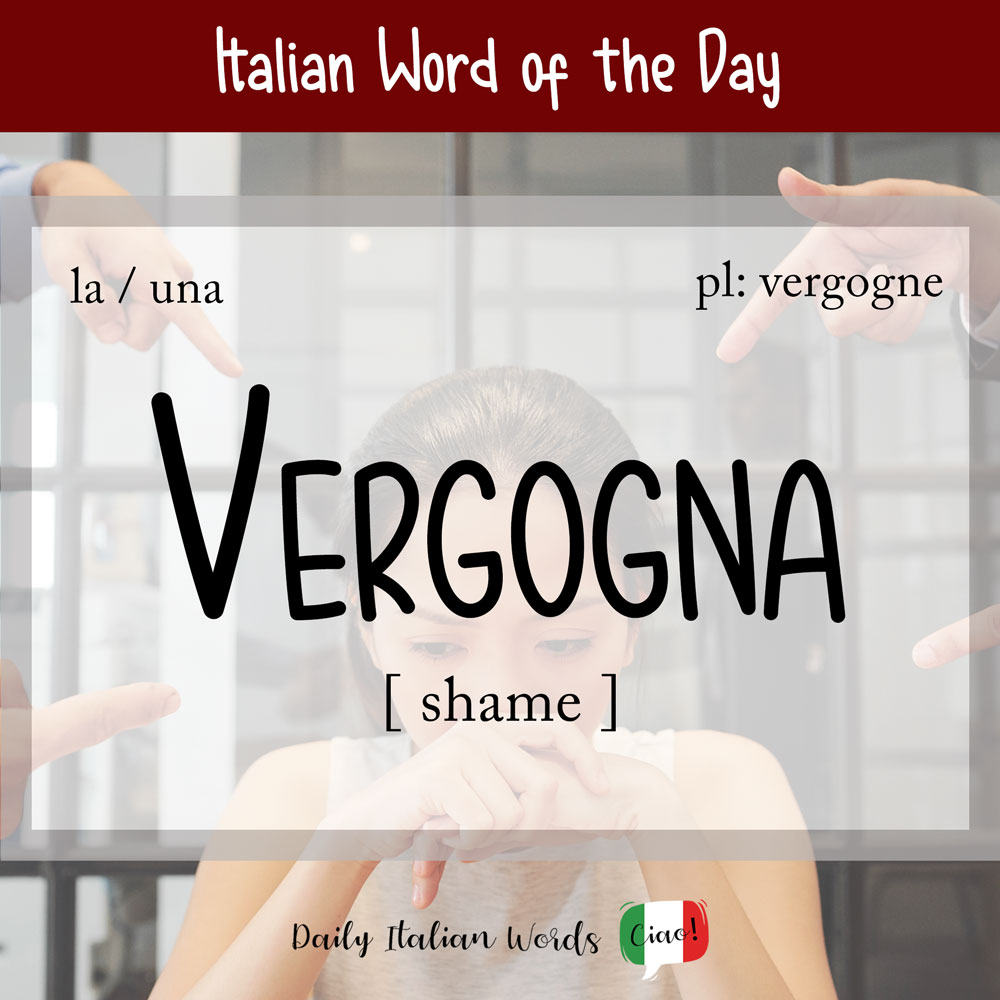
Italian Word of the Day: Vergogna (shame / disgrace)

Vergogna (feminine, plural: vergogne) is a very useful Italian noun that translates as shame, disgrace or embarrassment in English depending on the context. Below are a few common verbs you’ll see is the company of vergogna: Non provi neanche un po’ di vergogna per quello che hai fatto? Don’t you feel even a little bit …

Read more

Italian Word of the Day: Triste (sad)

The word for sad in Italian, which comes from the Latin tristis, is triste. Like all other adjectives that end in e, the ending of triste stays the same regardless of whether the subject is masculine or feminine. In its plural form, it becomes tristi. È una situazione molto triste per tutte le persone coinvolte. …

Read more