Italian Word of the Day: Pietra (rock, stone)
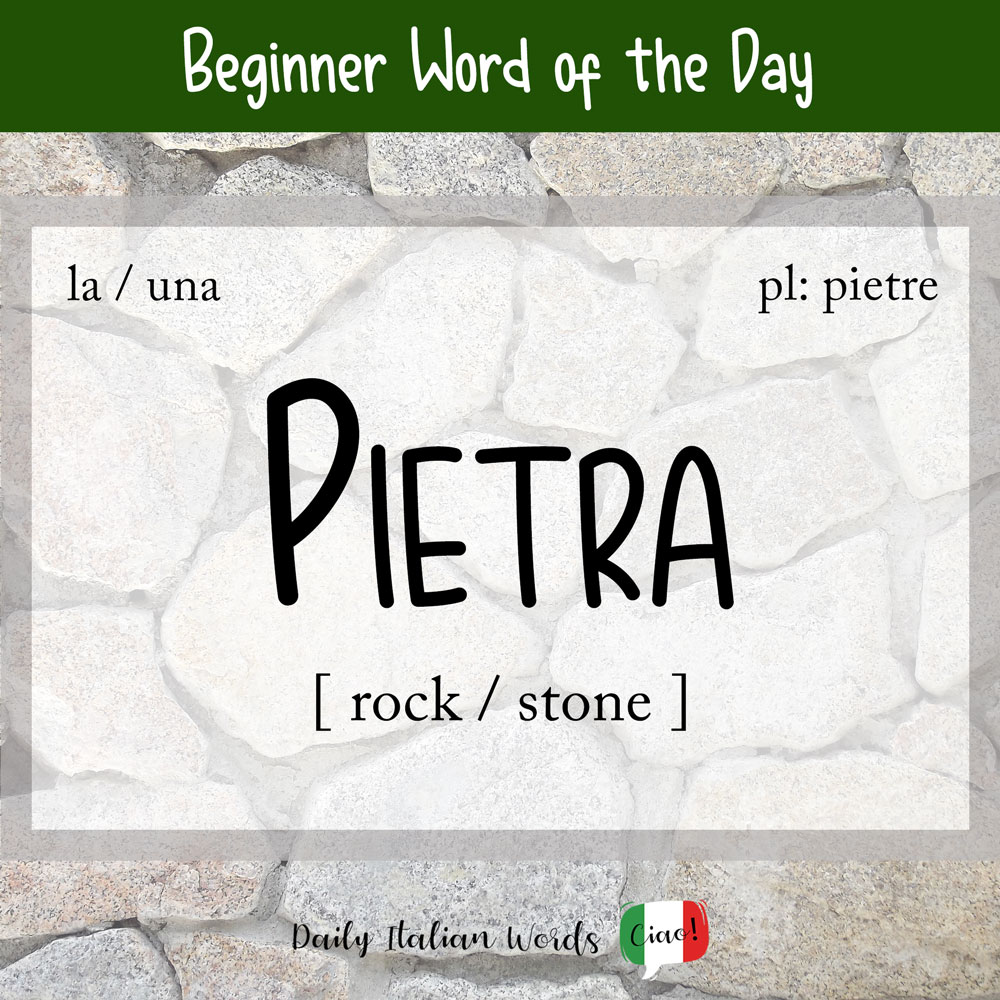
The Italian word pietra (feminine, plural: pietre) can be translated as either rock or stone in English. It comes from the Greek word πέτρα (pétrē). As you can see from the two examples below, pietra is used to talk about both the compact mass formed by natural mineral substances, as well as the smaller fragments …
Read more

Italian Word of the Day: Fiume (river)

If you are already familiar with the English word fluvial, you will have no trouble whatsoever remembering the Italian word for river which is fiume (masculine, plural: fiumi). The longest river in Italy, il Fiume Po, runs through the city of Turin where my husband was born. It flows 405 miles from its source near the …

Read more

Italian Word of the Day: Luna (moon)

The name given to the celestial body that orbits around our earth is luna (feminine, plural: lune) in Italian. La luna impiega un mese per orbitare intorno alla terra. The moon takes a month to orbit around the earth. Just as in English, it is also the word used to denote the natural satellite of any planet, …

Read more

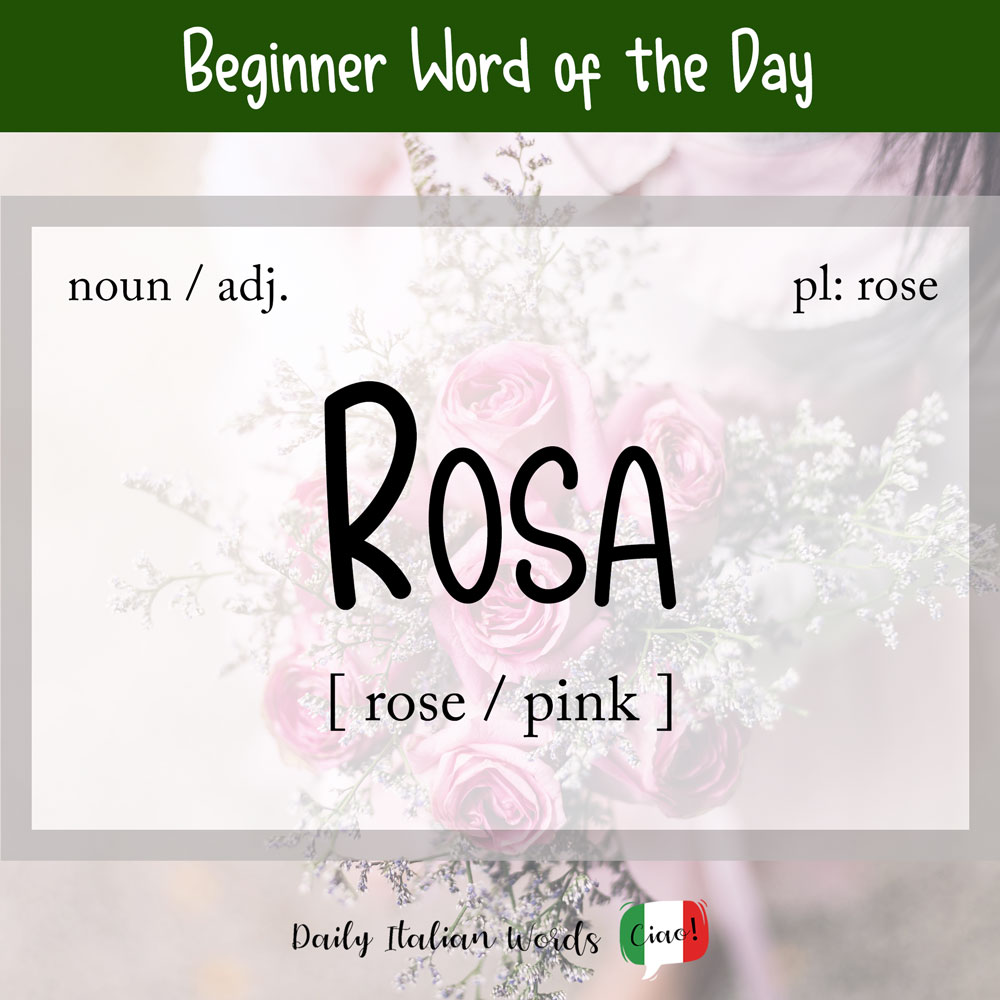
Italian Word of the Day: Rosa (rose / pink)

The prickly shrub that bears red, pink, yellow or white flowers is called a rosa (feminine, plural: rose) in Italian. It is also the name given to the colour pink, presumably because many roses come in a pink shade. Questa rosa mi sembra più rosa che rossa. This rose looks more pink than red to …

Read more

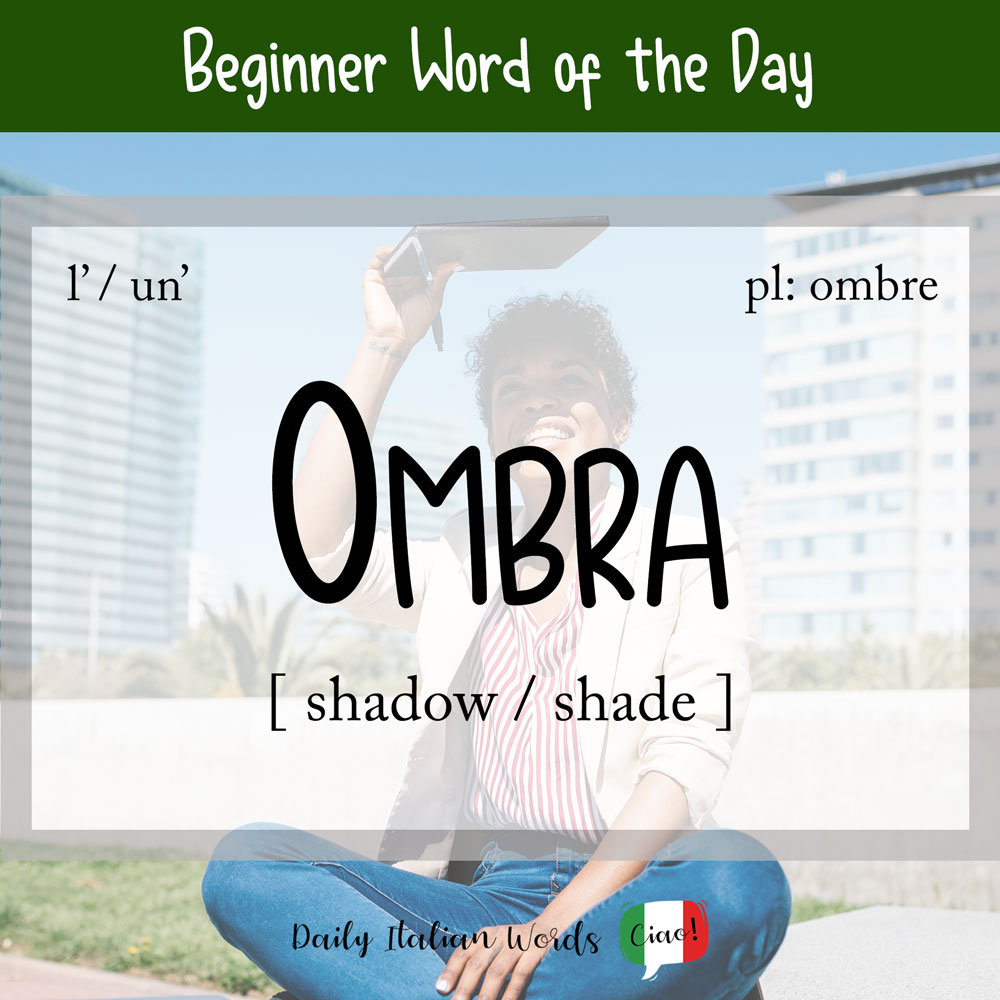
Italian Word of the Day: Ombra (shadow / shade)

Ombra (feminine, plural: ombre) is the word for both shadow (the dark shape cast behind an illuminated body) and shade (the darkness created by direct shelter from sunlight). In Italian, there is no real distinction between these two concepts. L’albero proiettava un’ombra sul marciapiede. The tree cast a shadow on the footpath. Mi sono seduto all’ombra …

Read more

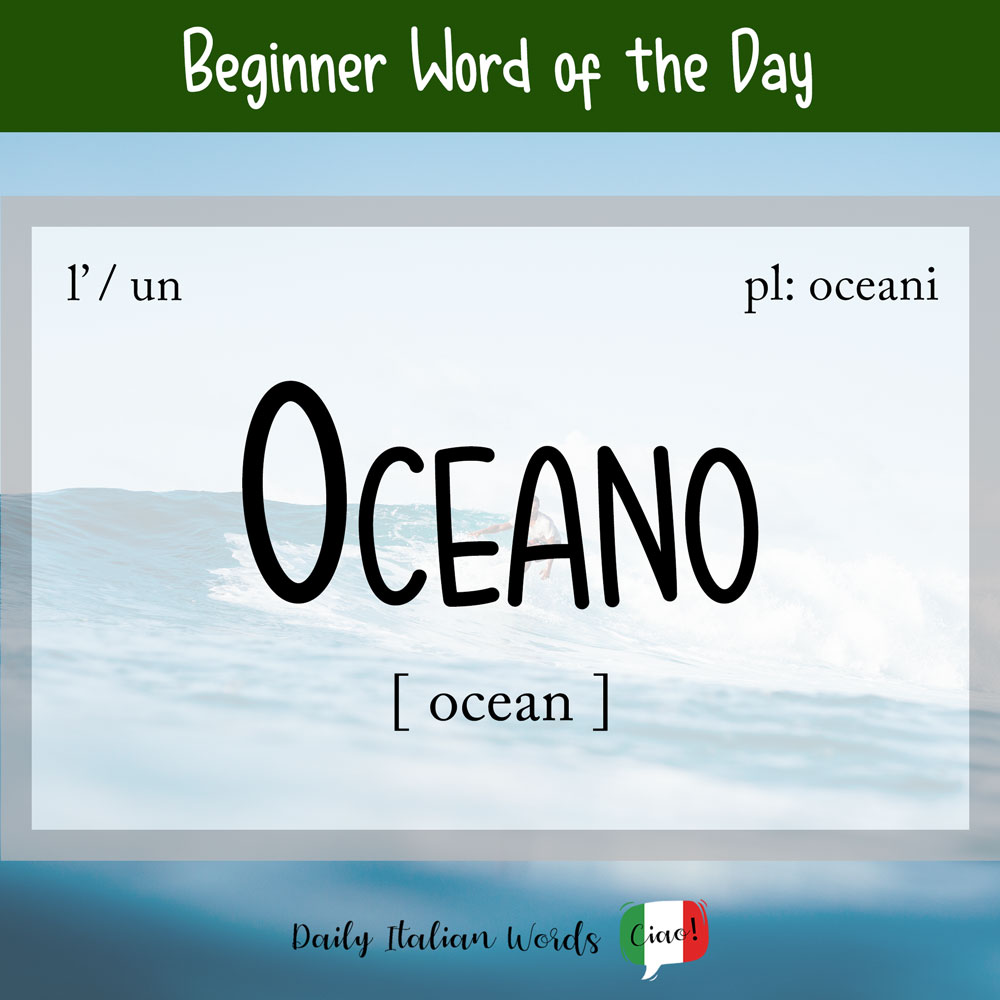
Italian Word of the Day: Oceano (ocean)

The terms ocean and oceano (masculine, plural: oceani), which derive from the Greek ōkeanos, refer to the largest expanses of salt water on the earth’s surface. Just as in English, Italians often refer to the ocean as il mare (the sea), even though technically seas are smaller in size and have different geological characteristics. There …

Read more