Italian Word of the Day: Cintura (belt)

The word for belt, or any kind of material typically worn around the waist, is cintura in Italian. It comes from the Latin cinctura, which in turn is a derivative of the verb cingere (to wrap, tie, enclose). Cintura is a feminine noun, and its plural is cinture. la cinturauna cintura le cinturedelle cinture Six …

Read more

Italian Word of the Day: Tazza (cup / mug)

The word for any small bowl-shaped drinking container with a handle is tazza in Italian. Unlike most Italian words which derive from Latin, the origin of the word tazza can be traced back to the Arabic ṭasa. Two possible translations in English are cup and mug. Tazza is a feminine noun. The plural is tazze. …

Read more

Italian Word of the Day: Cellulare (cell / mobile phone)

In Italian, the portable device we use to make phone calls, browse the Internet, take photos and send messages, is called a cellulare. It comes from the Latin word cellularis, which in turn derives from the word cellula meaning ‘little chamber’. Cellulare is a masculine noun. The plural is cellulari. un cellulareil cellulare dei cellularii …

Read more

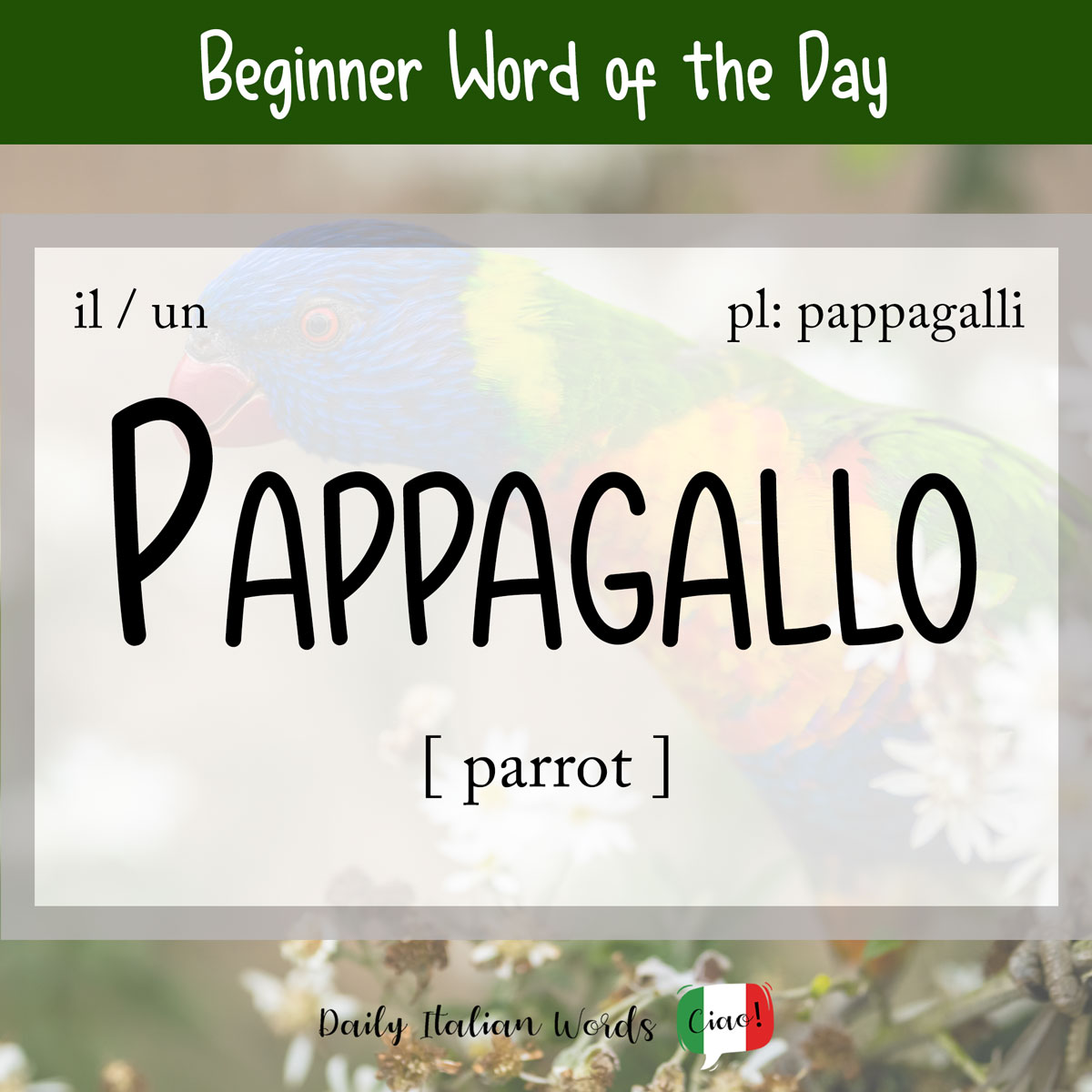
Italian Word of the Day: Pappagallo (parrot)

The word for a parrot in Italian is pappagallo. It entered the Italian language from the Arabic babaġā via the Greek papagâs. Pappagallo is a masculine noun. The plural is pappagalli. un pappagalloil pappagallo dei pappagallii pappagalli Ieri ho visitato uno zoo e ho visto tanti pappagalli colorati. Yesterday I visited a zoo and saw …

Read more

Italian Word of the Day: Asciugacapelli (hairdryer)

The word for a hairdryer in Italian is asciugacapelli. Just like the English term, it is the combination of the verb asciugare (to dry) and capelli (hair). Asciugacapelli is a masculine noun and is invariable, which means that its plural form is the same as its singular form. l’asciugacapelliun asciugacapelli gli asciugacapellidegli asciugacapelli L’asciugacapelli ha …

Read more

Italian Word of the Day: Rana (frog)

The Italian word for a frog is rana. It derives from the Latin word of the same spelling. Rana is a feminine noun. Its plural is rane. la ranauna rana le ranedelle rane Among the most well-known types of frogs there is the rana rossa (common frog), rana toro (American bullfrog) and the rana verde …

Read more