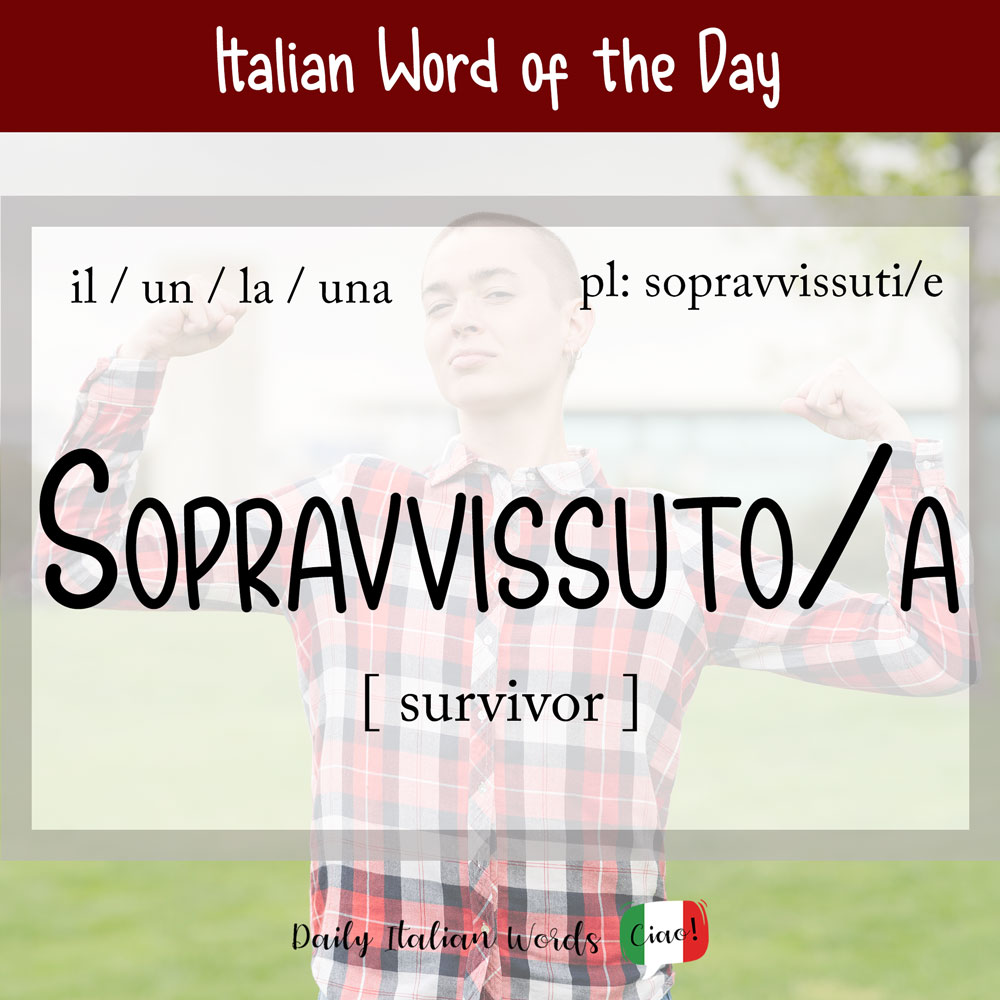
Italian Word of the Day: Sopravvissuto (survivor)

Sopravvissuto, the word for survivor in Italian, comes from the verb sopravvivere meaning to survive. It is formed of two parts: sopra (above) and vissuto (past participle of vivere ‘to live’). If you are talking about a woman instead of a man, the masculine sopravvissuto becomes the feminine sopravvissuta. Their respective plurals are sopravvissuti and …

Read more

Italian Word of the Day: Tigre (tiger)

The word for tiger in Italian is the feminine noun tigre (plural: tigri) which derives from the Latin tigris. It remains feminine regardless of whether you are talking about a male tiger (una tigre maschio) or a female tiger (una tigre femmina). It is the largest of the so-called big cats (grandi felini) that make …

Read more

Italian Word of the Day: Drago (dragon)

The word for dragon in Italian is drago (masculine, plural: draghi). It comes from the Latin draco which in turn comes from the Greek drakon meaning serpent. Note: Anglophone learners of Italian might be tempted to use the synonym dragone since it sounds closer to the English word but drago is the preferred term. La …

Read more

Italian Word of the Day: Patatine (chips / fries)

When not in the midst of a short-lived diet regime, I have the terrible habit of binging on chips (or crisps as they are known in the UK) and French fries. There is something about their salty greasiness that just hits the spot! The word for both of these irresistible junk foods in Italian is …

Read more

Italian Word of the Day: Coccola (cuddle)

One of the sweetest words in the Italian language is coccola (feminine), which is how you’d say cuddle or snuggle. An interesting fact about this word is that it usually appears in its plural form coccole. Coccola is a feminine noun that takes the following definite and indefinite articles: It comes from the verb coccolare, …

Read more

Italian Word of the Day: Treno (train)

The word for train in Italian is, you guessed it, treno (masculine, plural: treni). It entered the language via the French word train, which in turn comes from the verb traîner meaning to drag. Some common verbs you will see used with treno include: Viaggiare in treno può essere veloce quanto prendere un aereo. Traveling …

Read more