At first glance, the Italian word ruga refers to a wrinkle, as in the fine lines that mark a face – and that I’m noticing more and more in the mirror every day! But in certain regions of Italy, especially in Venice, ruga also takes on a completely different meaning as we’ll discover in this article!
ruga
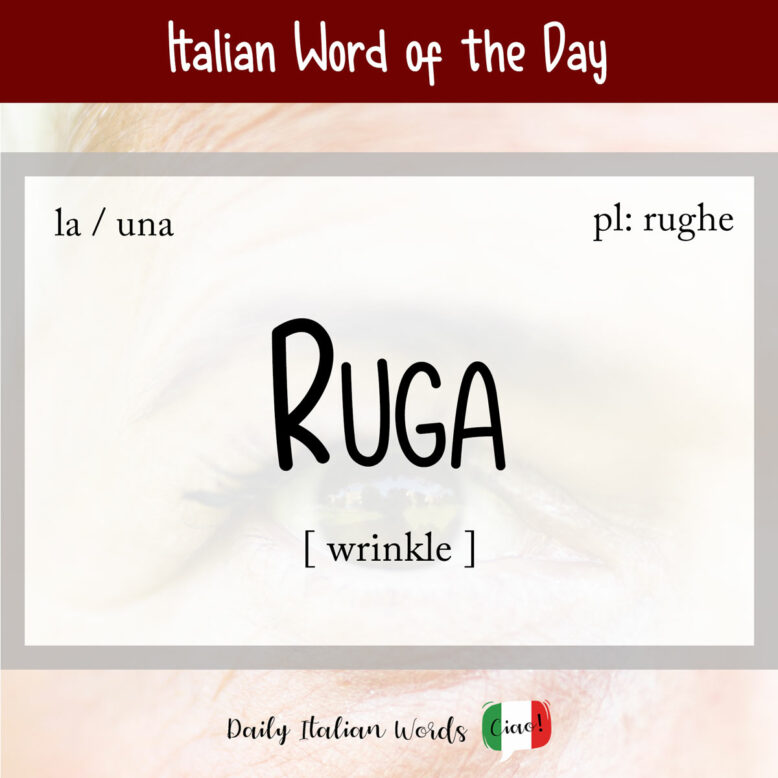
Grammatically, ruga is a feminine noun. The definite articles are la and le – la ruga in the singular, and le rughe in the plural. The indefinite article is una, so una ruga for a wrinkle and delle rughe for some wrinkles.
- la ruga
- le rughe
- una ruga
- delle rughe
Etymologically speaking, ruga comes directly from the Latin rūga, which actually meant “fold” or “crease.” It shares its roots with words in other Romance languages, such as French ride, Spanish arruga, and Portuguese ruga. The Latin term itself is thought to stem from the Proto-Indo-European root *h₁roug-h₂- (“wrinkle”).
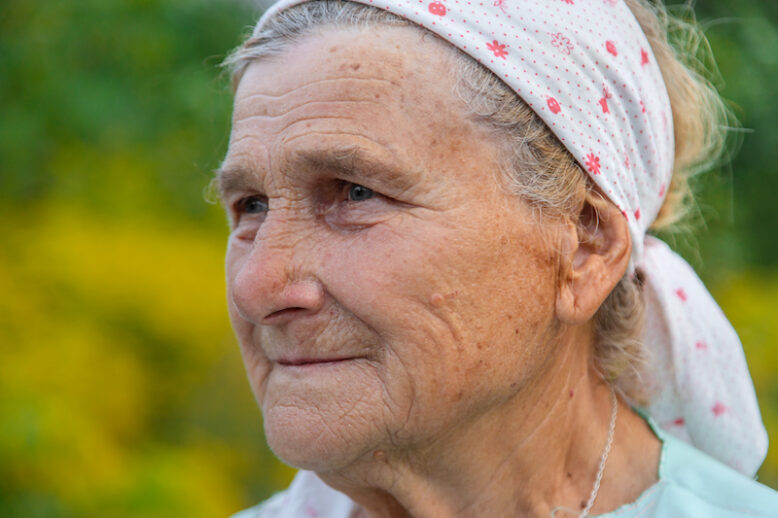
In its most common, everyday sense, ruga is used to talk about a wrinkle on the skin. For example, you might hear someone say:
Ha qualche ruga sul viso, ma è ancora bellissima.
She has a few wrinkles on her face, but she’s still beautiful.
Si guardò allo specchio e notò una piccola ruga vicino agli occhi.
He looked in the mirror and noticed a small wrinkle near his eyes.
Ha poche rughe per la sua età.
She has few wrinkles for her age
Below you can find a few of the most common verbs used with ruga in everyday Italian:
avere = to have
Ha molte rughe sul viso. → She has many wrinkles on her face.
comparire / apparire = to appear
Le prime rughe cominciano a comparire. → The first wrinkles are starting to appear.
formarsi = to form
Si sono formate delle rughe sulla fronte. → Wrinkles have formed on his forehead.
ridurre = to reduce
Questa crema promette di ridurre le rughe. → This cream promises to reduce wrinkles.
eliminare = to eliminate
Non puoi eliminare tutte le rughe. → You can’t eliminate all wrinkles.
coprire = to cover
Ha usato un po’ di trucco per coprire le rughe intorno agli occhi. → She used a bit of make-up to cover the wrinkles around her eyes.
nascondere = to hide
Il trucco può nascondere qualche ruga. → Make-up can hide a few wrinkles.
accentuarsi = to become deeper / more visible
Le rughe si accentuano quando sorride. → The wrinkles deepen when he smiles.
distendere = to smooth out
Una buona notte di sonno distende le rughe. → A good night’s sleep smooths out wrinkles.
By extension, ruga is also used in biology and anatomy, referring to a fold that forms on the mucosal surface of some human, animal or plant organs. Take, for example, la ruga vaginale (the vaginal fold), la ruga della mucosa gastrica (the gastric mucosal fold), le rughe della corteccia (the cortical folds), and so on. It’s also used in geology to refer to a specific kind of an elongated underwater relief.
Unlike English, the word cannot be used to describe folds in clothing or other materials. Instead, you need to use the feminine noun piega (plural: pieghe). For example, you can say:
Le pieghe della camicia vanno stirate.
The wrinkles on the shirt need to be ironed.
Le mie lenzuola hanno un sacco di pieghe!
My bedsheets have a lot of wrinkles!
Many Italians dislike the sight of pieghe on their clothes and bed linens almost as much as on their faces. Even today, it’s not unusual for them to iron everything from bedsheets to socks and undergarments. So, if you’d rather avoid curious looks in public, be sure to at least press your shirts and trousers.
As for the verb to wrinkle (or to furrow for one’s brow), you should use raggrinzire (or the pronominal raggrinzarsi).
Tutti sanno che l’età raggrinzisce la pelle.
Everyone knows that age wrinkles the skin.
Il viso di Marco si è tutto raggrinzito.
Marco’s face is all wrinkled.
Someone who is wrinkled may also be described with the adjective grinzoso (e.g. la pelle grinzosa = wrinkled skin).
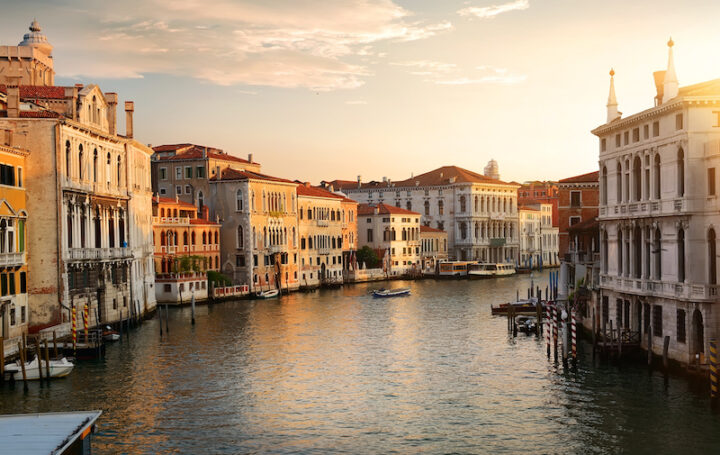
Travel towards Venice, and ruga takes on a whole new meaning. There, a ruga isn’t necessarily on your face – it’s beneath your feet!
The Venetian dialect preserves an alternative sense of the term also found in Early Medieval Latin, referring to a small street flanked on both sides by a number of shops and houses. This meaning appears in place names such as Ruga degli Orefici (Street of the Goldsmiths) or Ruga Vecchia San Giovanni. You may also encounter the diminutive form rughetta. The visual analogy should be quite clear – wrinkles define our faces just as the streets of Venice run through and divide up the body of the city.
Sto camminando lungo Ruga degli Orefici.
I’m walking along Ruga degli Orefici.
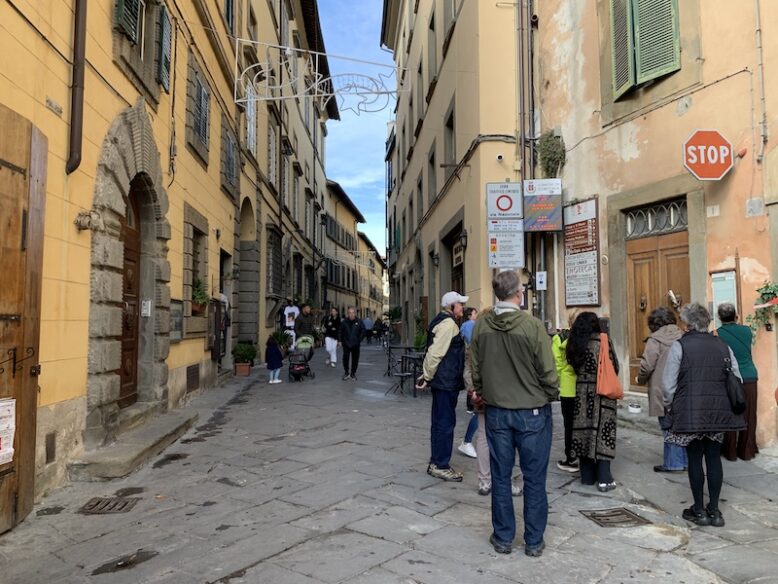
I was also surprised to discover that ruga is used in other parts of Italy as well. In the Tuscan town of Cortona, for instance, the main street – officially called Via Nazionale – is known locally as Ruga Piana (“Flat Road”), likely because it’s the only one that doesn’t wind up the hillside.
Beyond the physical meaning, Italians sometimes use the word figuratively to describe the beauty of invecchiare (aging) and the passage of time, as in:
Ogni ruga racconta una storia.
Every wrinkle tells a story.
Although I’m not a fan of my ever-increasing rughe, I try to tell myself: Non temere le rughe: sono il segno che hai sorriso molto (Don’t fear wrinkles; they’re the sign you’ve smiled a lot.)

Heather Broster is a graduate with honours in linguistics from the University of Western Ontario. She is an aspiring polyglot, proficient in English and Italian, as well as Japanese, Welsh, and French to varying degrees of fluency. Originally from Toronto, Heather has resided in various countries, notably Italy for a period of six years. Her primary focus lies in the fields of language acquisition, education, and bilingual instruction.