When I’m not working in front of the computer or working out at the leisure centre, I take great pleasure in tending to our local community allotment. Every year we plant different kinds of verdure (vegetables) to share with our community fridge – though admittedly some years have been more successful than others! On occasion we use starter plants, but more often than not, we grow our vegetables from seed. The translation for seed in Italian is seme, and it’s also our word of the day!
seme
seed
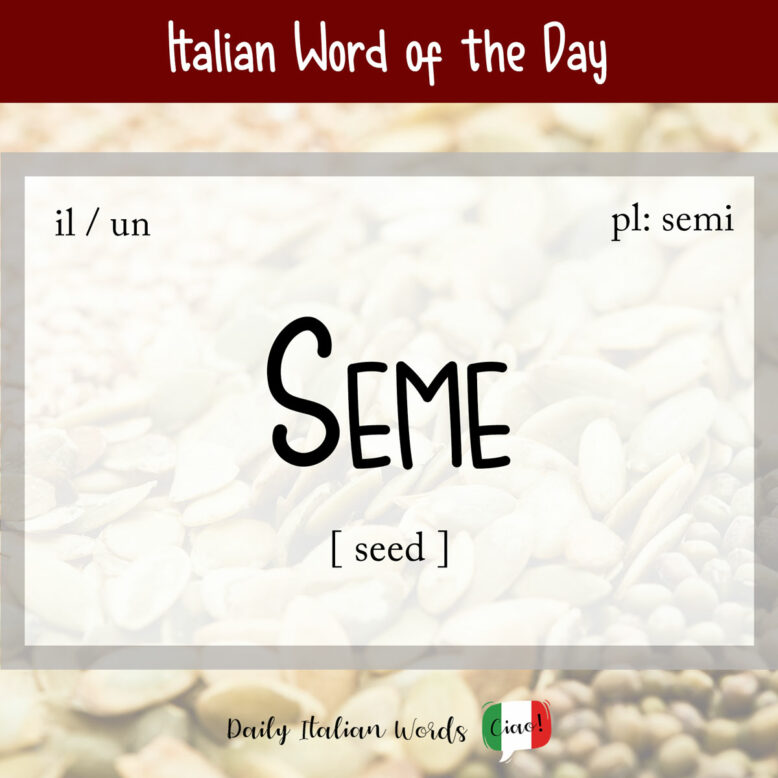
Seme is a masculine noun ending in -e and its plural form is semi. Here are its definite and indefinite articles:
- il seme = the seed
- un seme = a seed
- i semi = the seeds
- dei semi = some seeds
The word comes from Latin sēmen, sēminis, meaning “seed” or “source of life.” The Latin noun derives from the Indo-European root *se- / *sē-, meaning “to sow, to scatter,” which is also the root of the Latin verb serĕre (“to sow”). From sēmen come related words like seminare (to sow), seminario (seminary), semenza (seed stock), and inseminare (to inseminate).
A plant’s life cycle begins with a seme. Inside the seed is a tiny plant embryo, along with stored food to help it start growing. When the seed gets the right conditions – usually acqua (water), calore (warmth), and ossigeno (oxygen) – it begins the process of germinazione (germination). The seed coat breaks open, a small radice (root) grows downward into the soil to absorb water and nutrients, and a shoot grows upward toward the light.
As the germoglio (shoot) reaches the surface, it develops leaves and begins fotosintesi (photosynthesis), using la luce del sole (sunlight) to make its own food. This stage is called a piantina (seedling), which literally translates as “small plant.” Over time, the plant grows taller and stronger, developing more foglie (leaves), steli (stems), and radici (roots). Eventually, it becomes an adult plant capable of producing fiori (flowers), frutti (fruits), or pigne (cones), which create new seeds and begin the ciclo vitale (life cycle) all over again.
Ho piantato il seme e ora aspetto che cresca.
I’ve planted the seed and now I’m waiting for it to grow.
You probably already know that semi are a very healthy addition to a balanced diet because they are packed with important nutrienti (nutrients) in a small amount of food. Many semi contain healthy grassi, proteine, fibre, vitamine e minerali (fats, protein, fibre, vitamins, and minerals) that support overall health.
Because seeds are so nutrient-dense, even a small handful added to meals can boost the nutritional value of your diet, which is why I have them at colazione (breakfast) every morning with my muesli! Here are some of the most nutritious:
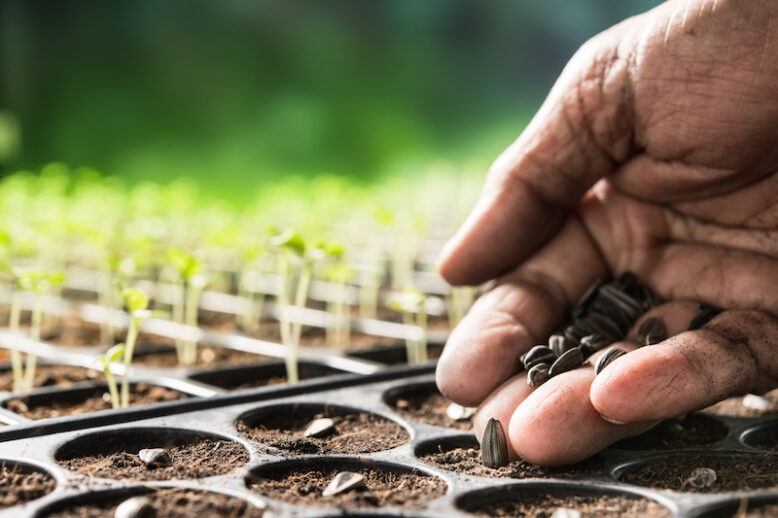
- sunflower seeds = semi di girasole
- pumpkin seeds = semi di zucca
- chia seeds = semi di chia
- flax seeds = semi di lino
Many people, especially during the winter months, enjoy putting out a mangiatoia per uccelli (bird feeder) filled with seeds to help small birds survive the winter. However, there is growing evidence that feeding birds in the garden is linked to risks such as the spread of disease and parasites. If you do decide to use a mangiatoia, always make sure that it is extremely pulita (clean) and free of umidità (moisture).
In addition to seed, seme can also refer to sperm or semen, with a common synonym being sperma. For example, la banca del seme is the word for sperm bank.
La banca del seme è aperta cinque giorni alla settimana.
The sperm bank is open five days a week.
Figuratively, it can also mean seed, root or cause, as in the expression gettare il seme della discordia (literally “to sow the seeds of discord”).
Finally, you will also see vegetable oil being referred to, quite literally, as “seed oil” – olio di semi.

Heather Broster is a graduate with honours in linguistics from the University of Western Ontario. She is an aspiring polyglot, proficient in English and Italian, as well as Japanese, Welsh, and French to varying degrees of fluency. Originally from Toronto, Heather has resided in various countries, notably Italy for a period of six years. Her primary focus lies in the fields of language acquisition, education, and bilingual instruction.