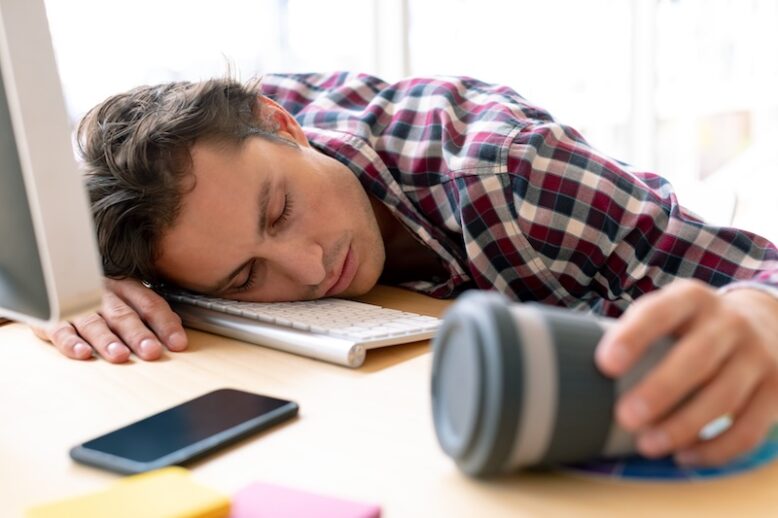
Mio papà (my dad) has developed a habit over the years that is pretty common amongst the over-sixties: afternoon naps. He never used to be someone who’d let l’omino del sonno (the Sandman) pay him a visit while the sun is up, but these days, if there’s a quiet afternoon and he’s reading a book or watching the TV, he’ll happily close his eyes and have a little snooze. It makes me laugh because I can’t help but wonder whether I’ll turn into exactly the same person one day!
Italian has lots of useful and natural ways to talk about sleep, and knowing a few different expressions can help you sound much more fluent than simply learning dormire (to sleep). Whether you’re talking about having a good night’s sleep, feeling exhausted, taking a quick nap or sleeping in, there’s an expression for almost every situation!
1. Dormire (to sleep)
The most basic verb is dormire, meaning to sleep. It is an -IRE verb and conjugates in the following way in the present tense:
- io dormo = I sleep
- tu dormi = you sleep (informal, singular)
- lui dorme = he sleeps
- lei dorme = she sleeps / you sleep (formal, singular)
- noi dormiamo = we sleep
- voi dormite = you both sleep / you all sleep
- loro dormono = they sleep
You’ll see it used in phrases such as:
- Non riesco a dormire. = I can’t sleep.
- Devo dormire. = I need to sleep.
- Hai dormito abbastanza? = Did you sleep enough?
You can also use dormire to talk about how long you slept:
Ho dormito otto ore.
I slept for eight hours.
2. Andare a dormire (to go to bed)
If you want to say to go to bed, Italian commonly uses andare a dormire, literally to go to sleep.
- Vado a dormire. = I’m going to bed.
- A che ora vai a dormire? = What time do you go to bed?
- Sono andato a dormire tardi. = I went to bed late.
Non voglio andare a dormire adesso!
I don’t want to go to bed now!
Another very common expression is andare a letto, literally to go to bed:
Vado a letto presto stasera.
I’m going to bed early tonight.
And if you overhear a parent talking to their child, you are bound to encounter the alternative andare a nanna, with nanna being the childish word for sleep – a bit like beddy-byes in English!
Anna, è ora di andare a nanna.
Anna, it’s time to go to bed.
3. Avere sonno (to be sleepy)
Now that we know how to sleep and go to bed, we need to learn to talk about being sleepy. In Italian, this is avere sonno, literally to have sleep.
- Ho sonno. = I’m sleepy.
- Ho tantissimo sonno. = I’m really sleepy.
- Hai sonno? = Are you sleepy?
Dopo pranzo ho sempre sonno.
I’m always sleepy after lunch.
It is extremely important to remember that Italian normally doesn’t express I am sleepy using the verb essere. This is because sonno is a noun, meaning sleep, slumber, or sleepiness. If you really want to use essere, you need to pair it with the adjective assonnato/a (sleepy / drowsy) instead.
Sono più assonnato del solito.
I am sleepier than usual.
4. Fare un pisolino (to take a nap)
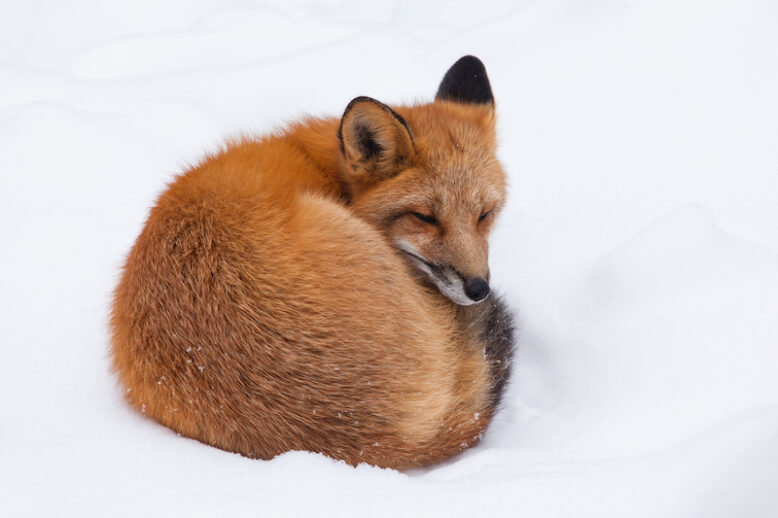
And now we get to my dad’s speciality: the afternoon nap. The most common expression is fare un pisolino, meaning to take a nap.
- Faccio un pisolino. = I’m going to take a nap.
- Mio padre fa sempre un pisolino dopo pranzo. = My dad always takes a nap after lunch.
- Ho bisogno di fare un pisolino. = I need to take a nap.
I don’t know about you, but I find that pisolino, as a word, sounds quite cute and affectionate. You might also hear schiacciare un pisolino, an informal expression meaning to have a little nap. (Schiacciare literally means to squash or to flatten!)
Vado a schiacciare un pisolino prima di cena.
I’m going to have a little nap before dinner.
5. Fare un sonnellino (to have a little sleep)
Another useful word is sonnellino, which also means nap or little sleep. And if you look carefully, you’ll notice that word sonno once again – sonnellino is simply the diminutive form of sonno!
- Faccio un sonnellino dopo pranzo. = I take a nap after lunch.
- Ho fatto un sonnellino sul divano. = I had a little sleep on the sofa.
Pisolino and sonnellino are very similar in that it doesn’t really matter when they occur, which isn’t always the case with our next expression…
6. Fare una pennichella (to have an afternoon nap)
And then there is pennichella, one of those wonderful words that is particularly associated with having a little nap during the day.
Fare una pennichella means to have a nap, especially an afternoon nap. I’d say it has a slightly humorous or cosy feel to it.
- Dopo pranzo mi faccio una pennichella. = After lunch I have a little nap.
- Mio padre ama fare la pennichella. = My dad loves having his afternoon nap.
Mi faccio una pennichella di mezz’ora.
I’ll have a half-hour nap.
The pennichella is closely linked to the typical abbiocco dopo mangiato (post-meal drowsiness), the kind you experience after a very large Christmas dinner. You can just imagine someone settling down on the divano (sofa) after a big meal and announcing that they’re just going to have una pennichella. It’s exactly the kind of word I can imagine my dad using – if he were Italian, of course!
7. Sonnellino pomeridiano (afternoon nap)
If you want to be more descriptive, you can go with sonnellino pomeridiano which is a word-for-word translations for afternoon nap.
- Mio padre ama fare il sonnellino pomeridiano. = My dad loves having an afternoon nap.
- Un sonnellino pomeridiano mi aiuta a recuperare le energie. = An afternoon nap helps me recharge.
You could also say un pisolino pomeridiano or una pennichella pomeridiana.
8. Fare una bella dormita (to have a good sleep)
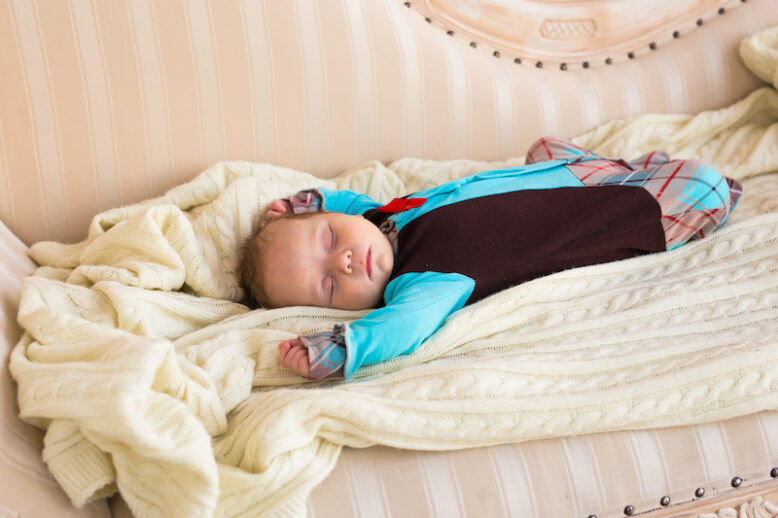
The expression fare una bella dormita means to have a good sleep or a good lie-in, almost always with the sense of getting a decent amount of rest.
- Ho bisogno di farmi una bella dormita. = I need to get a good sleep.
- Domenica voglio fare una bella dormita. = On Sunday I want to have a good lie-in.
The adjective bella is interesting here. Una bella dormita doesn’t literally mean a beautiful sleep. Bella, in this case, conveys the idea of a good, satisfying sleep. Some other examples of bello/a being used in this way include:
- una bella mangiata = a good meal
- una bella lavata = a good wash
- una bella nuotata = a good swim
- una bella chiacchierata = a good chat
Fai una bella dormita!
Have a good sleep!
9. Dormire fino a tardi (to sleep in)
For those mornings when you don’t want to get out of bed, or feel that you really need a lie-in after a late night out with friends, you can say dormire fino a tardi.
- Sabato ho dormito fino a tardi. = On Saturday I slept until late.
- Mi piace dormire fino a tardi nel weekend. = I like sleeping in at the weekend.
Mio figlio non dorme mai fino a tardi.
My son never sleeps in.
10. Dormire come un sasso (to sleep like a log)
Italian has some wonderfully visual expressions for sleeping deeply. Dormire come un sasso literally means to sleep like a stone, and is used to say that you slept like a log, to use a very close English idiom.
But this is far from the only expression you’ll hear:
- dormire come un ghiro = to sleep like a dormouse
- dormire della grossa = to sleep soundly
- dormire come un ciocco = to sleep like a log
- dormire come una marmotta = to sleep like a marmot (my mother-in-law’s favourite!)
Ieri notte ho dormito come un sasso.
Last night I slept like a log.
11. Dormire bene / male (to sleep well / badly)
Dormire bene simply means to sleep well. Of course, sometimes sleep doesn’t go quite so well, in which case you can use dormire male.
- Ho dormito bene stanotte. = I slept well last night.
- Non ho dormito bene. = I didn’t sleep well.
- Ho dormito poco. = I didn’t sleep much.
- Ho dormito benissimo. = I slept really well.
- Ho dormito malissimo. = I slept terribly.
Non riesco a dormire bene in questi giorni.
I can’t sleep well these days.
And if you really slept poorly, you can go for the more idiomatic expression non chiudere occhio, literally not to close an eye.
Stanotte non ho chiuso occhio.
I didn’t sleep a wink last night.
12. Addormentarsi (to fall asleep)
Don’t confuse dormire with addormentarsi – they are two very different verbs! While dormire describes the act of sleeping, addormentarsi is strictly used to talk about falling asleep. It is reflexive and is used in the following manner in the present tense:
- mi addormento = I fall asleep
- ti addormenti = you fall asleep (informal, singular)
- si addormenta = he / she falls asleep OR you fall asleep (formal, singular)
- ci addormentiamo = we fall asleep
- vi addormentate = you both / all fall asleep
- si addormentano = they fall asleep
Here are some example sentences:
Mi sono addormentato sul divano. = I fell asleep on the sofa.
Mi addormento sempre presto. = I always fall asleep early.
Non riesco ad addormentarmi. = I can’t fall asleep.
Mi sono addormentato alle 10 di sera.
I fell asleep at 10pm.

Heather Broster is a graduate with honours in linguistics from the University of Western Ontario. She is an aspiring polyglot, proficient in English and Italian, as well as Japanese, Welsh, and French to varying degrees of fluency. Originally from Toronto, Heather has resided in various countries, notably Italy for a period of six years. Her primary focus lies in the fields of language acquisition, education, and bilingual instruction.