Italian Word of the Day: Bidone (garbage can)

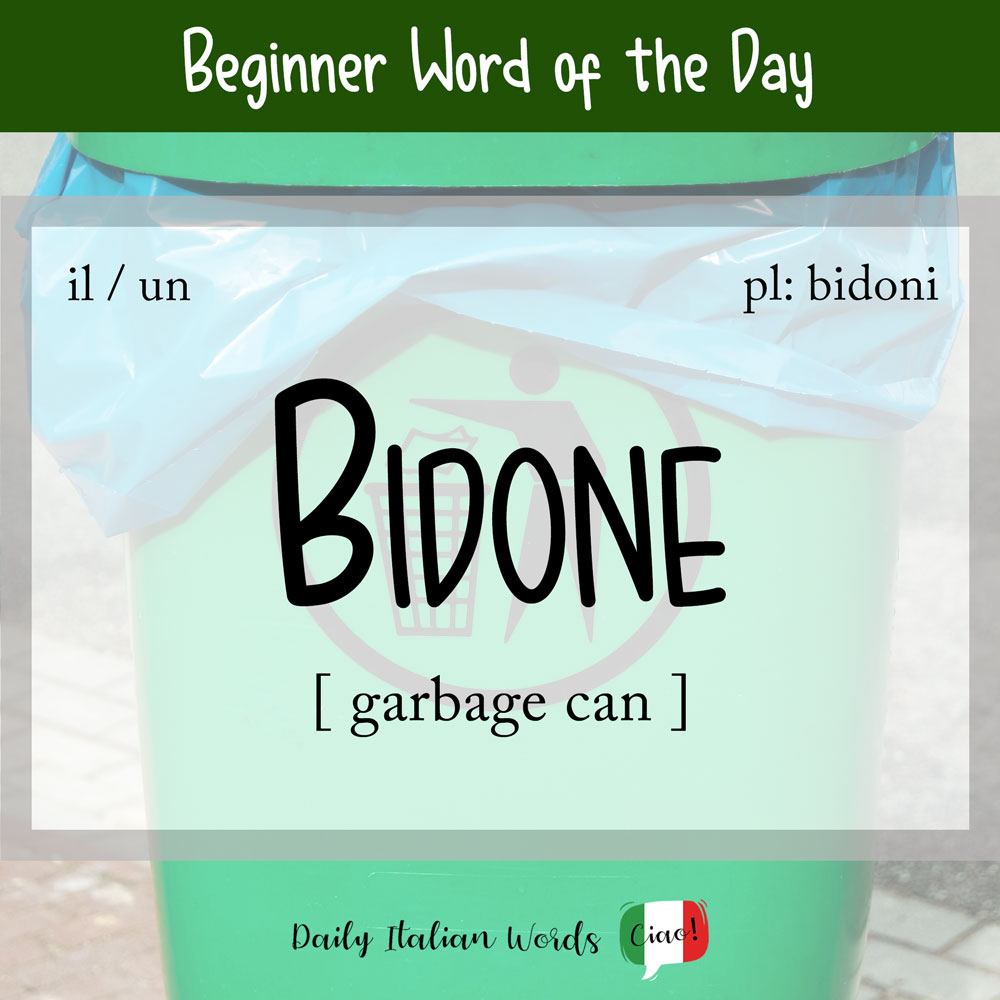
Just as there are numerous terms for the humble garbage can in English including trash can, rubbish bin, wastepaper basket and dustbin, so too are there many in Italian! One of the most diffused terms is bidone (masculine, plural: bidoni). It can be used on its own or followed by della spazzatura / dei rifiuti …

Read more

Italian Word of the Day: Virus (virus)

Today’s “word of the day” couldn’t be more timely with news about the coronavirus dominating every headline across the world. The Italian word virus (masculine, plural: virus) is written the same as in English but is pronounced quite differently as you can hear from the audio clip below. The word comes from the Latin virus …

Read more

Italian Phrase of the Week: Ho fame! (I’m hungry!)

A very important phrase for all those who enjoy a hearty Italian meal is Ho fame! which in Italian means I’m hungry! It is made up of two components: the first person conjugation of the verb avere (to have) and the noun fame which translates as famine or hunger. Ho (I have) + fame (hunger) …

Read more

Italian Word of the Day: Moglie (wife)

The word for wife in Italian is moglie (feminine plural: mogli), which comes from the Latin mŭlier meaning woman, wife or mistress. Ho conosciuto mia moglie dieci anni fa. I met my wife ten years ago. By making it diminutive, you get the word mogliettina which roughly translates as wifey or little wife in English. …

Read more

Italian Word of the Day: Fiume (river)

If you are already familiar with the English word fluvial, you will have no trouble whatsoever remembering the Italian word for river which is fiume (masculine, plural: fiumi). The longest river in Italy, il Fiume Po, runs through the city of Turin where my husband was born. It flows 405 miles from its source near the …

Read more

Italian Word of the Day: Pulito (clean)

The adjective pulito, whose primary translation is clean in English, is the past participle of the verb pulire (to clean). It comes from the Latin verb ‘polire’ of the same meaning. Pulito is the masculine singular form of this adjective. In order to make it feminine, it is necessary to change the word final o …

Read more