Italian Word of the Day: Regalo (present / gift)
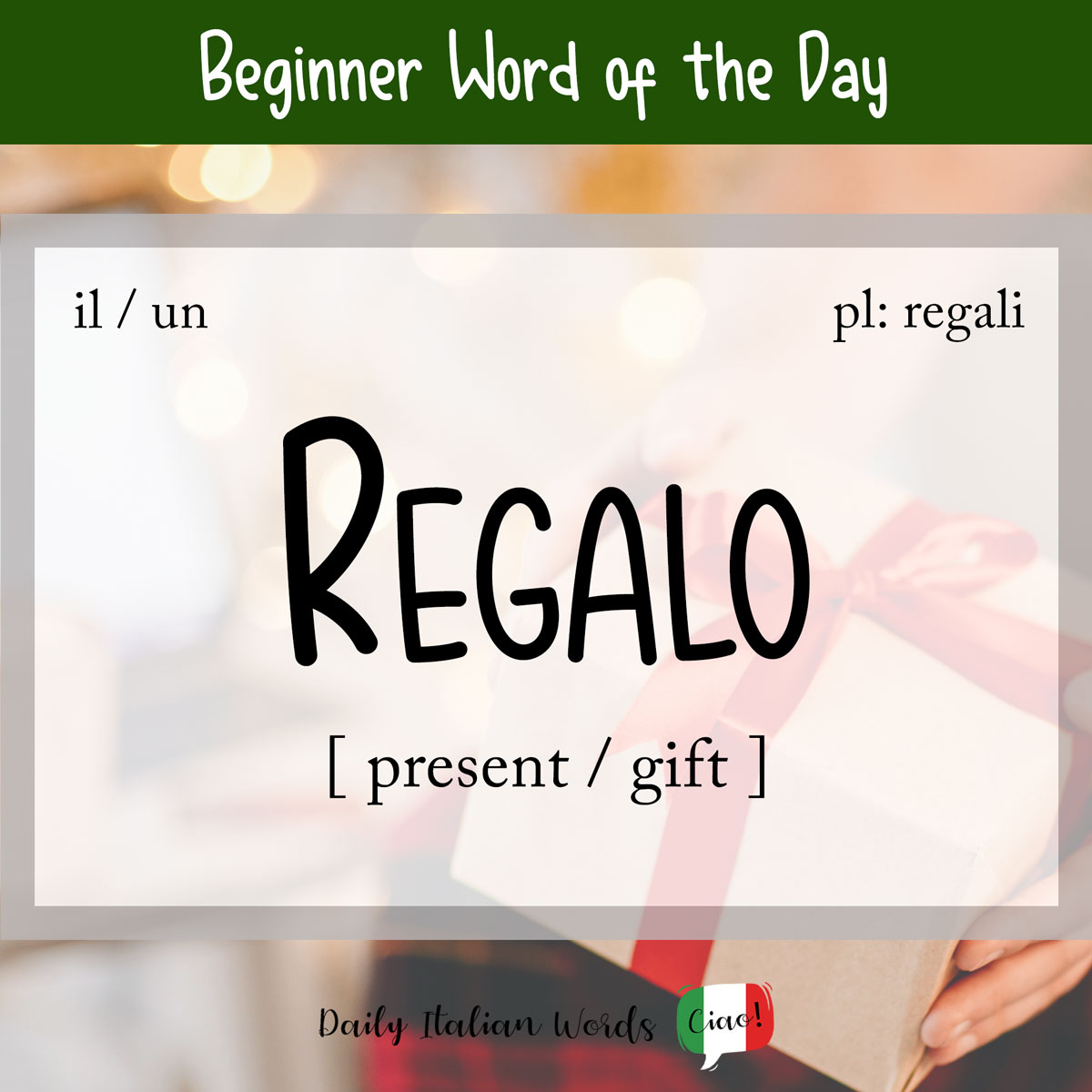
According to Christian tradition, the practice of exchanging presents during Christmastime is symbolic of the presentation of the gifts gold, frankincense and myrrh to Jesus by the Three Wise Men (i Tre Re Magi). It was reinforced by the story of St. Nicholas, a fourth-century saint and secret gift-giver who gave rise to the model …
Read more

Italian Word of the Day: Fiocco di neve (snowflake)

The snow we see on the ground at Christmastime is made up of hundreds of billions of tiny snowflakes, none of which are identical. This is because each snowflake is made up of millions of tiny water molecules that can arrange themselves in infinite ways. Comparing two snowflakes may reveal some physical similarities but statistically …

Read more

La Befana: The Italian Christmas Witch

Most people in the English speaking world strictly associate witches with Halloween. In our minds, they are dark clad figures with flying brooms, ragged clothing, craggy features, and perhaps, a black cat for company. As far as I know, Italy is the only country in the world where witches are also closely linked to the …

Read more

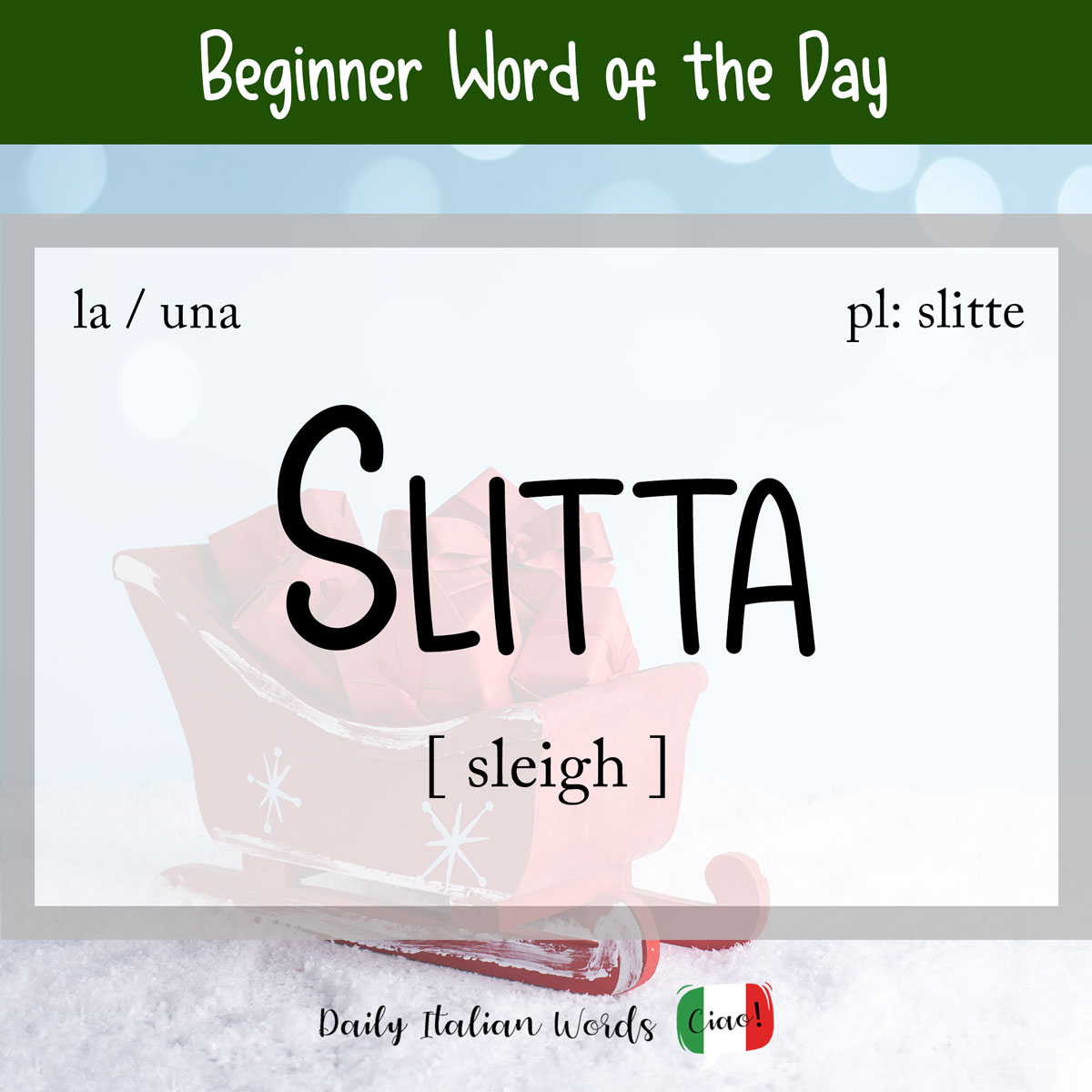
Italian Word of the Day: Slitta (sleigh)

Without his faithful sleigh – or slitta (feminine, plural: slitte) in Italian – and the help of his eight reindeer, Santa Claus wouldn’t be able to deliver presents to the millions of children across the world! (Or so the story goes!) La slitta di Babbo Natale è carica di regali. Santa’s sleigh is loaded with …

Read more

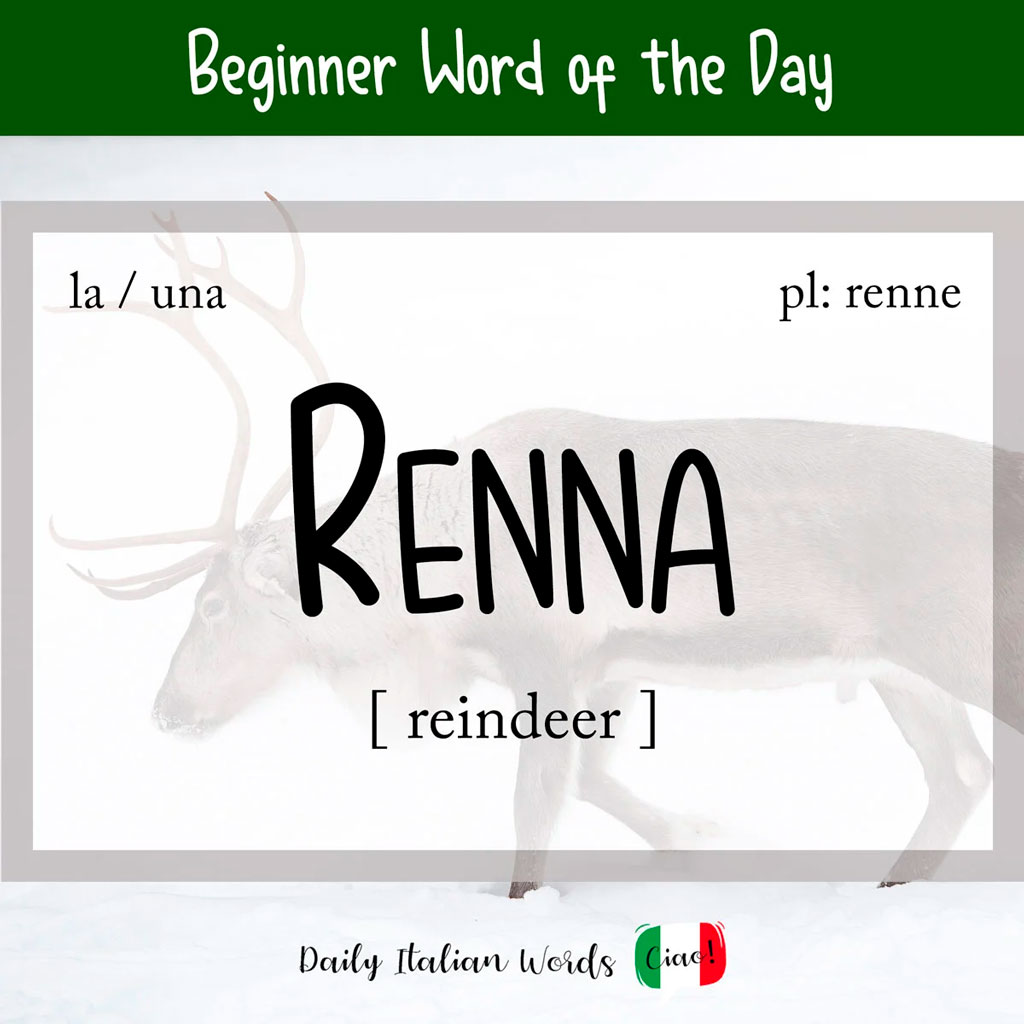
Italian Word of the Day: Renna (reindeer)

Italian word for reindeer, renna

The word for reindeer in Italian is renna (feminine, plural: renne). Reindeer are one of the most recognised modern Christmas symbols across the world because they are depicted as pulling Santa Claus‘ sleigh across the night sky. In Italian, these eight reindeer are called: Cometa, Ballerina, Fulmine, Donnola,Freccia, Saltarello, Donato, Cupido Tu conosci tutti i …

Read more

5 Ways to Say “Good job!” or “Well done!” in Italian

Knowing how to pay a compliment is a huge part of learning any language to proficiency. Using them properly can improve your relationships with other people, which is extremely important when making new friendships in a foreign country. In English, we tend to say Good job!* or Well done! to praise an individual or a …

Read more