How to Pronounce “Bruschetta” in Italian
The name both Italians and English speakers give to the delicious toasted Italian bread covered in olive oil, garlic or tomatoes is bruschetta (feminine, plural: bruschette). Learn how to pronounce “bruschetta” with our video You may be wondering why today’s ‘word of the day’ is an Italian word that also exists in the English language. …
Read more

Qui vs Qua | Lì vs Là in Italian – What’s the difference?

In English, we have one adverb of place to describe the location of something close to us – here – and another to describe the location of something further away – there. This is why many learners are surprised to learn that four different adverbs exist in Italian: qui and qua (the equivalents of here) …

Read more

Italian Word of the Day: Verdura (vegetables)

The word verdura in Italian is interesting because it is normally used as a singular collective noun, referring to the category vegetables as a whole, or more specifically, the parts of a vegetable plant that can be used in human nutrition. verdura vegetable / vegetables For example, if you say La verdura fa molto bene …

Read more

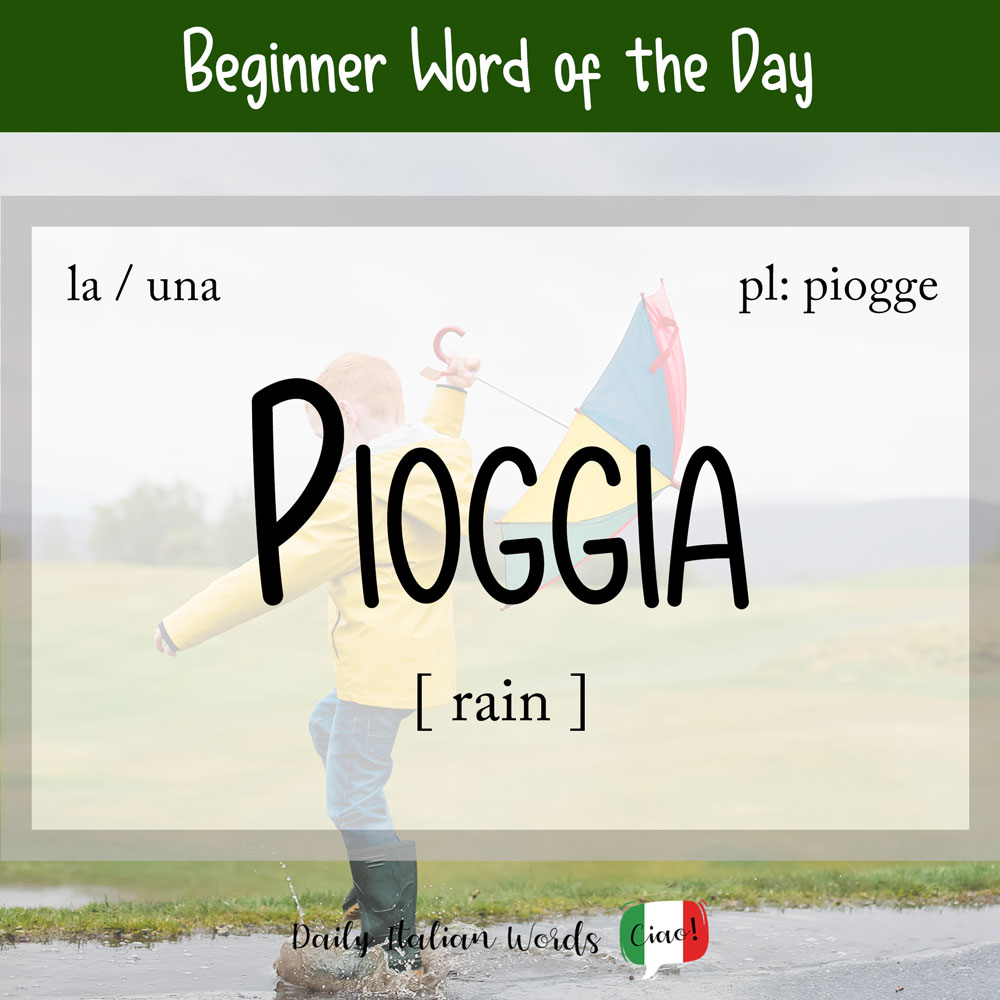
Italian Word of the Day: Pioggia (rain)

Although Italy has a variety of microclimates, the rainy season generally occurs between March and May and again between September and November, with October and November being the rainiest months of the year. In the Piemonte region where I used to live, violent thunderstorms are also common during the peak summer months. The word for …

Read more

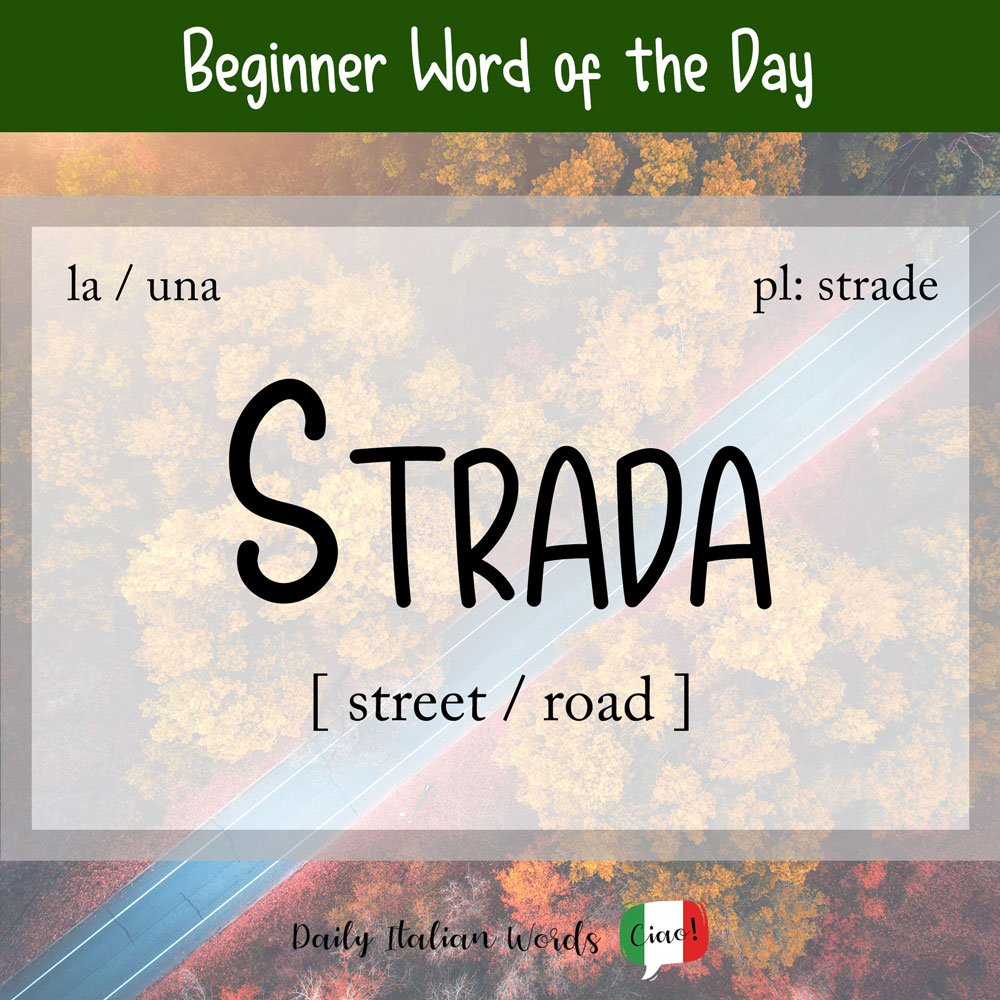
Italian Word of the Day: Strada (road, street)

Strada is an incredibly flexible word in Italian. Not only does it mean road or street in the literal sense, but it also has a couple of figurative meanings, as we’ll discover below. strada road / street Strada is a feminine noun and takes the following definite and indefinite articles: Io abito in strada San …

Read more

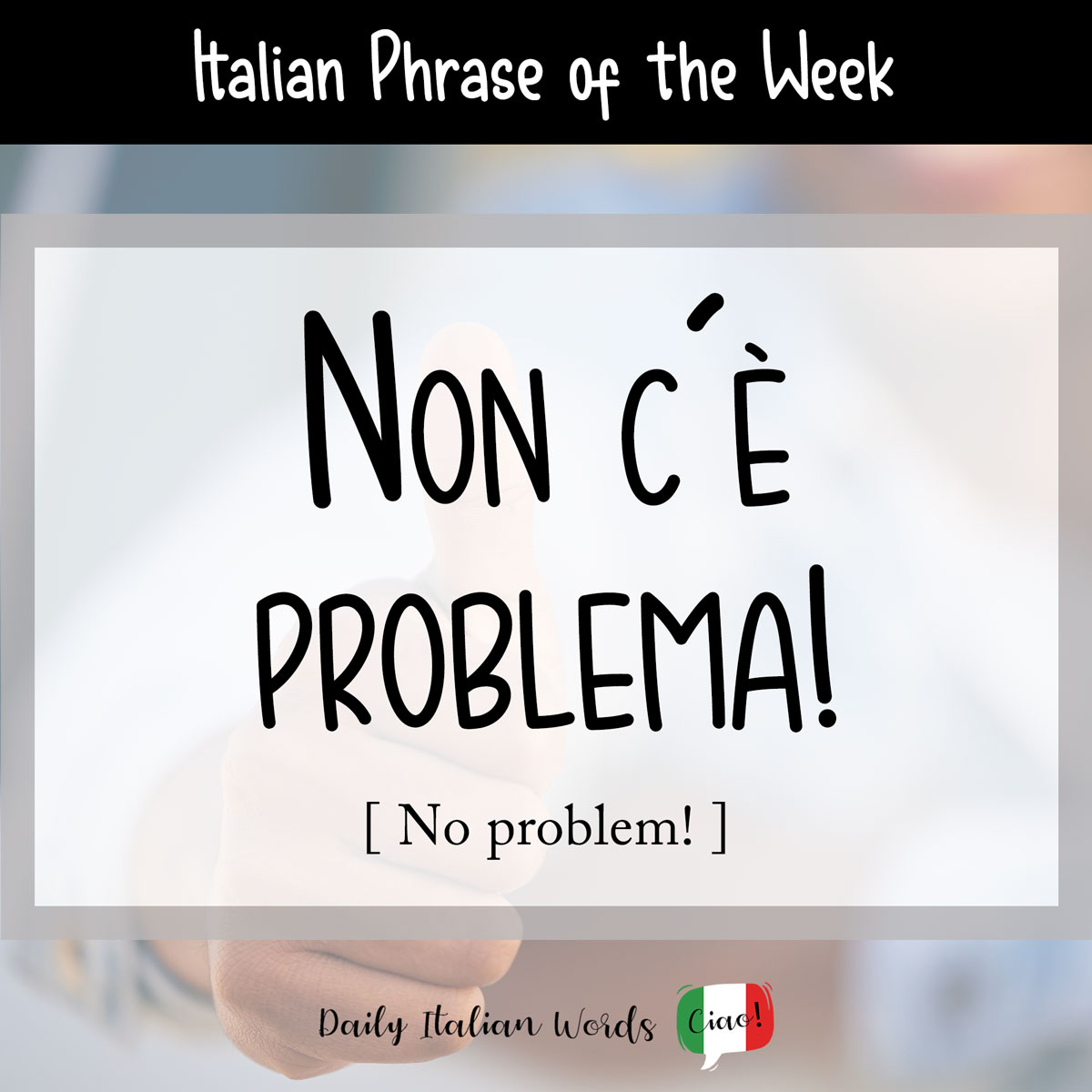
Italian Phrase of the Week: Non c’è problema! (No problem!)

If someone thanks you for a favour you’ve done, or apologises for a mistake they’ve made, there is one easygoing response that covers all the bases: Non c’è problema! (No problem!). It literally translates as there isn’t a problem. Caspita, ho dimenticato il regalo per Anna… – Non c’è problema. Lo prendiamo al ritorno. Darn, …

Read more