
Adjectives

Italian Word of the Day: Calvo (bald)
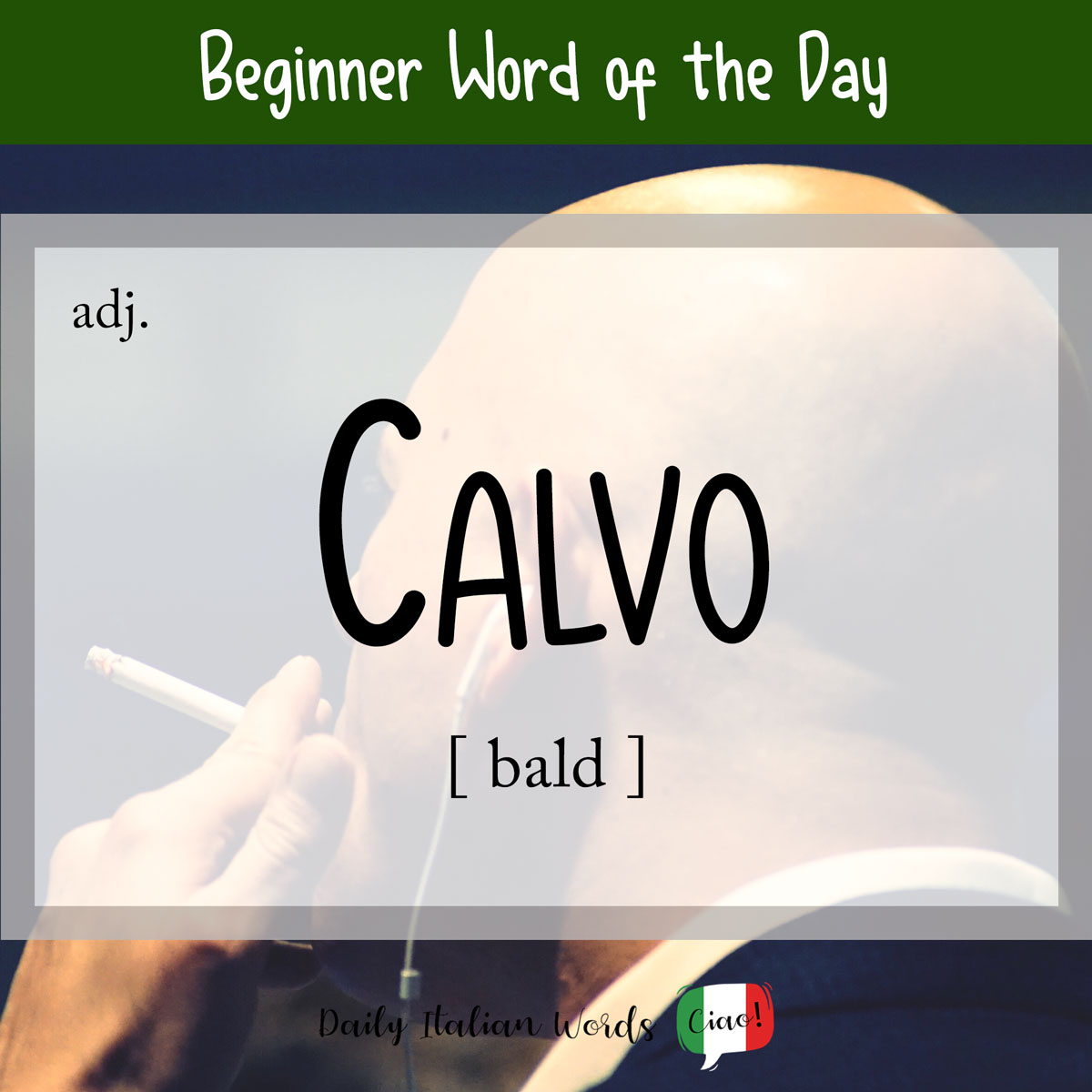
The word for bald or bald-headed in Italian is calvo, which comes from the Latin calvus of the same meaning. Its feminine form is calva and their respective plural forms are calvi and calve. Learn with our video Essere calvo means to be bald whereas diventare calvo means to go bald. Sarò calvo fra qualche …
Italian Word of the Day: Pazzesco (crazy / incredible)
Did you recently see or hear something that completely blew your mind? If so, you could use the Italian adjective pazzesco to describe it! The feminine and plural forms of pazzesco are as follows: Learn with our video Pazzo vs pazzesco: what’s the difference? Pazzesco derives from the adjective pazzo which means crazy or insane. …
Italian Word of the Day: Affezionato (fond / affectionate)
An Italian adjective that means fond or attached is affezionato, which is the past participle of the verb affezionare (to grow fond). The feminine form is affezionata, whereas the respective plurals are affezionati (masculine) and affezionate (feminine). Learn with our video Whereas in English, we would say fond of (something) or attached to (something), Italians …
Italian Word of the Day: Furbo (cunning / clever)

The adjective furbo in Italian is used to describe a person who is good at avoiding deception and traps, getting out of dangerous situations, or working a situation to his or her advantage. In English, you could describe such a person as cunning / sly / crafty if you are being critical of them, or …
Italian Word of the Day: Stonato (out of tune / tone-deaf)
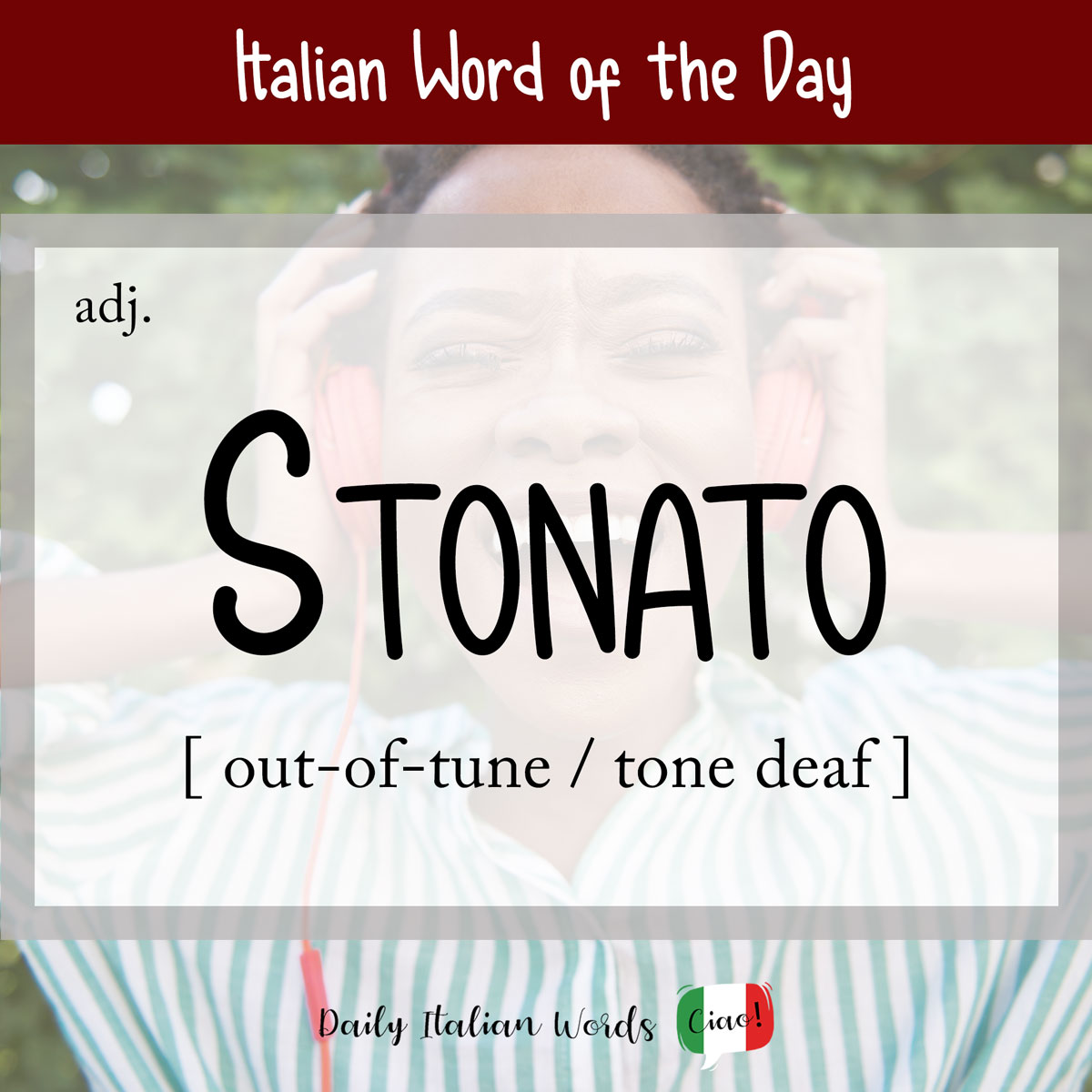
The adjective stonato comes from the verb stonare which means to sing / play out of tune. The feminine equivalent is stonata and their respective plurals are stonati and stonate. Stonato can be used to describe a naturally tone-deaf person, a professional singer whose voice is off-key or flat for some reason, or a musical …