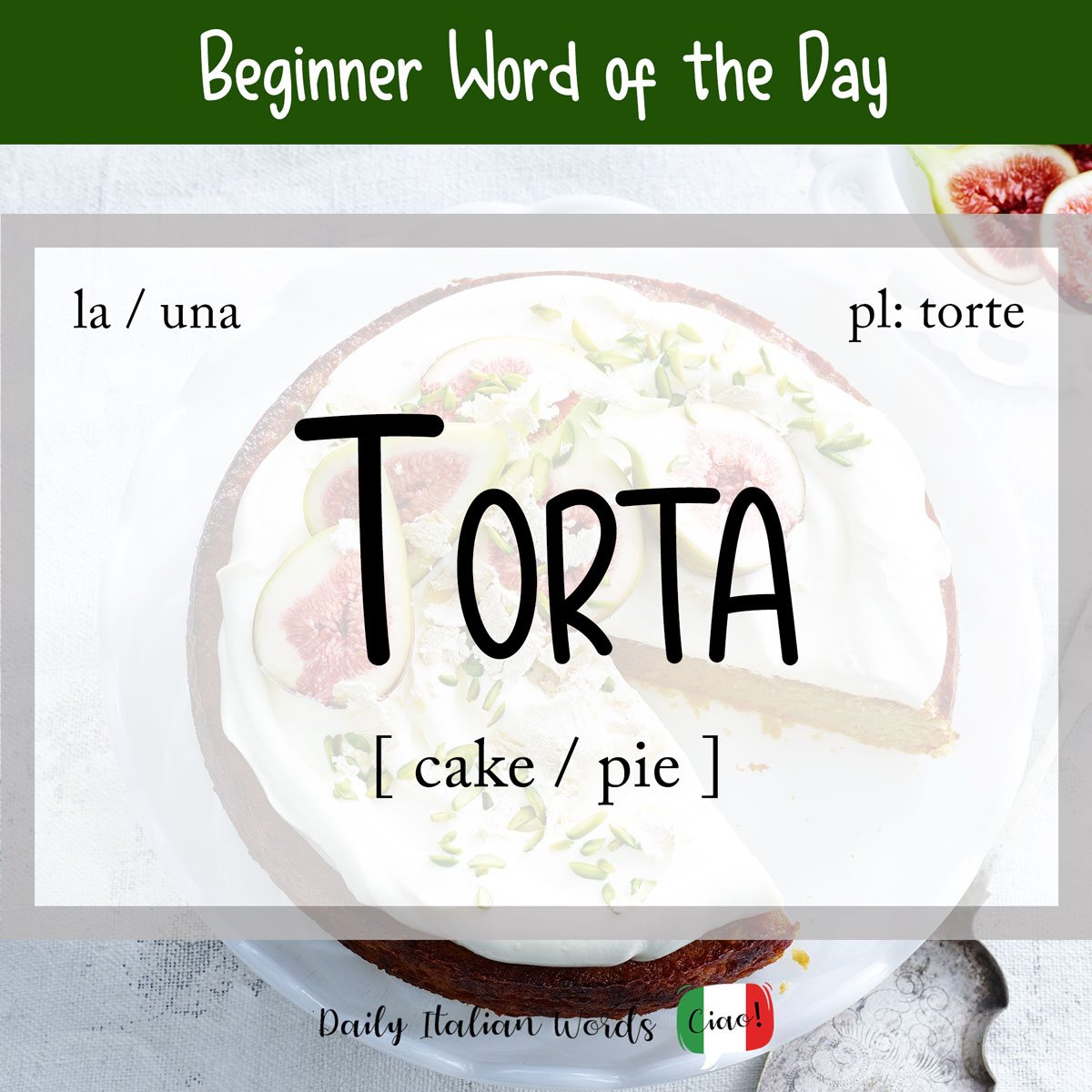
Italian Word of the Day: Torta (cake / pie)

The generic name for a baked sweet that is round in shape and made from ingredients such as flour, sugar, butter and eggs is torta (feminine, plural: torte). Although cake is the most common translation in English, it may also denote a pie. Some different kinds of sweet torte people enjoy include: Ho mangiato tre …

Read more

Italian Phrase of the Week: A presto! (See you soon!)

Tired of saying the formal greeting arrivederci when parting ways with someone? Want to transform it into something more casual and friendly? Then why not try saying A presto! (See you soon!) instead! Let’s break it down into its component parts: a A is a preposition that means to or at depending on the context. …

Read more

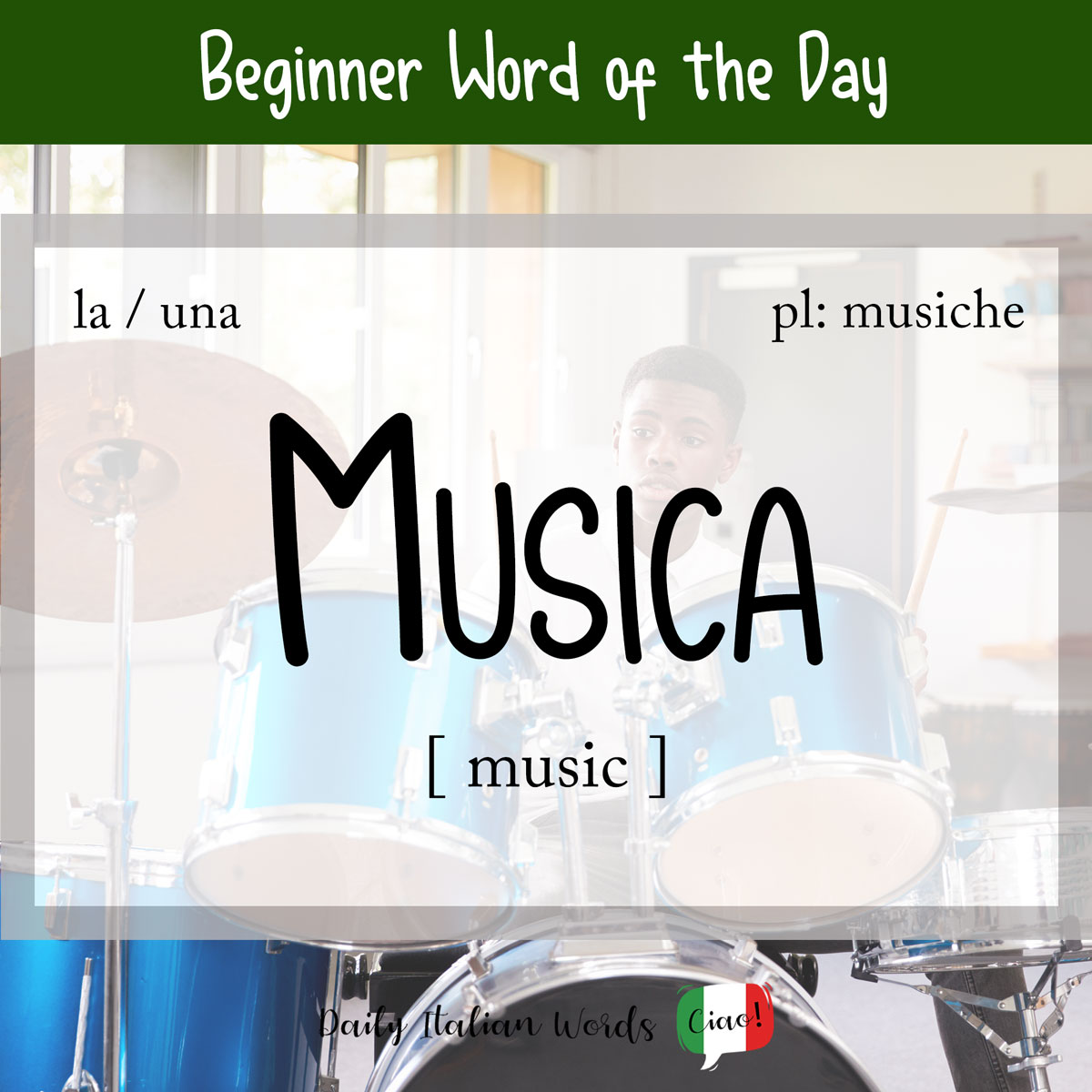
Italian Word of the Day: Musica (music)

The Italian word for music is the similar sounding musica (feminine, plural: musiche). Both words can be traced back to the Greek mousikē (tekhnē) which means (art) of the Muses. Like the English word, musica is used to talk about not only the combination of melodic vocals and sounds itself, but also the art of …

Read more

Italian Word of the Day: Camminare (to walk)

The verb to walk in English usually translates as camminare in Italian. It derives from the noun cammino (walk, journey) which entered the language from the Latin camminus. Learn with our video Camminare is a regular-first conjugation verb finishing with -are, which means it conjugates in the following manner in the present tense: io camminoI …

Read more

Italian Word of the Day: Lavorare (to work)

The verb to work translates as lavorare in Italian. It comes from the Latin verb laborare and shares the same origin as the words labor and laboratory in English. Learn with our video and podcast The video is also available on our YouTube channel. The podcast episode can be found on Podbean, Google Podcast, Apple …

Read more

Italian Word of the Day: Viola (purple / violet)

The colour purple is known as viola in Italian. It comes from the Latin word of the same spelling. When used as an adjective, it remains invariable, or in other words, it has the same form in both the singular and the plural. For example: When used as a noun, it is always masculine (il …

Read more