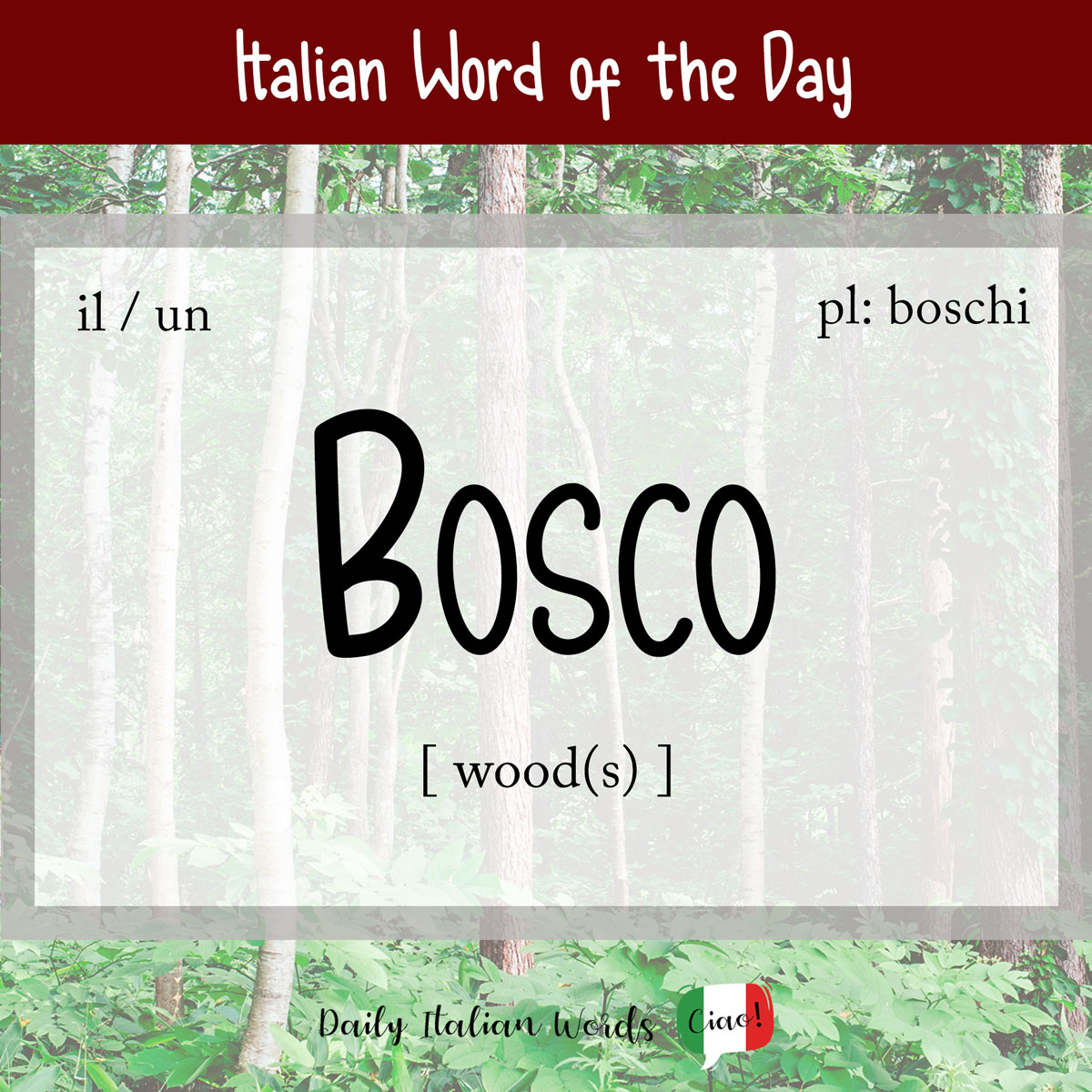
Italian Word of the Day: Bosco (woods)

On the weekend, one of our favourite pass-times as a family is going on a walk in the woods. In Italian, woods translates to bosco. bosco wood(s) / woodland Bosco is a masculine noun, derived from the West Germanic busk or bosk, with its plural form being boschi. Here are its definite and indefinite articles: …
Read more

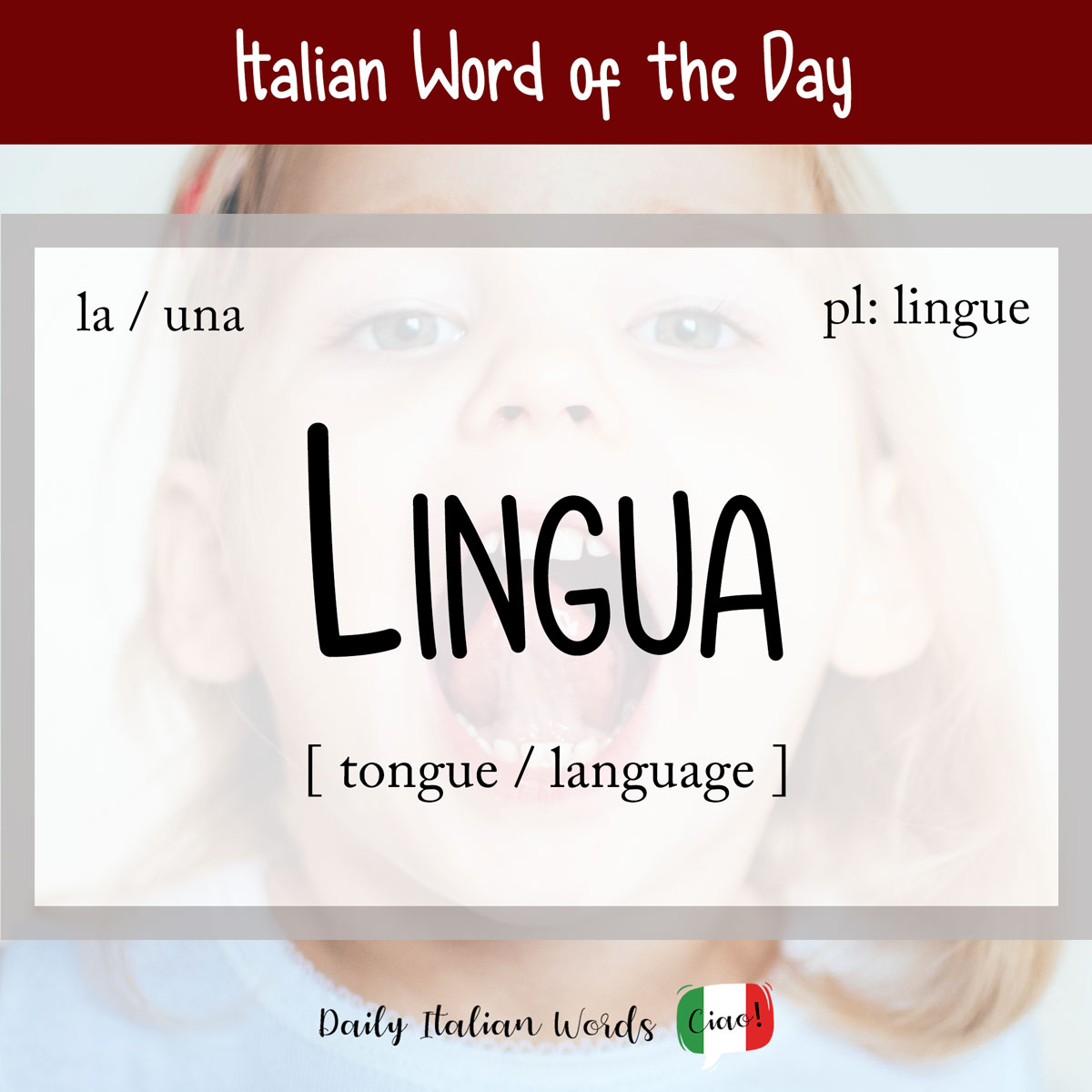
Italian Word of the Day: Lingua (tongue / language)

Today, we’re delving into a word that lies at the heart of human communication. Whether referring to the physical organ itself (tongue) or the words it generates through articulation (language), la lingua is indispensable for expressing and exchanging our thoughts effectively! lingua tongue / language Before we begin, let’s take a quick look at its …

Read more

Italian Word of the Day: Spazio (space)

The English word space carries various meanings, and the good news for learners is that the Italian equivalent, spazio, covers nearly all of these meanings as well. spazio space Before we dive in, let’s quickly explore its etymology. Spazio derives from the Latin spatium, a word of uncertain origin that encompasses the same meanings as …

Read more

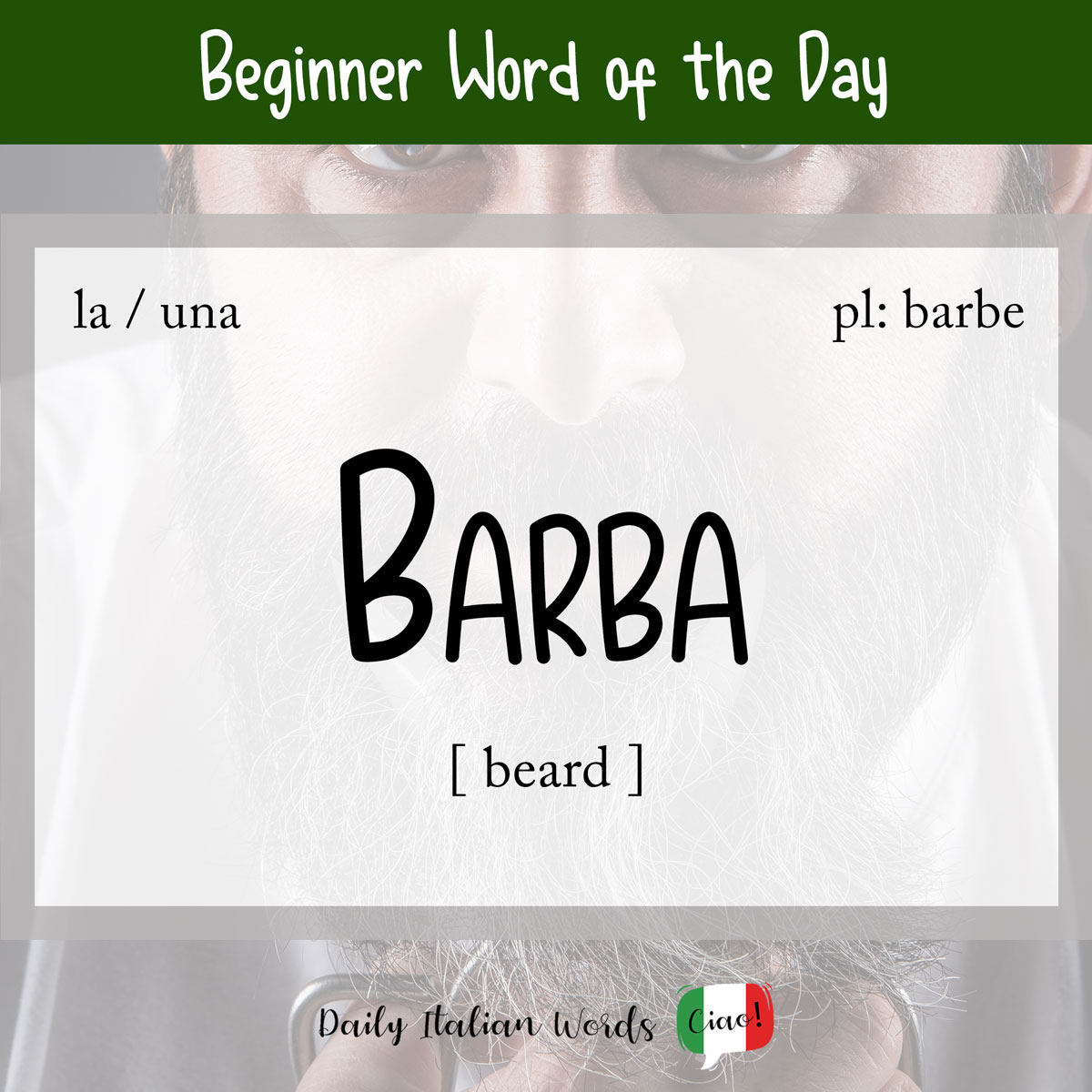
Italian Word of the Day: Barba (beard)

Whether you love them or hate them, many men choose to grow a beard at some point in their lives. In Italian, the word for this type of peli del volto (facial hair) is barba. barba beard The word comes from the Latin barba of the same spelling and meaning. Barba is a feminine noun, …

Read more

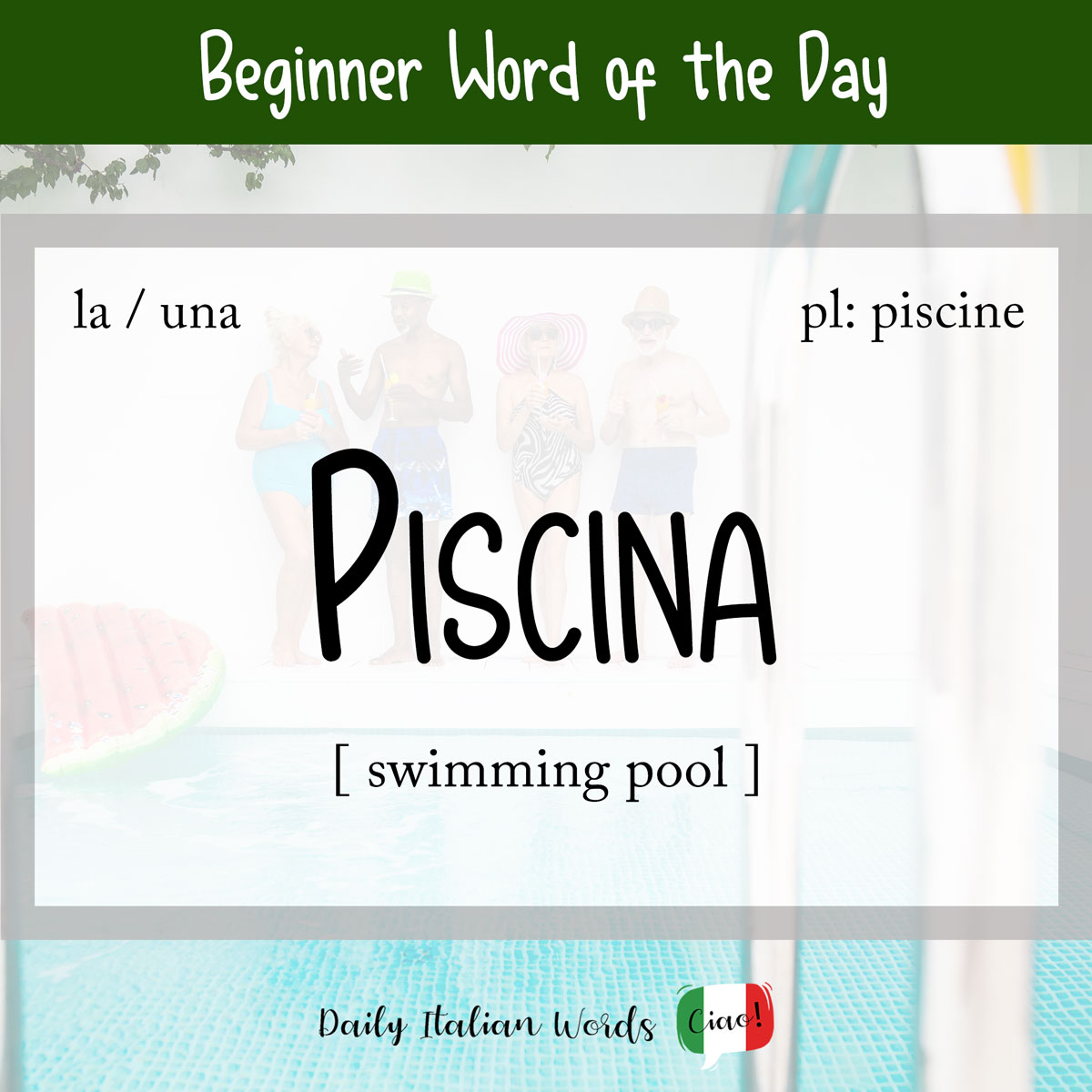
Italian Word of the Day: Piscina (swimming pool)

Since the birth of our son, my husband and I have made a joint commitment to prioritise fitness in our lives. While I hit the gym and regularly attend spin classes, my husband has chosen to focus on running and swimming at our local piscina (swimming pool). Six months in and we’re seeing pretty good …

Read more

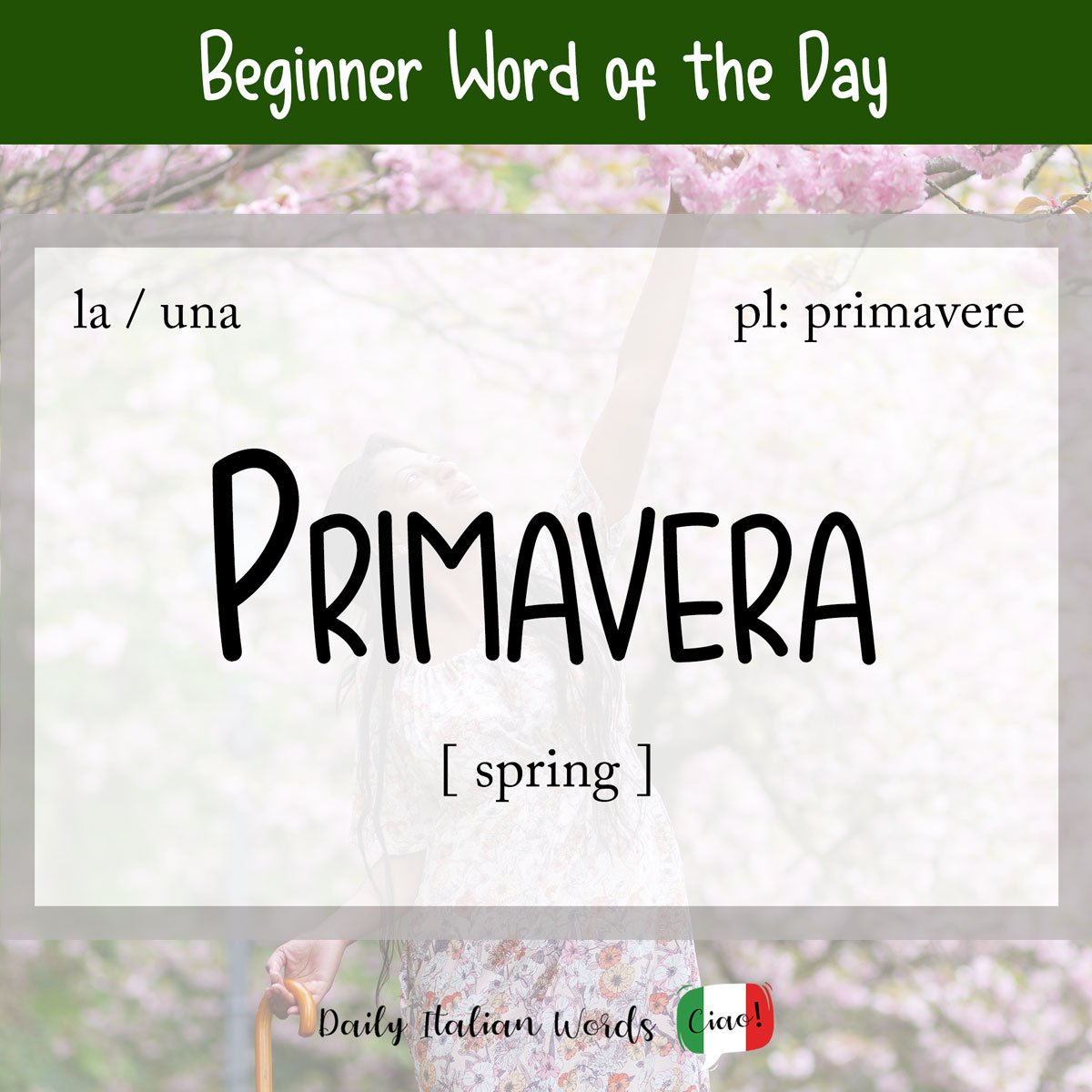
Italian Word of the Day: Primavera (spring)

If you ask someone about their favourite of the four seasons, chances are they’ll say spring, or primavera in Italian. Sadly, this lovely time of year is coming to an end! primavera spring It derives from the Late Latin primavera, which goes back to the Classical Latin ablative primo vere, signifying “at the beginning of …

Read more