Italian Word of the Day: Stivale (boot)
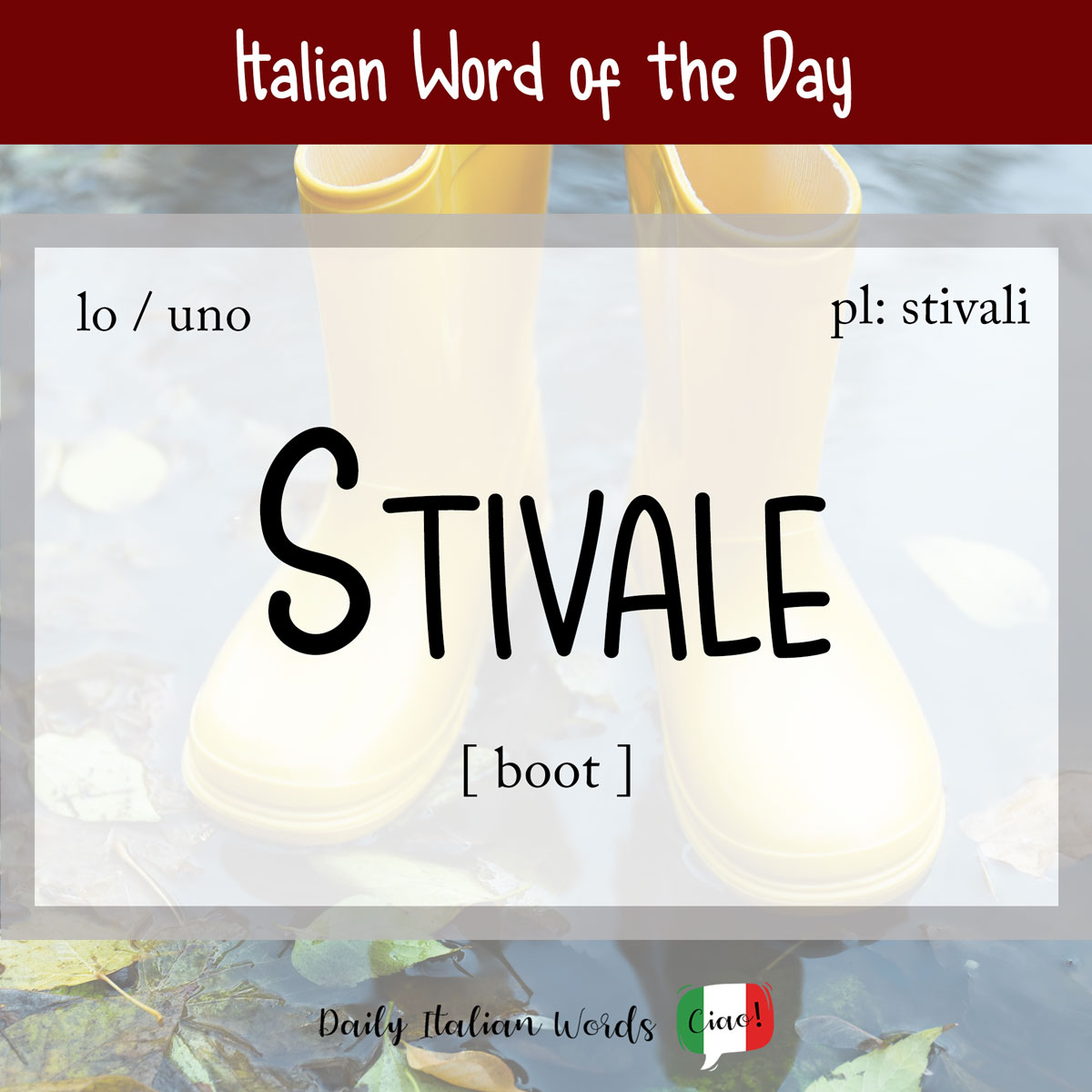
One of my son’s favourite pastimes, like many kids his age, is jumping in muddy puddles (pozzanghere). Unfortunately, he’ll sometimes run into a puddle even without his boots (stivali) on! stivale boot According to Treccani, the origin of stivale dates back to Old French estival, but beyond that, its etymology is uncertain. However, Devoto-Oli suggests …

Read more

Italian Word of the Day: Sonno (sleep / sleepiness)

If there’s one thing most of us likely don’t get enough of, especially those with young children, it’s sleep. The noun translates as sonno in Italian. sonno sleep / sleepiness The word comes from Latin somnus, which derives from Proto-Italic *swepnos and Proto-Indo-European *swépnos, rooted in *swep- meaning “to sleep.” It is a masculine noun …

Read more

Italian Word of the Day: Magro (thin / slim / light / scarce)

Some adjectives in Italian have only one straightforward meaning, while others encompass a range broader than you might anticipate. Magro is one such adjective! magro thin / light / scarce Since magro is an adjective, its ending changes based on the gender and number of the subject – magro (masculine, singular), magra (feminine, singular), magri …

Read more

Italian Word of the Day: Bagnato (wet)

Today’s word of the day, bagnato (wet), is inspired by the dreadful weather we’ve been experiencing here in Wales. We’ve barely seen a couple of weeks of sunshine in nearly nine months! bagnato wet Bagnato is an adjective that is also the past participle of the verb bagnare (to wet / to water). Bagnare, in …

Read more

Italian Word of the Day: Scimmia (monkey)

The monkey, known as scimmia in Italian, is one of the closest relatives to gli essere umani (human beings). In fact, we share over 90% of our DNA with our primate cousins! scimmia monkey The word is derived from the Latin simia, which in turn comes from simus, derived from the Greek simós meaning ‘”snub-nosed.” …

Read more

Italian Word of the Day: Chiamare (to call)

Italian verb "chiamare"

Today we are going to investigate a beginner verb that every learner should master from day one – chiamare – which means to call. chiamare to call Chiamare is a regular -ARE verb, which means that it should be conjugated in the following manner in the present tense: io chiamo = I calltu chiami = …

Read more