Italian Word of the Day: Assaggio (taste / sip)

The word assaggio (masculine, plural: assaggi) in Italian refers to a small portion of food or drink taken as a sample. In English, it is best translated as taste, but other possibilities include sip (when talking about drinks), bite or nibble to name a few. Combined with the verb fare (to do / make), you …
Read more

Italian Phrase: Mangiamo! (Let’s eat!)

In Italian, any verb that follows the plural first-person pronoun noi (we) must be conjugated with the ending -iamo in the present tense. This means that, for example, the infinitive andare (to go) becomes noi andiamo (we go), fare (to do/make) becomes noi facciamo (we do/make) and venire (to come) becomes noi veniamo (we come). …

Read more

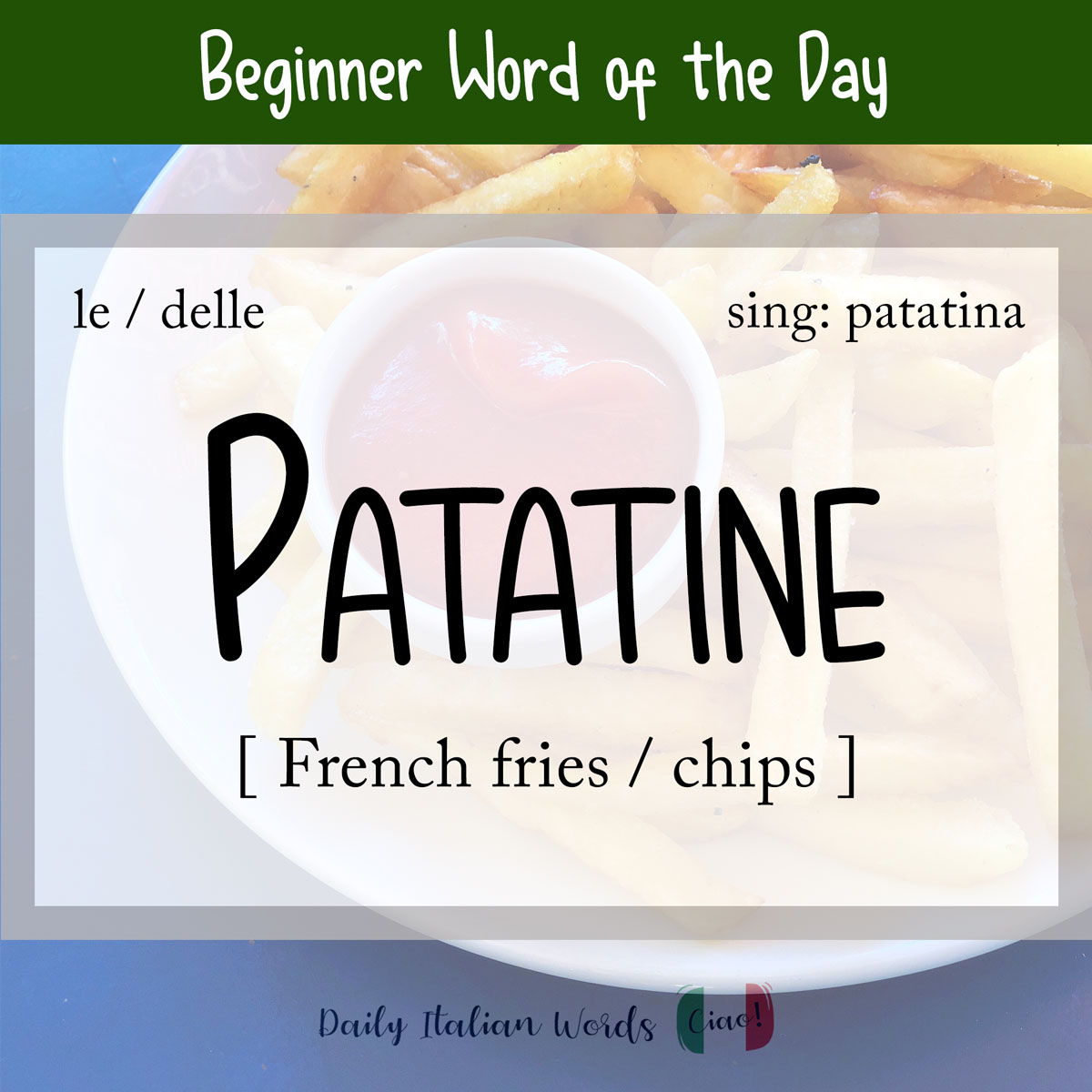
Italian Word of the Day: Patatine (chips / fries)

When not in the midst of a short-lived diet regime, I have the terrible habit of binging on chips (or crisps as they are known in the UK) and French fries. There is something about their salty greasiness that just hits the spot! The word for both of these irresistible junk foods in Italian is …

Read more

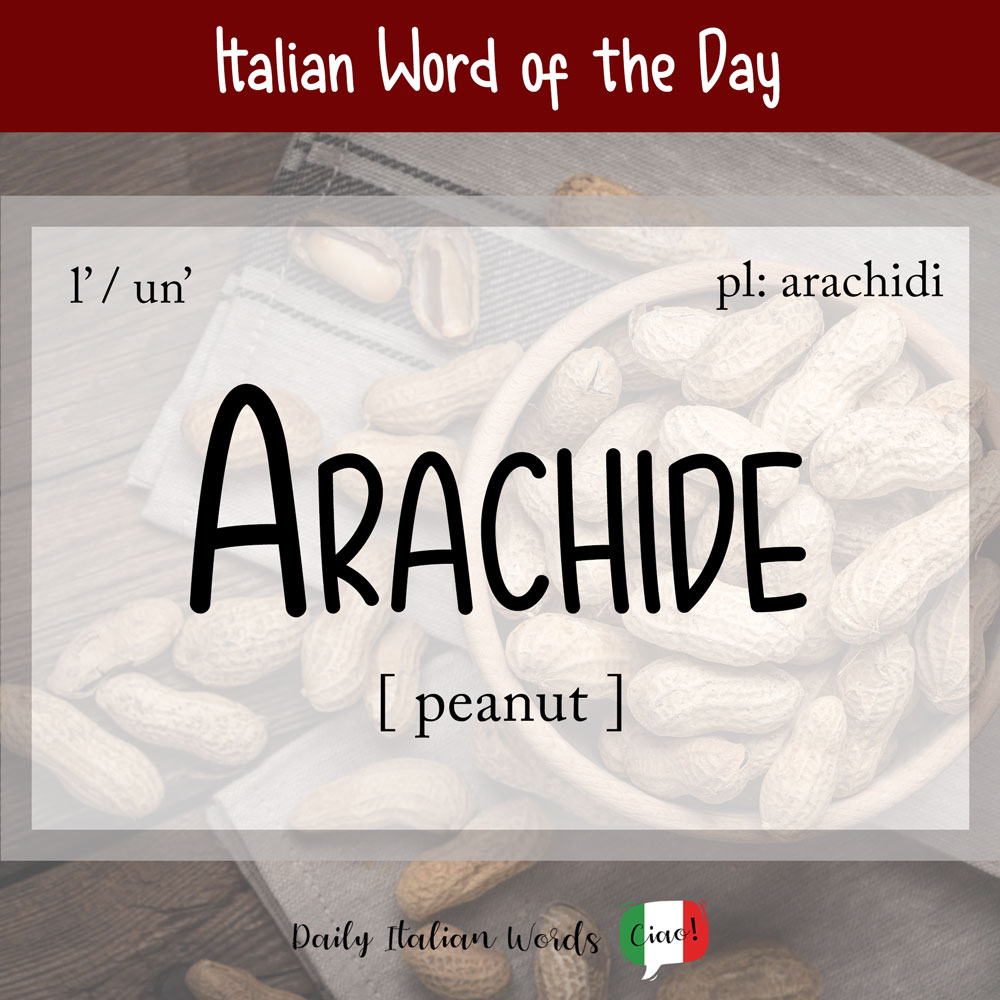
Italian Word of the Day: Arachide (peanut)

The word for both peanut and the peanut plant in Italian is arachide (feminine, plural: arachidi). Just as you can call a peanut a groundnut, goober or monkey nut in English, Italian too has three synonyms: nocciola americana, pistacchio di terra and cece di terra. Le arachidi sono il mio snack preferito. Peanuts are my …

Read more

Italian Word of the Day: Abbuffarsi (to stuff oneself)

If you want to say to stuff / gorge oneself in Italian, you can use the reflexive verb abbuffarsi (alternative spelling: abboffarsi). According to Treccani, this verb likely derives from buffare meaning to huff or to puff. If you have trouble remembering it, I find it helpful to make a mental association with the term …

Read more

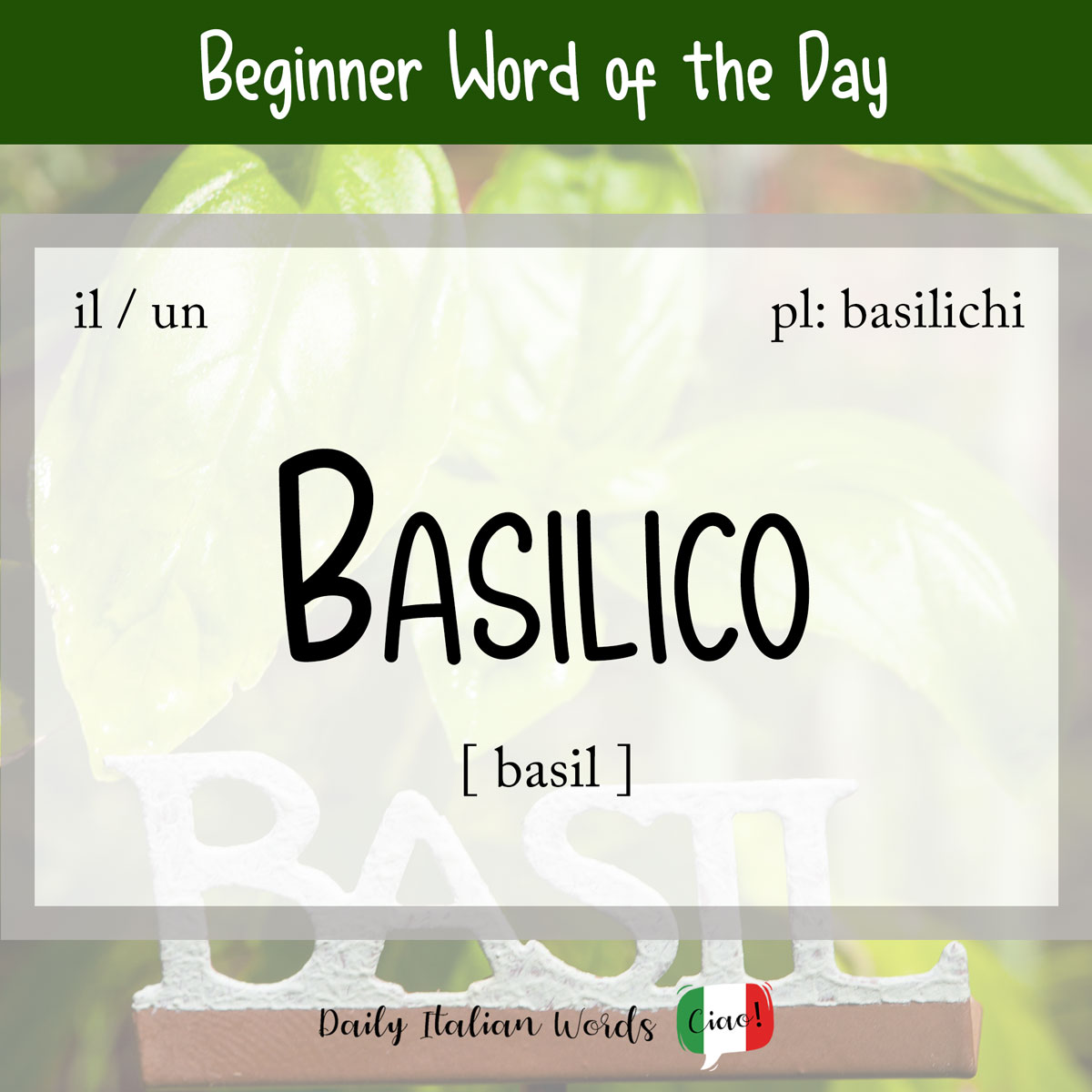
Italian Word of the Day: Basilico (basil)

A plant whose sweet-smelling leaves are often used as a herb in Italian cooking is basilico (masculine, plural basilichi), which is the word for basil. In the Tuscan dialect, it is pronounced with a double s (bassilico). basilico It must not be confused with the similar sounding basilica, which is the name given to certain …

Read more