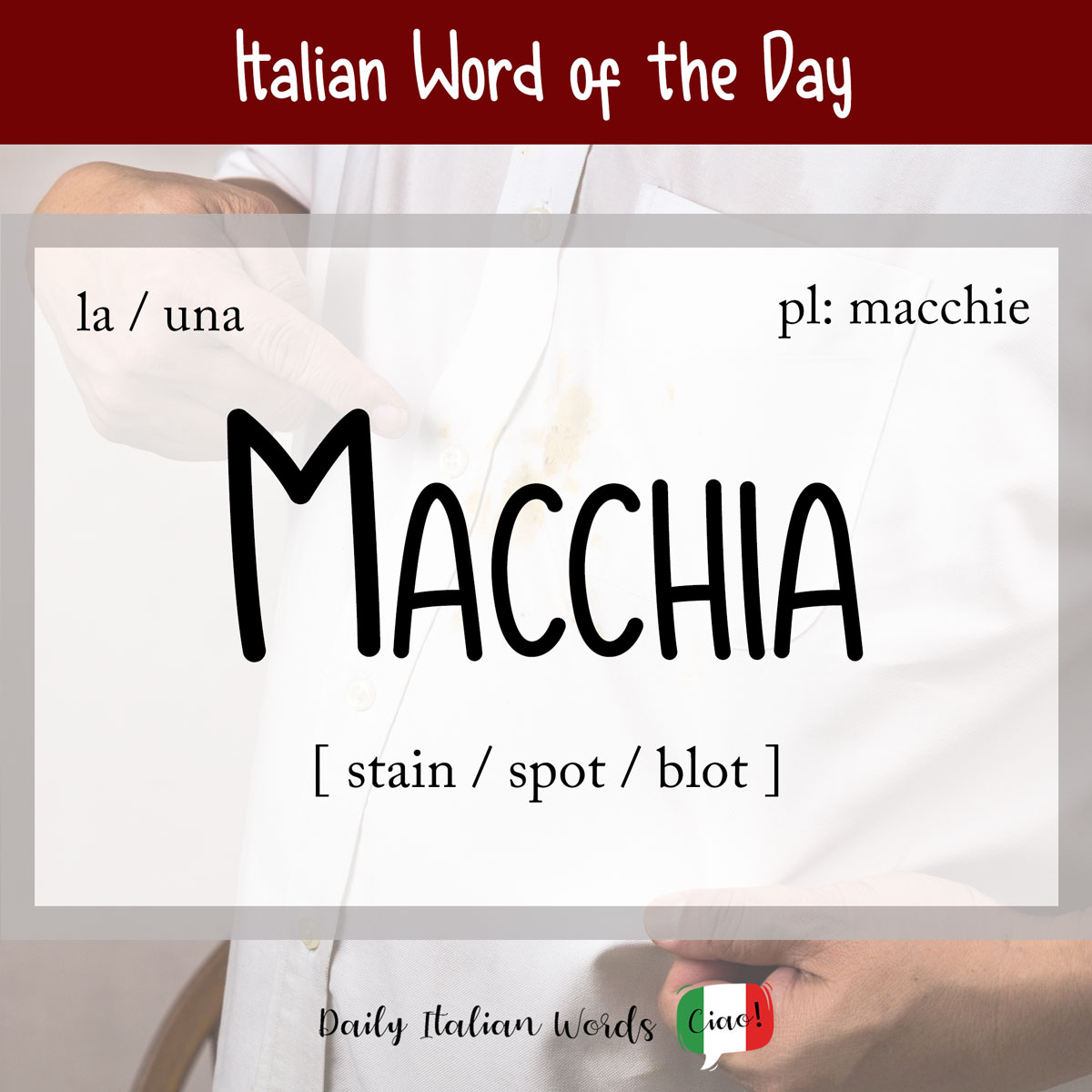
Italian Word of the Day: Macchia (stain / spot / blot)

The Italian word macchia is used to describe any stain, spot, or blot caused by ink, paint, dirt, or liquid, whether created intentionally or not. It directly derives from the Latin macŭla. macchia Because it is a feminine noun, it takes the following definite and indefinite articles: Perché questa macchia non va via? Why won’t …

Read more

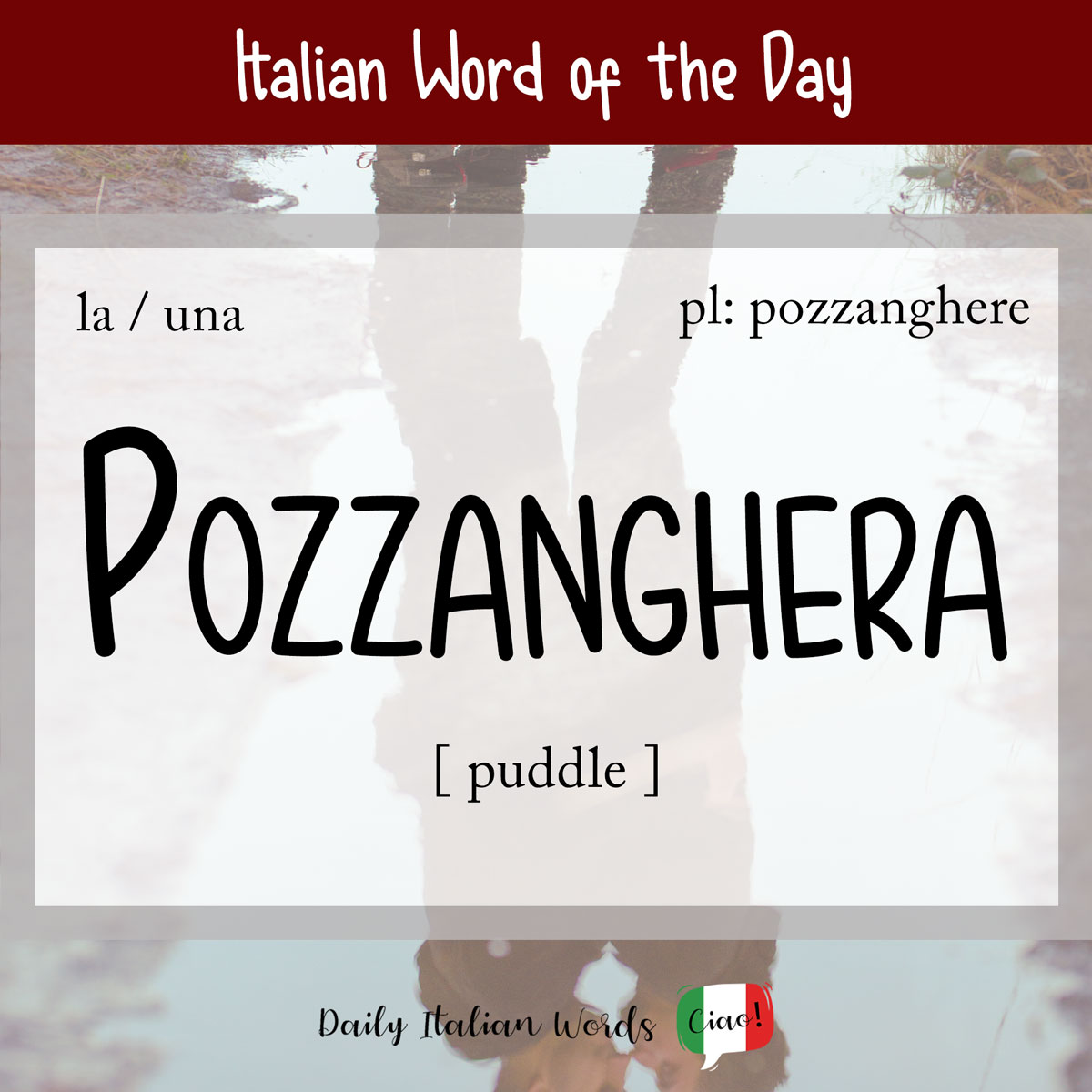
Italian Word of the Day: Pozzanghera (puddle)

The Italian word pozzanghera describes a muddy or dirty puddle or pool of water on the ground. pozzanghera /poz·zàn·ghe·ra/ -[potˈtsangera] It is a feminine noun, so it takes the following definite and indefinite articles: It is derived from the noun pozza (puddle / pool), with a double diminutive suffix, and can be traced back to …

Read more

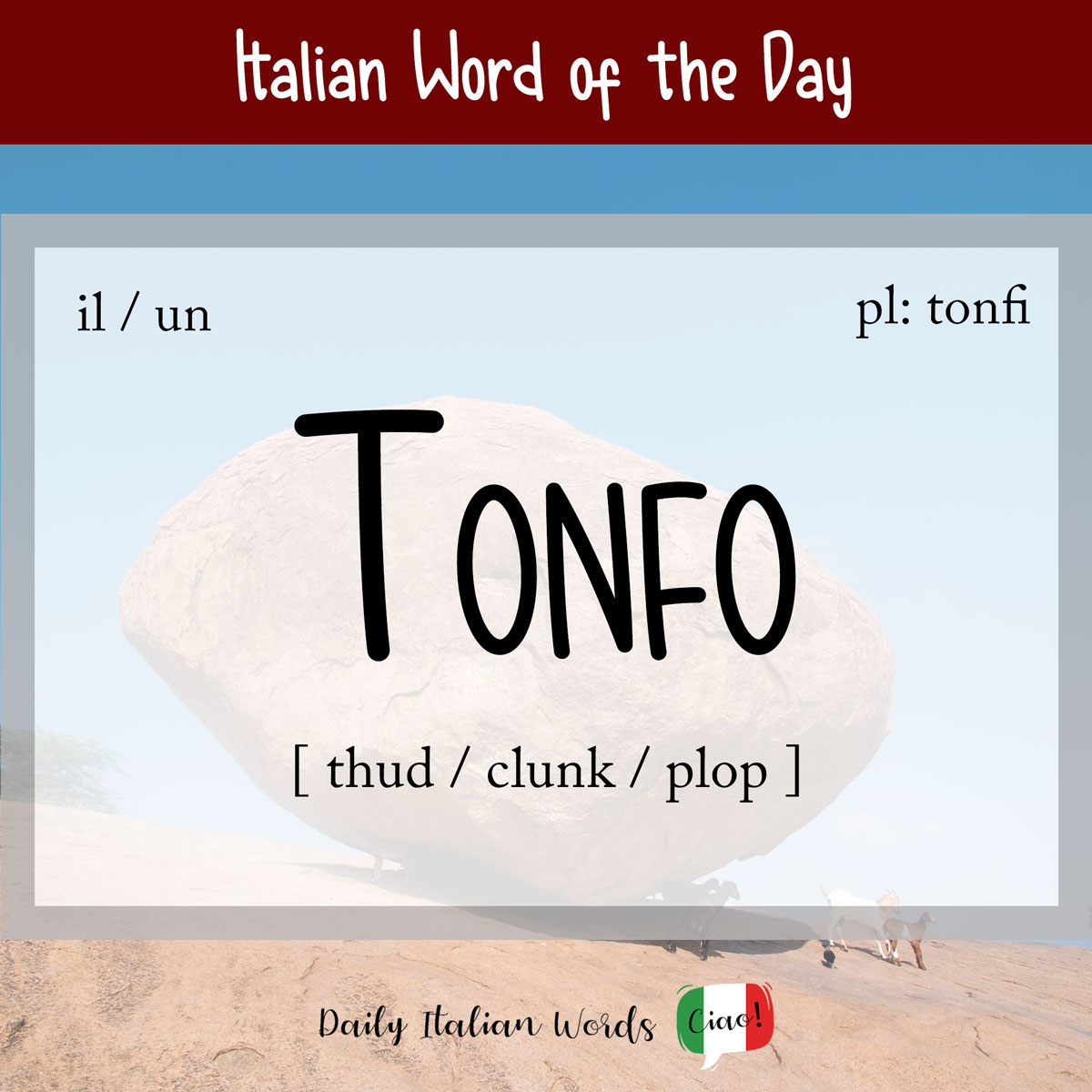
Italian Word of the Day: Tonfo (thud / clunk / plop)

When something large and heavy falls on the ground or into the water, it’s likely to produce a thudding sound, a phenomenon that in Italian can be described using the noun tonfo. tonfo It is derived from the Lombardic *tumpf meaning the sound of a fall, and has an onomatopoeic origin. Tonfo is a masculine …

Read more

Italian Word of the Day: Sfacciato (insolent / brash / brazen)

If an individual displays rude and arrogant behaviour, demonstrating a total lack of respect, you could characterise them as sfacciato in Italian, which translates to insolent, brash, brazen or impudent in English. sfacciato The term sfacciato originates from the root faccia (face), employed figuratively to convey notions of honor or respect. The s- prefix, in …

Read more

Italian Word of the Day: Spietato (ruthless / cutthroat / fierce)

The Italian adjective spietato can be translated into English in various ways, ranging from cruel and ruthless to fierce and cutthroat. spietato ruthless / cutthroat It derives from the noun pietà (pity), to which the prefix s- has been added. This prefix adds a sense of negation or absence, transforming the word to convey the …

Read more