Italian Word of the Day: Scavezzacollo (daredevil)
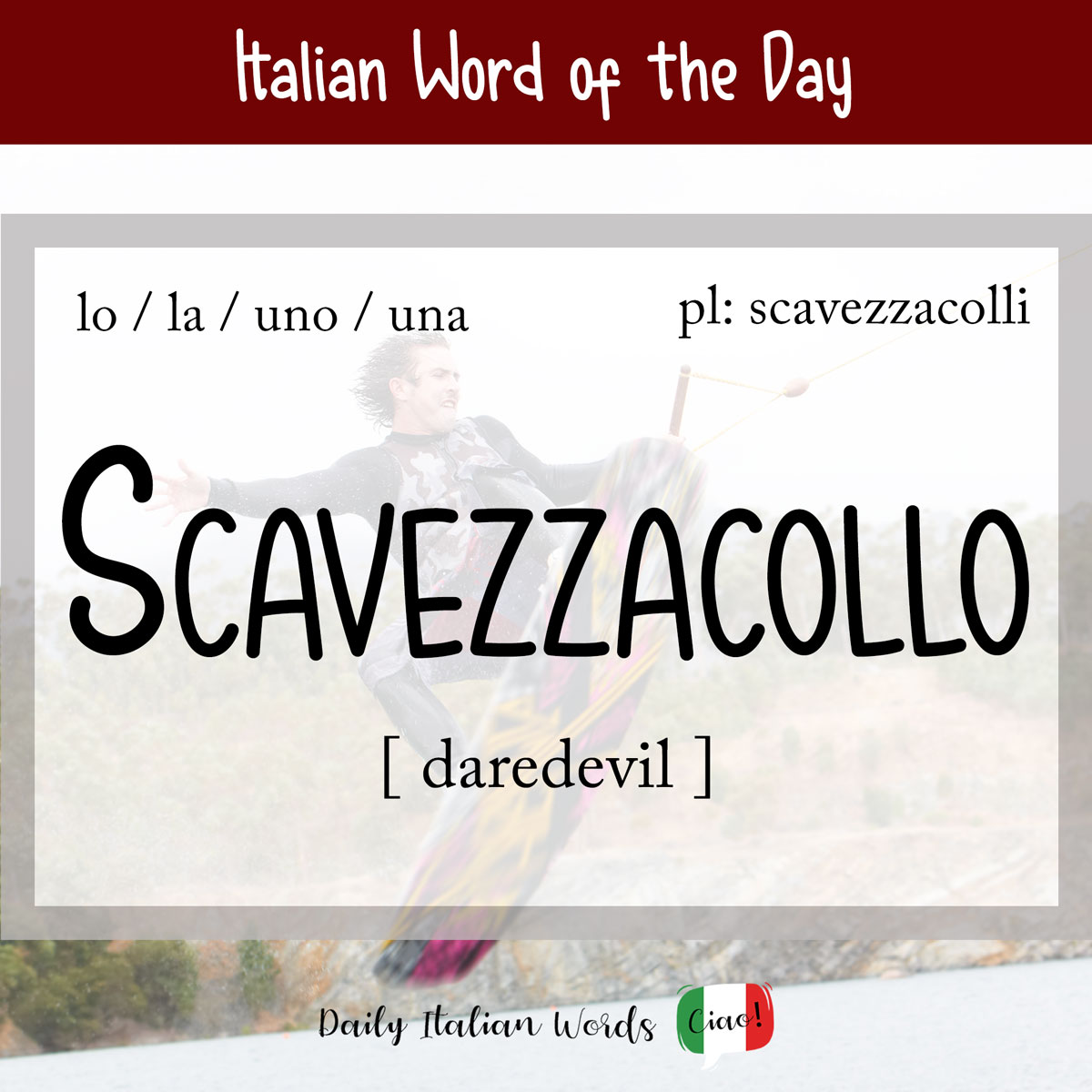
The word for a reckless young person who leads a wild, free and unruly life is scavezzacollo in Italian. Three possible translations in English include daredevil, risk-taker and tearaway. Learn with our video It is composed of two words: scavezzare, a single verb that means to break the top off a tree or more generally …
Read more

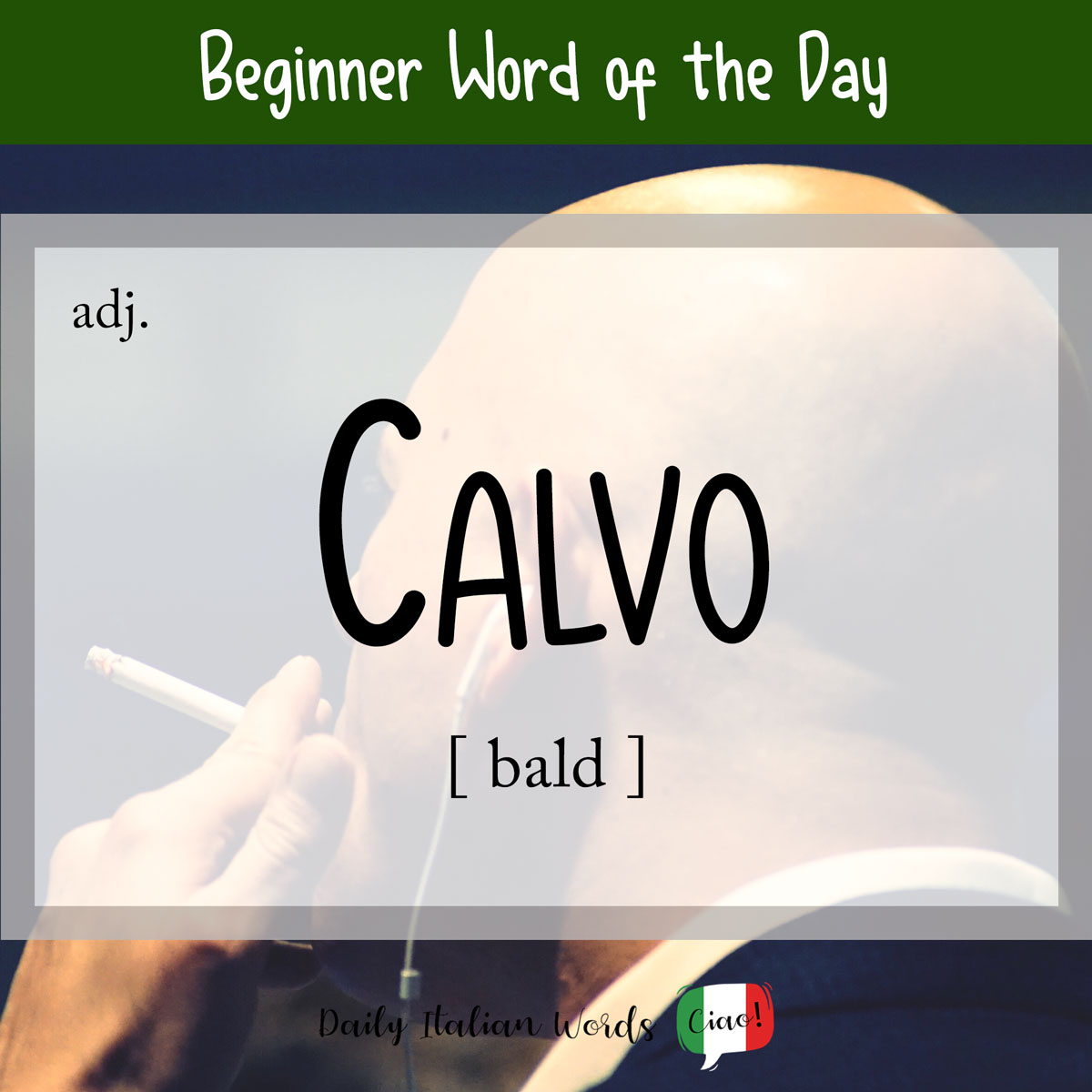
Italian Word of the Day: Calvo (bald)

The word for bald or bald-headed in Italian is calvo, which comes from the Latin calvus of the same meaning. Its feminine form is calva and their respective plural forms are calvi and calve. Learn with our video Essere calvo means to be bald whereas diventare calvo means to go bald. Sarò calvo fra qualche …

Read more

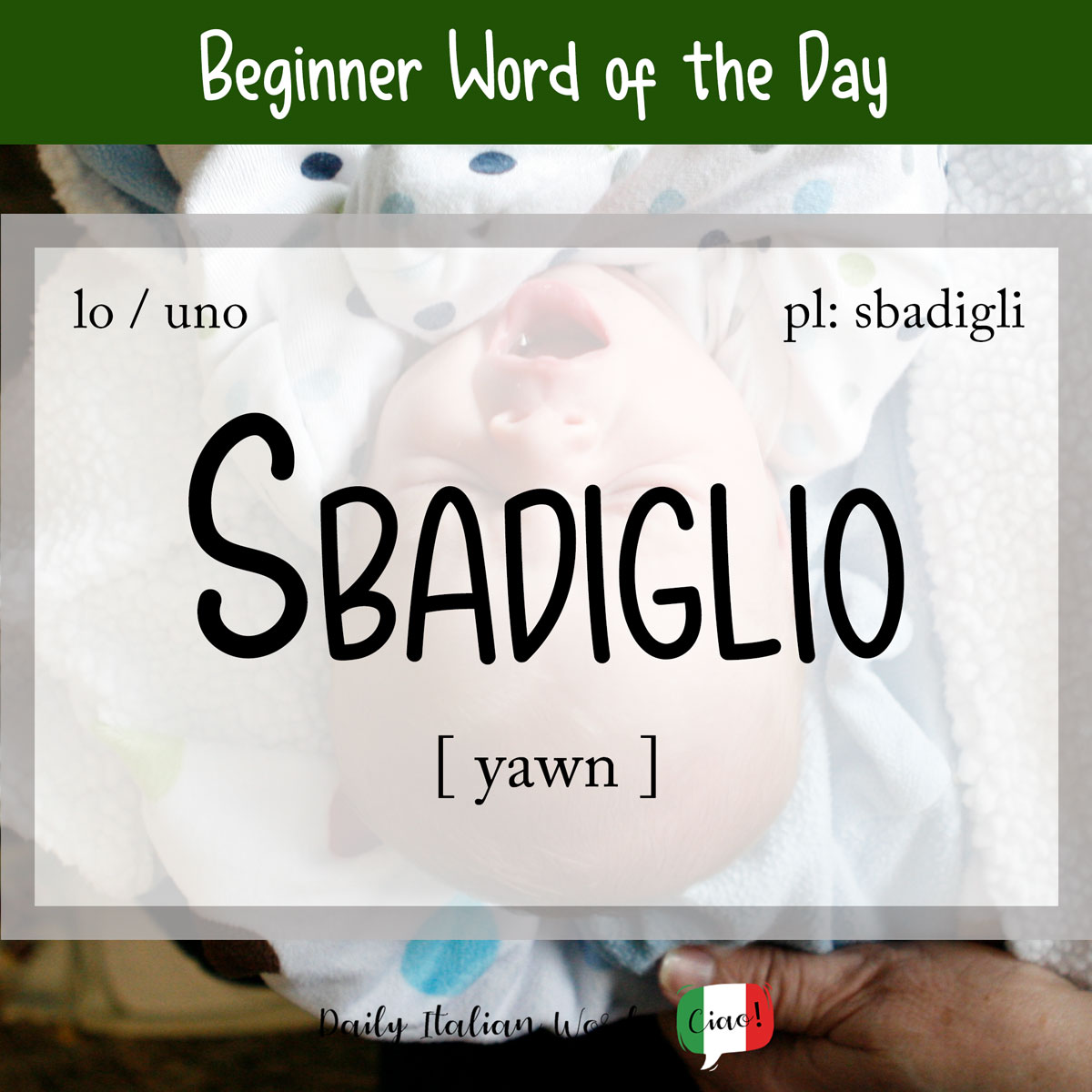
Italian Word of the Day: Sbadiglio (yawn)

The Italian word for yawn is sbadiglio (masculine, plural: sbadigli). Learn with our video Because it starts with s+consonant, the articles il (the – singular), un (a – singular), i (the – plural) and dei (some – plural) become lo, uno, gli and degli respectively. Some common verbs used with sbadiglio include: Tratteneva a stento …

Read more

Mattino vs Mattina – What’s the difference?

Mattino (masculine) and mattina (feminine), both of which translate as morning in English, are two words of different genders that derive from the same Latin adjective matutinus. They indicate the part of the day between dawn and noon. Their respective plurals are mattini (masculine) and mattine (feminine). Knowing which word to use and when can …

Read more

Italian Word of the Day: Bicchiere (glass / cup)

The Italian word for a glass or cup from which one drinks is bicchiere (masculine, plural: bicchieri). It is thought to derive from a dialectal form of old French, or possibly the Greek βῖκος (bikos). Learn with our video Ho fatto cadere il bicchiere e si è frantumato in mille pezzi. I dropped the glass …

Read more

Italian Word of the Day: Olio di oliva (olive oil)

Olio di oliva – or olive oil in English – is technically three words, but they appear together so often that we figured you’d let us off the hook, just this once! 😉 Olio is a masculine noun. To create the plural form, just get rid of the ending -o and you have oli, and …

Read more