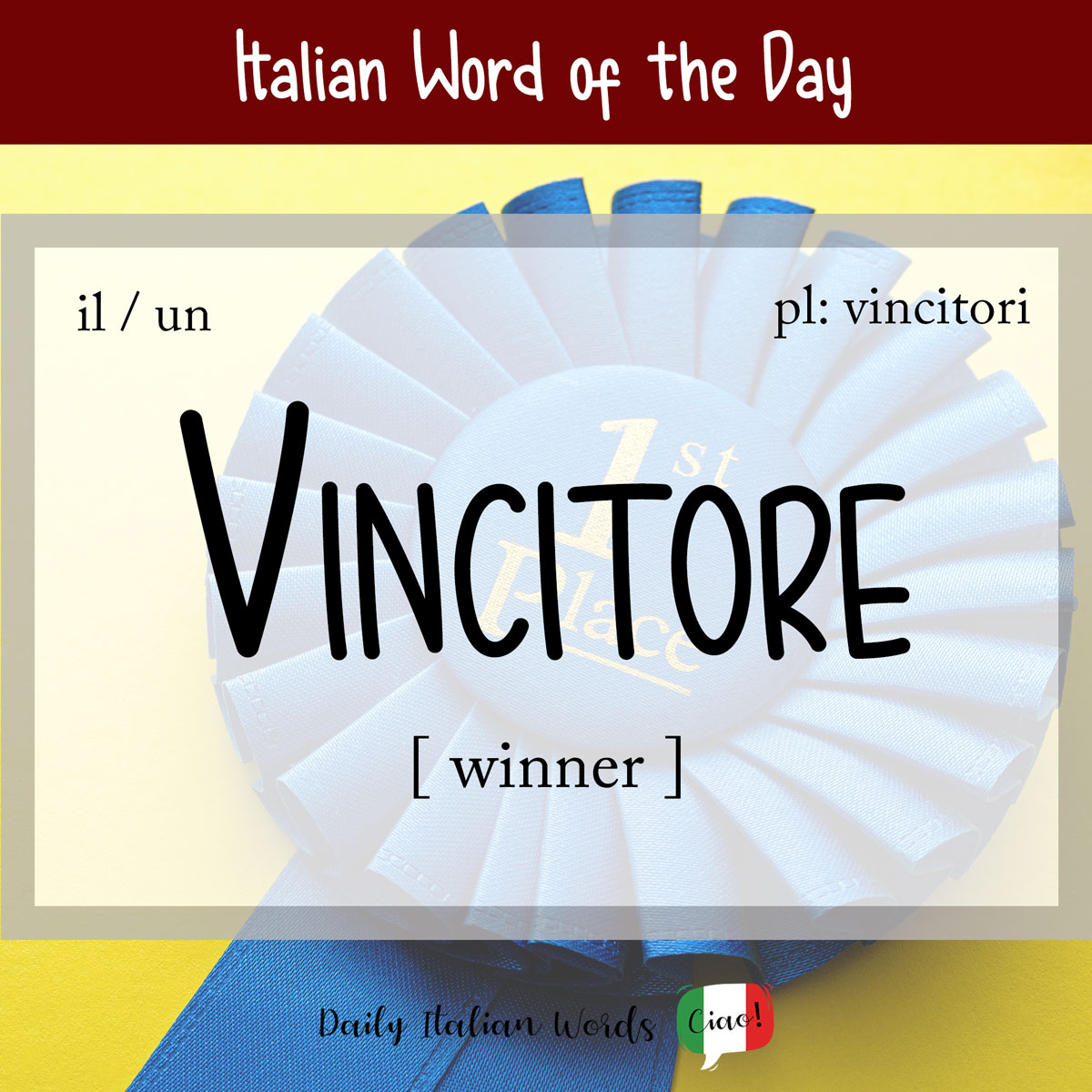
Italian Word of the Day: Vincitore (winner)

The Italian word for a male winner is vincitore (masculine, plural: vincitori). If you are talking about a female, this becomes vincitrice (feminine, plural: vincitrici). A useful way to remember this word is to think of the English terms victor or invincible. Learn with our video Il vincitore del torneo ha donato tutto il premio …

Read more

Italian Word of the Day: Vaccino (vaccine)

The word on everyone’s lips these days is vaccine, which in Italian translates as vaccino (masculine, plural: vaccini). Learn with our video and podcast The video is also available on our YouTube channel. The podcast episode can be found on Podbean, Google Podcast, Apple Podcast and Spotify. Keep scrolling for the written version. Both the …

Read more

Italian Word of the Day: Baracca (hut / shed)

The word baracca (feminine, plural: baracche) in Italian, which comes from the Catalan barraca, literally translates as a hut, shed or shack used as temporary shelter for people, animals or goods. It should be quite easy for English speakers to remember as it shares the same origin as the word barracks. Learn with our video …

Read more

Italian Word of the Day: Viavai (comings and goings)

Viavai (masculine, plural: viavai) is the word Italians use to talk about the busy movement of many people or things, especially in and out of a place. In English, possible translations include coming(s) and going(s), bustle and to and fro. Learn with our video and podcast The video is also available on our YouTube channel. …

Read more

Italian Word of the Day: Scatola (box / container)

The generic word for any box or container equipped with a lid, used for storing or transporting goods, is scatola (feminine, plural: scatole) in Italian. Learn with our video and podcast The video is also available on our YouTube channel. The podcast episode can be found on Podbean, Apple Podcast and Spotify. Keep scrolling for …

Read more

Italian Word of the Day: Bebè (baby)

The word bebè (masculine, invariable) is an affectionate way of saying baby or infant in Italian. It entered the language via the French bébé which itself comes from the English baby. Although the most commonly used terms for baby are bambino for a boy and bambina for a girl, they are somewhat problematic as they …

Read more