Have you ever created, designed or written something that you were extremely proud of because you did it all by yourself? If so, today’s Italian idiom is for you!
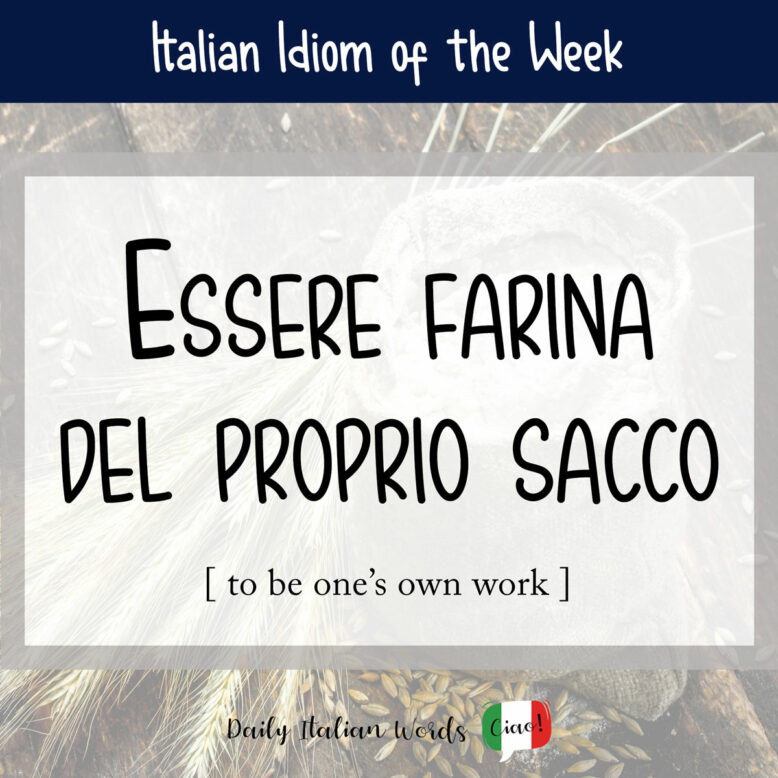
essere farina del proprio sacco
to be one’s own work
Essere farina del proprio sacco is a frequently used Italian idiomatic expression that describes something entirely of your own creation, something you managed to bring to fruition without anyone else’s help. Some other possible translations include:
- to be the fruit of one’s own labour
- to be one’s own doing
It is often used as a response when someone, such as a teacher or doubting relative, accuses you of copying someone else’s work, or when they doubt your abilities.
Here is how it is used with the various possessive pronouns:
- è farina del mio sacco = it’s my work
- è farina del tuo sacco = it’s your work (informal, singular)
- è farina del suo sacco = it’s his / her work / your work (formal)
- è farina del nostro sacco = it’s our work
- è farina del vostro sacco = it’s your work (plural)
- è farina del loro sacco = it’s their work
L’hai scritto tu questo tema? – Sì, è tutta farina del mio sacco!
Did you write this essay yourself? – Yes, it’s entirely my own work!
Mio figlio è molto fiero del treno di Lego che ha costruito. Nessuno l’ha aiutato – è tutta farina del suo sacco.
My son is very proud of the Lego train he built. No one helped him – it’s entirely his own work.
On the other hand, non essere farina del proprio sacco means that the person in question didn’t do something by themselves, or that they only managed to do it because someone else helped them.
Non credo che questi compiti siano farina del suo sacco. Si sarà fatto aiutare da un compagno di classe.
I don’t think this homework is his own doing. He must have had a classmate help him.
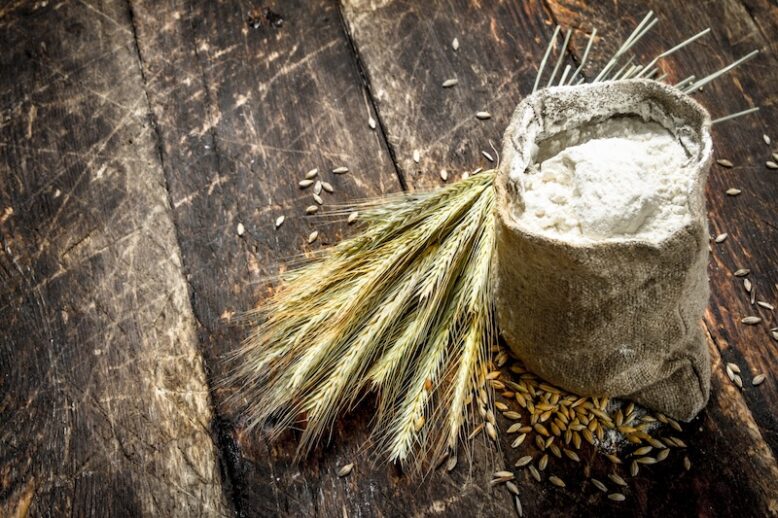
You may be wondering what the literal translation of this idiom is. Farina means flour and sacco means sack, so literally we are saying “it isn’t flour from one’s own sack.”
According to Dizionario Italiano Olivetti, the expression comes from the latin non est de sacco ista farina tua.
Virgilio, on the other hand, explains that in the past, dishonest millers would add low quality flour to their sacks to sell it a higher price. In other words, some of that flour would not be their own, and that might be where the expression originated.

Heather Broster is a graduate with honours in linguistics from the University of Western Ontario. She is an aspiring polyglot, proficient in English and Italian, as well as Japanese, Welsh, and French to varying degrees of fluency. Originally from Toronto, Heather has resided in various countries, notably Italy for a period of six years. Her primary focus lies in the fields of language acquisition, education, and bilingual instruction.