
Today’s Italian expression cannot really be classified as an idiom, but it is an interesting one to explore nonetheless because a) it has a dual meaning, and b) it is an expression that often bewilders learners when they first encounter it.
fare il bagno
to go for a swim / dip
Before we proceed any further, it is important to point out that fare il bagno – or farsi il bagno using the reflexive form of fare – is the perfect translation for to have / take a bath in Italian. It describes the act of entering the vasca da bagno (bathtub) and lavarsi (washing oneself).
A mio figlio non piace fare il bagno.
My son doesn’t like having a bath.
So far, so good, right? Now we can move on to the second, extended meaning of fare / farsi il bagno, which is to have a swim.
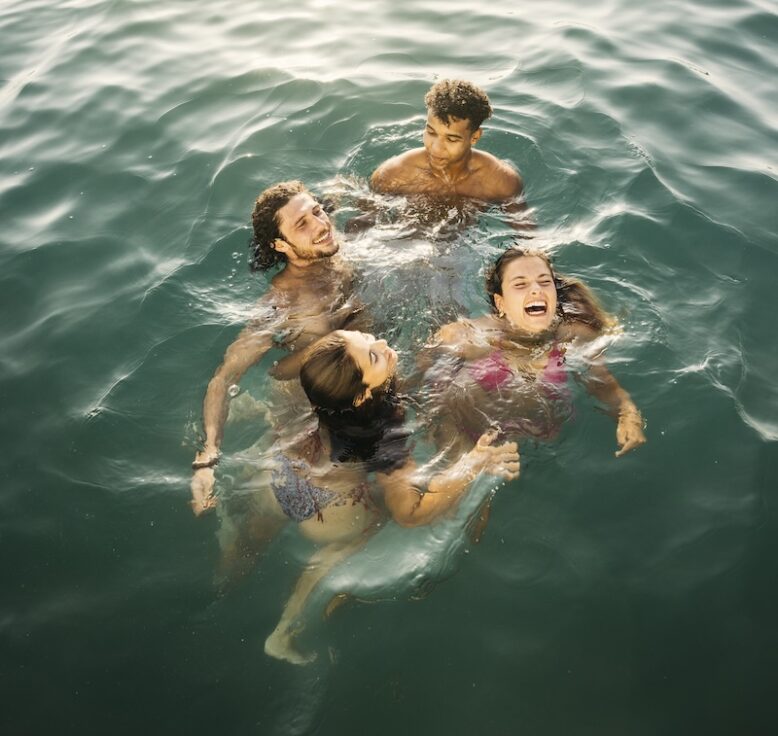
The reason this expression works is because fare / farsi il bagno actually refers to the act of entering a body of water and enjoying the experience, no matter how small or large that body of water might be. More importantly, it is the act of immersing oneself that is important – whether you actually start moving your arms and kicking your legs to move from point A to B is irrelevant.
Although we often use to go for a swim in English to describe entering the water as well as the act of swimming itself, I’d say that two much closer equivalents are to go for a dip or to bathe in the sea.
Here are a few places where you might fare un bagno:
- fare il bagno al / nel mare = to go for a swim / dip in the sea
- fare il bagno nell’oceano = to go for a swim / dip in the ocean
- fare il bagno nel fiume = to go for a swim / dip in the river
- fare il bagno al / nel lago = to go for a swim / dip in the lake
One glaring exception is piscina (swimming pool) because the act of going to the pool implies that active swimming is probably involved. In this case, you are more likely to hear:
- Vado in piscina = I’m going to the pool
- Vado a fare una nuotata in piscina = I’m going to have a swim in the pool
This isn’t to say that fare il bagno in piscina is incorrect, but it is less common as an expression. You might hear it used, for example, when someone talks about the pool in their backyard where they relax on hot, sunny days.
A big mistake learners tend to make is using the verb nuotare (to swim) when attempting to translate to go for a swim. You can only use nuotare when you want to literally describe the act of swimming.
Mi piace fare il bagno nel mare.
I like going for a swim / dip in the sea.
Mi piace nuotare nel mare.
I like swimming in the sea.
Prima facciamo un bagno per rinfrescarci, poi andiamo a nuotare un po’ più al largo.
First we’ll go for a dip to cool off, then we’ll swim a bit further out.
Finally, also keep in mind that fare il bagno can be used as a way of telling someone to get lost, as in Vai a fare un bagno! (Get lost!) or the more colloquial Vaffanbagno!

Heather Broster is a graduate with honours in linguistics from the University of Western Ontario. She is an aspiring polyglot, proficient in English and Italian, as well as Japanese, Welsh, and French to varying degrees of fluency. Originally from Toronto, Heather has resided in various countries, notably Italy for a period of six years. Her primary focus lies in the fields of language acquisition, education, and bilingual instruction.