Mio figlio (my son) has never been a fan of peas. Put a plate of them in front of him and you’d think I’d served him a bowl of tiny green villains. He’ll happily eat pasta, most kinds of minestra (soup) and practically anything else Italian, but peas? Absolutely not.
Which is kind of a shame, because today’s Italian word is pisello (pea).
pisello
pea
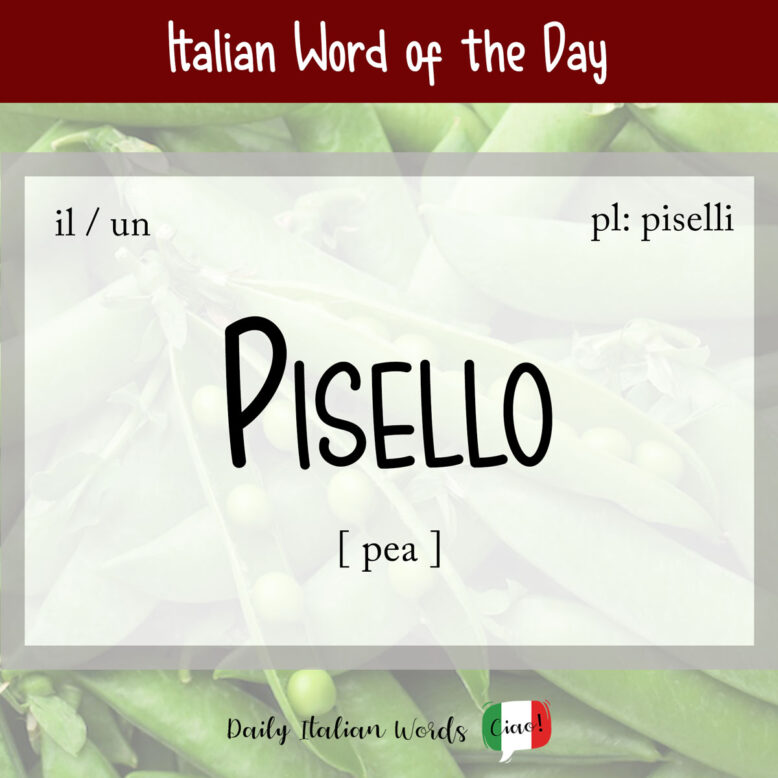
Pisello comes from the Latin pisum, meaning pea, which also gave rise to related words in several European languages. In Italian, the singular is pisello, while the plural is piselli. Here are its definite and indefinte articles:
- il pisello
- i piselli
- un pisello
- dei piselli
Mio figlio non mangia mai i piselli.
My son never eats peas.
You’ll encounter the word everywhere from supermarket shelves to restaurant menus, but a favourite in many countries around the world, including Italy, is la zuppa di piselli (pea soup).
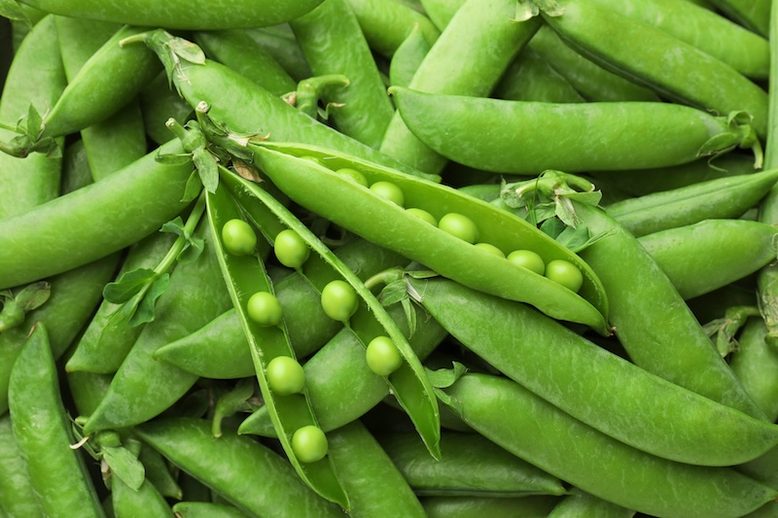
Although it is possible to purchase piselli freschi (fresh peas) still in their baccelli (pods), most people tend to buy them surgelati (frozen), simply because it is more convenient. (And apparently, fruit and vegetables tend to retain more of their nutrients if you flash freeze them – the things you learn!) However, I also coltivo piselli (grow peas) in my garden during the summer months, and I have to say that the gusto (taste) of fresh peas is ten times better than frozen.
Ho trovato un pisello sotto il tavolo.
I found a pea under the table.
But pisello has another meaning, and this is where this innocent little vegetable gets slightly more interesting!
In informal Italian, il pisello can also be a vulgar or childish term for the penis. The connection is presumably helped along by the pea’s small, rounded shape. You may also come across the diminutive form pisellino, literally little pea, which is once again a childish euphemism for the penis, kind of like saying willy in English.
So there you have it: pisello, a humble pea, a Latin descendant, a staple of cooking around the world, and, occasionally, a rather cheeky Italian euphemism.
As for my son? He still hates them. I wonder if he’d notice if I snuck them into his pasta dish one evening?

Heather Broster is a graduate with honours in linguistics from the University of Western Ontario. She is an aspiring polyglot, proficient in English and Italian, as well as Japanese, Welsh, and French to varying degrees of fluency. Originally from Toronto, Heather has resided in various countries, notably Italy for a period of six years. Her primary focus lies in the fields of language acquisition, education, and bilingual instruction.