Have you ever done something to benefit yourself, knowing full well that your actions could put someone else at a disadvantage? Or perhaps you’ve been on the receiving end of somebody’s selfish actions? Either way, there is a very appropriate expression in Italian to describe this way of behaving.
tirare acqua al proprio mulino
to be out for oneself / put oneself first
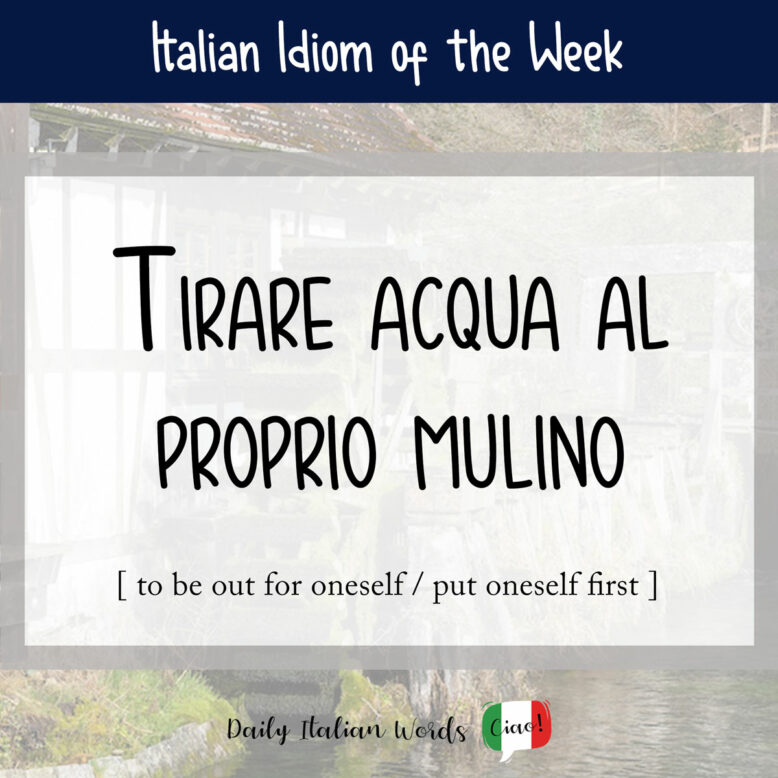
The literal translation of this expression is “to draw water to one’s own mill” and it is used to describe the act of pursuing one’s own interests, generally without any regard for the wellbeing of others (or even to their detriment). A few possible English translations include:
- to be out for oneself
- to look after number one
- to further one’s own cause
- to put oneself first
- to advance one’s own interests
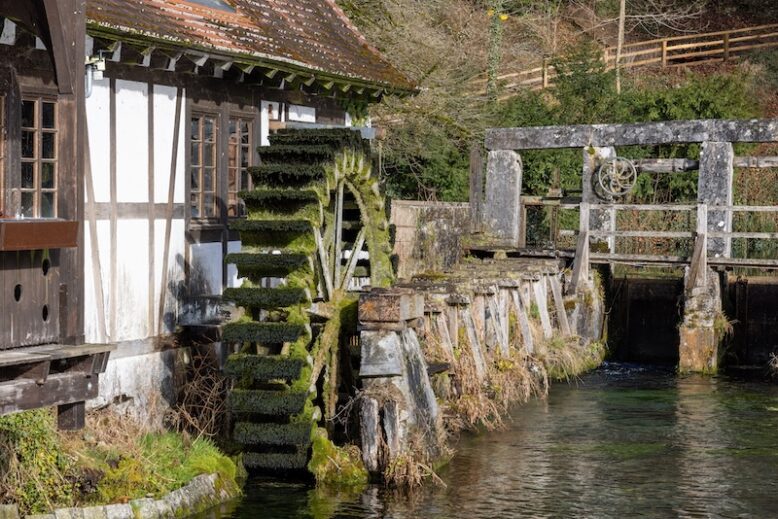
The mulino in this phrase was a water mill, not a windmill, which is mulino a vento. It used the power of flowing acqua (water) to get its blades turning. Once the le pale (blades) were spinning, they could be used to grind i cereali (grain) and do other useful jobs.
But there was a catch: no water, no spinning! So millers wanted to get as much water as possible flowing toward their own mill. They would dig channels and even redirect parts of the river to keep their mill running.
The problem was that what helped one mill could hurt another. By taking more water for themselves, millers could leave their neighbours with less – basically saying, Più acqua al mio mulino, meno al tuo! (More water for my mill, less for yours!)
Il politico sta cercando di tirare acqua al proprio mulino prima delle elezioni.
The politician is trying to advance his own interests before the elections.
Non fidarti troppo di quello che dice: sta solo tirando acqua al proprio mulino!
Don’t trust everything he says: he’s just looking out for himself!
You may also see tirare replaced by the verb portare (to bring).
Durante la riunione, Luca portava acqua al proprio mulino ogni volta che apriva bocca.
During the meeting, Luca was constantly pushing his own agenda.

Heather Broster is a graduate with honours in linguistics from the University of Western Ontario. She is an aspiring polyglot, proficient in English and Italian, as well as Japanese, Welsh, and French to varying degrees of fluency. Originally from Toronto, Heather has resided in various countries, notably Italy for a period of six years. Her primary focus lies in the fields of language acquisition, education, and bilingual instruction.