
One word in particular echoed throughout the shark documentary my son and I watched the other evening: torbido, used every few minutes to describe the murky depths with which the scuba-divers had to contend.
torbido

In English, we have the word turbid, which comes from the same Latin origin turbidus, but we would be more likely to use synonyms such as murky, muddy or cloudy in everyday conversation.
It is, of course, an adjective whose form changes depending on the number and/or gender of the subject in question. For example:
- il lago torbido = the murky lake
- i laghi torbidi = the murky lakes
- l’acqua torbida = the murky water
- le acque torbide = the murky waters
L’acqua del mare è così torbida – non si vede nulla.
The sea water is so murky – you can’t see anything.
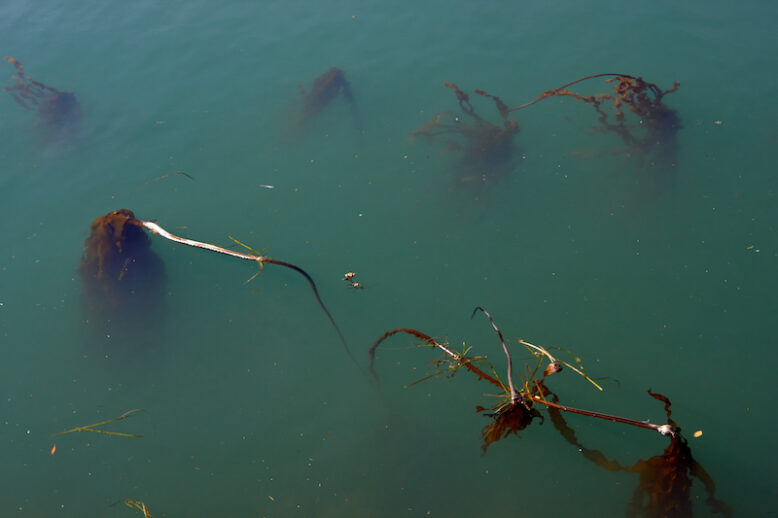
As is the case with many adjectives, torbido also has a couple of figurative meanings. First of all, we have fishy, shady or dishonest.
Come abbiamo fatto a finire in una situazione torbida come questa?!
How did we end up in such a shady situation?!
Alternatively it can denote something gloomy or troubled, as in tempi torbidi (troubled times) or un’espressione torbida (a gloomy expression), or even something dark and sinister such as pensieri torbidi (dark thoughts). To say that this adjective offers a lot of flexibility would be an understatement!
Used as a noun, it can also refer something, such as a situation or story, that is fishy or strange. For example:
C’è del torbido nel suo racconto.
There is something fishy about his story.
Before we conclude, let’s take a quick look at the expression pescare nel torbido, which can be translated as something along the lines of “to fish in troubled waters”. This refers to the idea of gaining an advantage by making the most of an ambiguous situation and chaos, which may or may not have been created intentionally. (Virgilio Sapere)


Heather Broster is a graduate with honours in linguistics from the University of Western Ontario. She is an aspiring polyglot, proficient in English and Italian, as well as Japanese, Welsh, and French to varying degrees of fluency. Originally from Toronto, Heather has resided in various countries, notably Italy for a period of six years. Her primary focus lies in the fields of language acquisition, education, and bilingual instruction.