
The Italian adjective molle is used to describe things that yield to touch or pressure. In English, we might use descriptors such as soft, flabby or damp depending on the object being described, but in Italian, molle neatly covers all these translations.
molle
soft / flabby / damp
In Italian, adjectives always agree with the noun they describe. In this case, molle stays the same for masculine and feminine nouns, but it changes to molli in the plural. It derives directly from the Latin mŏllis of the same meaning.
Things that are often described as being molle include skin (la pelle molle – flabby skin), different kinds of food (il pane molle – the mushy/soft bread), and surfaces (il terreno molle – soft ground). Quite often, things that are molle are also damp, or even wet, because dampness can make certain things more pliable – just think of every Italian’s nightmare, la pasta molle (mushy pasta)!
Mio figlio dice che le mie braccia sono molli!
My son says my arms are flabby!
Non mi piace mangiare la pasta molle. La preferisco al dente.
I don’t like eating mushy pasta. I prefer it al dente.
It differs from a similar adjective morbido in that morbido typically means soft to the touch (like a fluffy blanket or pillow), while molle means soft in the sense of physically yielding, squishy, mushy, or limp.
Figuratively, molle can describe someone or a group of people who are weak or feeble – a “flabbiness of spirit,” if you like! The translation I find the most fitting in this case is lackadaisical.
La squadra non ha fatto certamente una bella figura per errori tecnici e un atteggiamento molle.
The team certainly didn’t make a good impression due to technical errors and a lackadaisical attitude.
From molle derives the adjective molliccio, formed by adding the diminutive–pejorative suffix -iccio. The term conveys an added sense of unpleasant dampness, making soggy, mushy and squashy its closest English equivalents.
Oh no, il pane che ho appena sfornato è tutto molliccio dentro.
Oh no, the bread I just took out of the oven is all mushy inside.
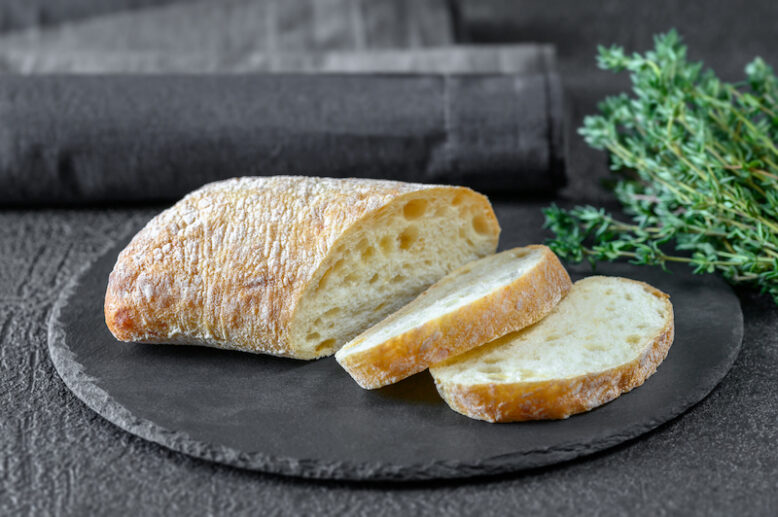
And it’s no coincidence whatsoever that the inner part of a loaf of bread is known as la mollica in Italian! That’s the one part my suocera (mother-in-law) simply refuses to eat, so she always give it to my husband, who happily accepts.
Note that mollica is pronounced with the accent on the i (mollìca). Although certain regions prefer the accent on the o, this is often considered incorrect.
mollica
Speaking of nouns, molle can act as a noun itself, meaning the soft part of something, such as the inside of a piece of candy.
Finally, don’t confuse molle with the noun molla, which is the word for a spring or metal coil.

Heather Broster is a graduate with honours in linguistics from the University of Western Ontario. She is an aspiring polyglot, proficient in English and Italian, as well as Japanese, Welsh, and French to varying degrees of fluency. Originally from Toronto, Heather has resided in various countries, notably Italy for a period of six years. Her primary focus lies in the fields of language acquisition, education, and bilingual instruction.