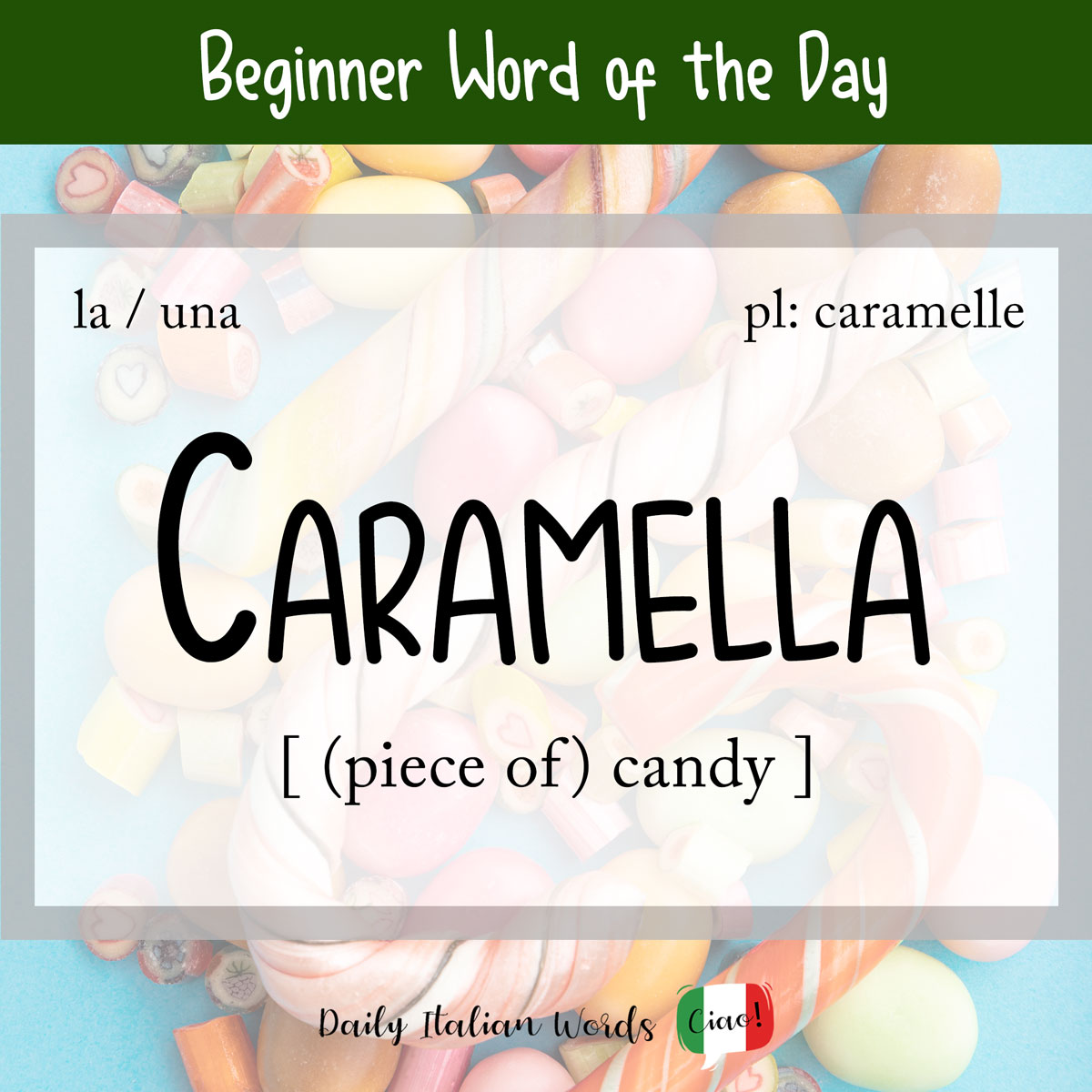
Italian Word of the Day: Caramella (piece of candy)

Both the English caramel and the Italian caramella derive from the Spanish caramelo, which in turn can be traced back to the Latin calamellus, the diminutive of calamus (sugarcane). Caramel and caramella can be considered false friends, however, in that the Italian word refers to any piece of candy or sweet made of sugar, whereas …

Read more

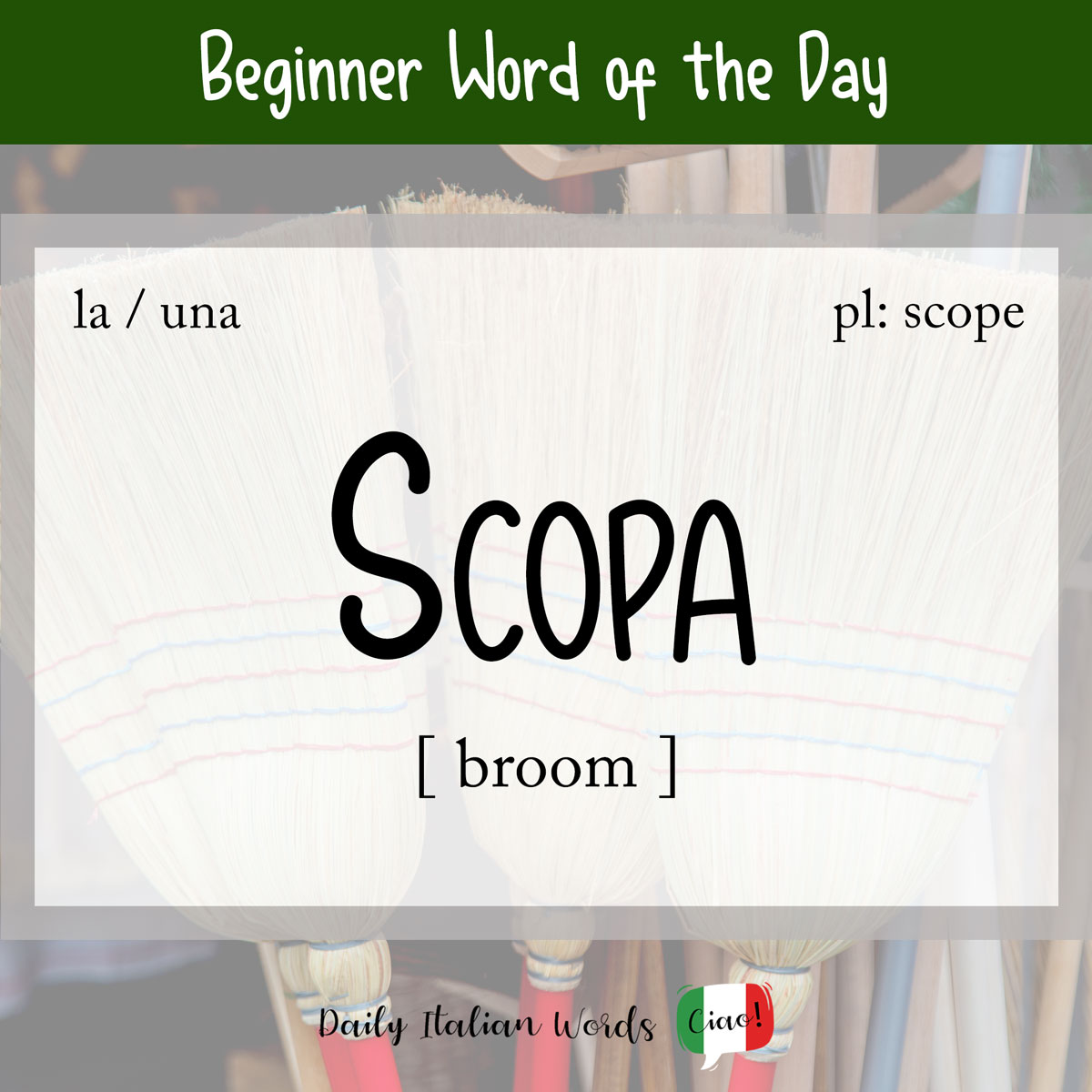
Italian Word of the Day: Scopa (broom)

Scopa is the word for broom in Italian. It is a feminine noun that comes from the Latin scopae meaning twigs. The definite and indefinite articles you need to use with this word are as follows: La strega vola sulla sua scopa. The witch flies on her broom. Here are some verbs that often appear in …

Read more

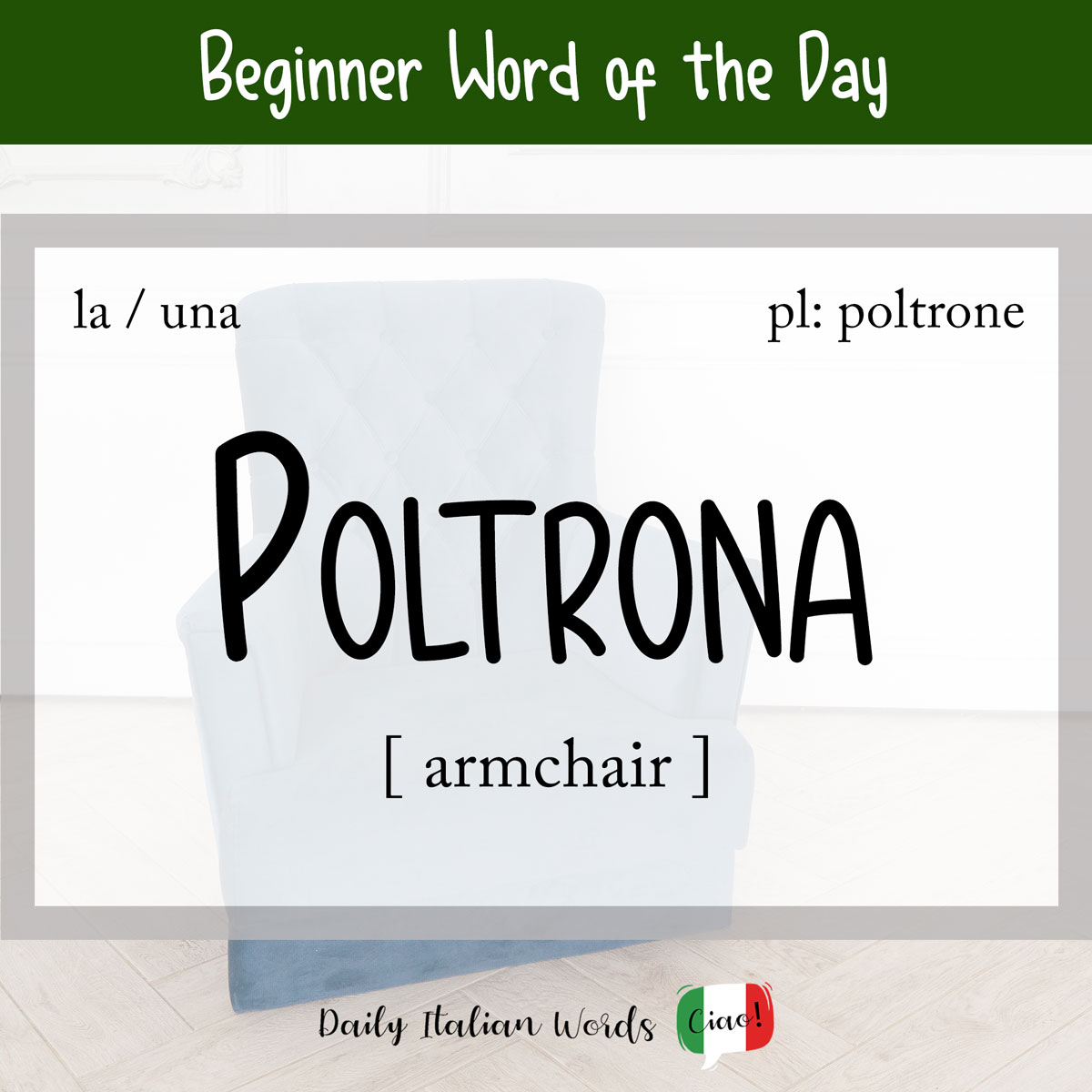
Italian Word of the Day: Poltrona (armchair)

Poltrona is the word for a large and comfortable seat, equipped with backrest and armrests. It derives from the archaic word poltro meaning bed. In English, the most common translation is armchair. Poltrona is a feminine noun, so it takes the following definite and indefinite articles: la poltronathe armchair una poltronaan armchair le poltronethe armchairs …

Read more

Italian Word of the Day: Diavolo (devil)

In Christian and Jewish belief, the enemy of Dio (God) and the supreme spirit of evil is il Diavolo (the Devil), otherwise known as Satana (Satan). You will see this word written with both a capital letter ‘D’ and a lower case ‘d’. Generally speaking, the capital letter is used when referring specifically to Satan, …

Read more

Italian Word of the Day: Spigolo (corner / edge)

An important word to know if you have a baby or toddler wandering around the house is spigolo which means corner, angle or edge. It is used most frequently to talk about the edges of furniture (particularly tables), walls, boxes, and cubes. Spigolo is a masculine noun that begins with the consonants sp, so it …

Read more

Italian Word of the Day: Soleggiato (sunny / sunlit)

After a number of vicious winter storms, the sun is shining for the first time in days, so what better word to talk about than soleggiato, which means sunny or sunlit. As you have probably inferred, it is a derivative of the word sole (sun). Being an adjective, the ending changes to match the gender …

Read more