Italian Word of the Day: Gelosia (jealousy / envy)
Italian word "Gelosia"

Ah, la gelosia! That passionate mix of love, doubt, and a few overreactions we’d rather forget. In Italian, this word sounds and means pretty much the same as “jealousy” in English, but it hides another meaning that might just surprise you. Curious? Let’s find out what it is! Gelosia But first, a quick grammar note: …
Read more

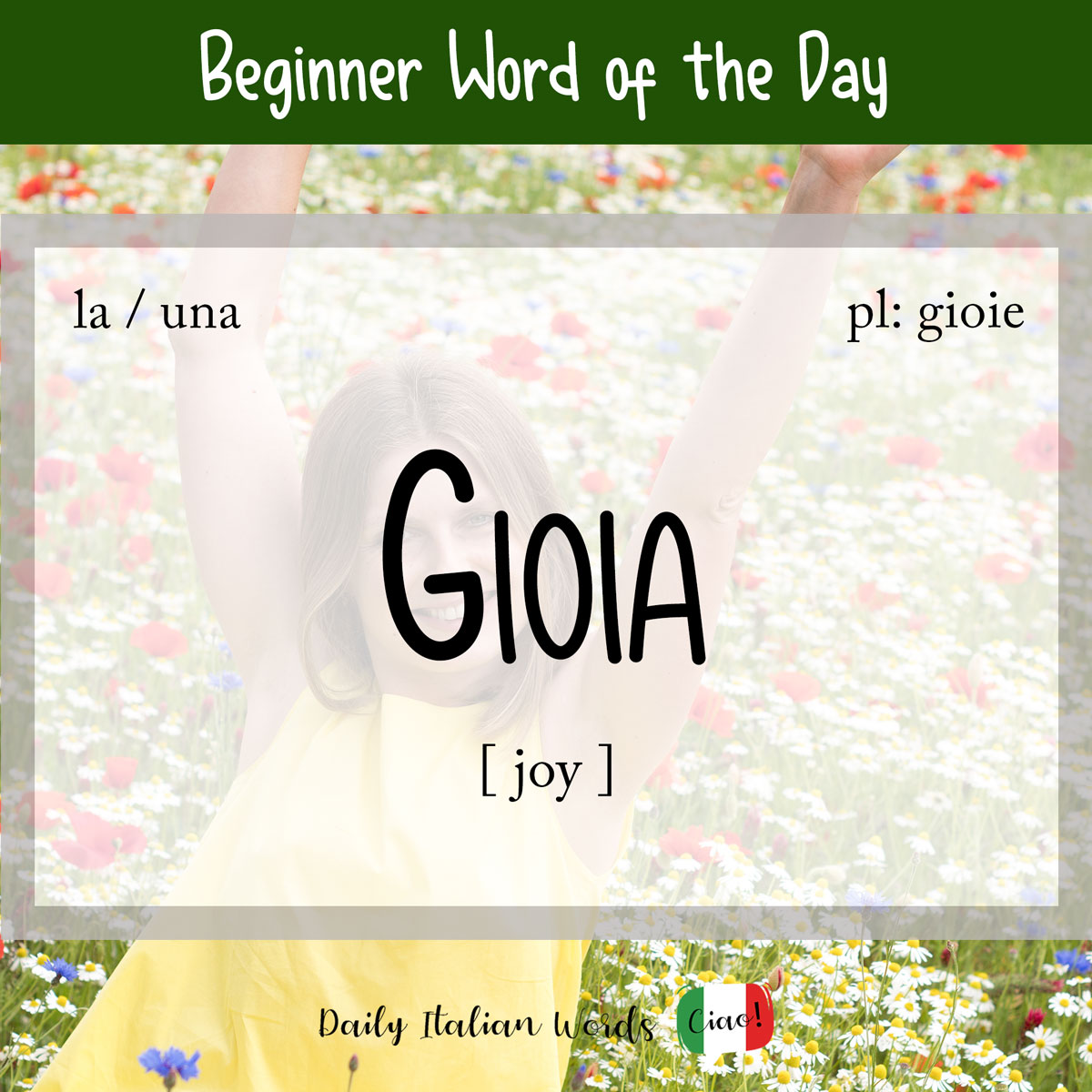
Italian Word of the Day: Gioia (joy)

Wouldn’t you agree that we all need a little more joy in our lives? The Italian word for this positive sentiment is gioia. gioia joy Gioia is a feminine noun that takes the following definite and indefinite articles: Gioia, similar to the English word joy, can denote both a state of being and the source …

Read more

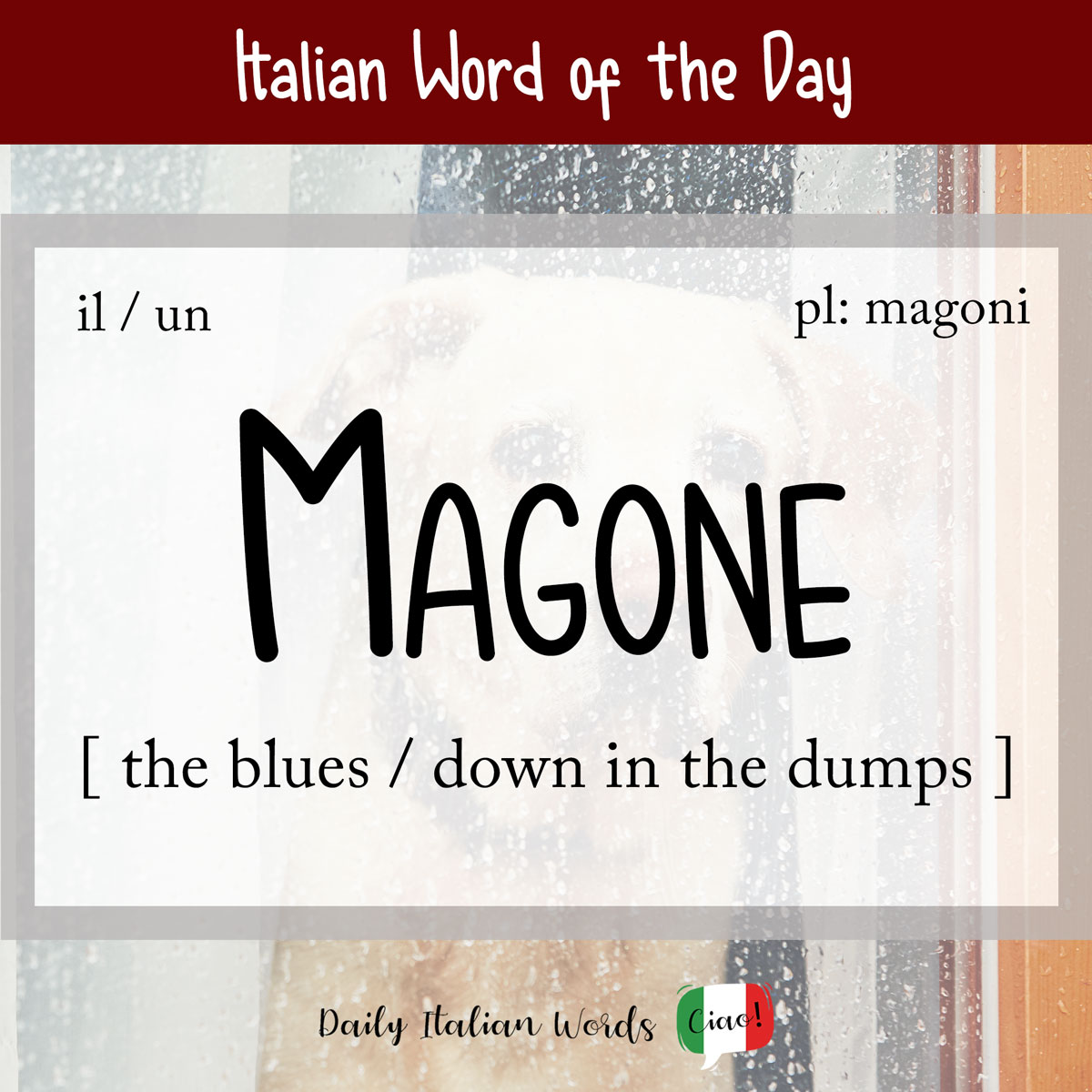
Italian Word of the Day: Magone (the blues / down in the dumps)

If you are feeling depressed, upset or anxious about something, so much so that it causes a feeling of tightness in the stomach, a great word you can use to describe the feeling in Italian is magone. Magone is a masculine noun that derives from the Lombardic mago, which in turn comes from the Proto-Germanic …

Read more

Italian Word of the Day: Emozionato (excited / moved / nervous)

Emozionato is one of those adjectives in Italian whose translation varies depending on the context in which it is used. However, in every case, it denotes a state of emotional upheaval, be it positive or negative. Used in a positive sense, it can translate as either excited or moved. For example: Luigi è molto emozionato …

Read more

Italian Word of the Day: Affezionato (fond / affectionate)

An Italian adjective that means fond or attached is affezionato, which is the past participle of the verb affezionare (to grow fond). The feminine form is affezionata, whereas the respective plurals are affezionati (masculine) and affezionate (feminine). Learn with our video Whereas in English, we would say fond of (something) or attached to (something), Italians …

Read more

Italian Word of the Day: Volontà (will)

The word for will, as in the mental power by which one controls one’s thoughts, actions and decisions, is volontà in Italian. It shares the same origin as the English word volition. In addition to being a feminine noun, it is also invariable, meaning that the plural is spelled the same way. Buona volontà (goodwill) …

Read more