Italian Word of the Day: Maleducato (rude / impolite)
There is a great Italian word for someone who eats with his mouth open, talks back to his parents, and disturbs other people by making too much noise, and that is maleducato. Maleducato translates into English as rude, impolite or ill-mannered and may refer to a person’s speech or behaviour. A volte quel ragazzo è …
Read more

Italian Word of the Day: Turista (tourist)

Tourism is one of Italy’s most profitable industrial sectors, with an estimated 47.7 million turisti (tourists, singular turista) visiting the country every year. That makes it the fifth most visited country in the world! An interesting fact about the word turista is that unlike many Italian words, it derives not from Latin but rather from …

Read more

Italian Word of the Day: Buongustaio (gourmet / foodie)

A connoisseur of good food is known as a buongustaio in Italian. It is made up of the following three parts: buon (good) + gustare (to taste / savour) + aio (a suffix used to form agent nouns) Buongustaio is a masculine noun that takes the following definite and indefinite articles: Unlike a mangione (a …

Read more

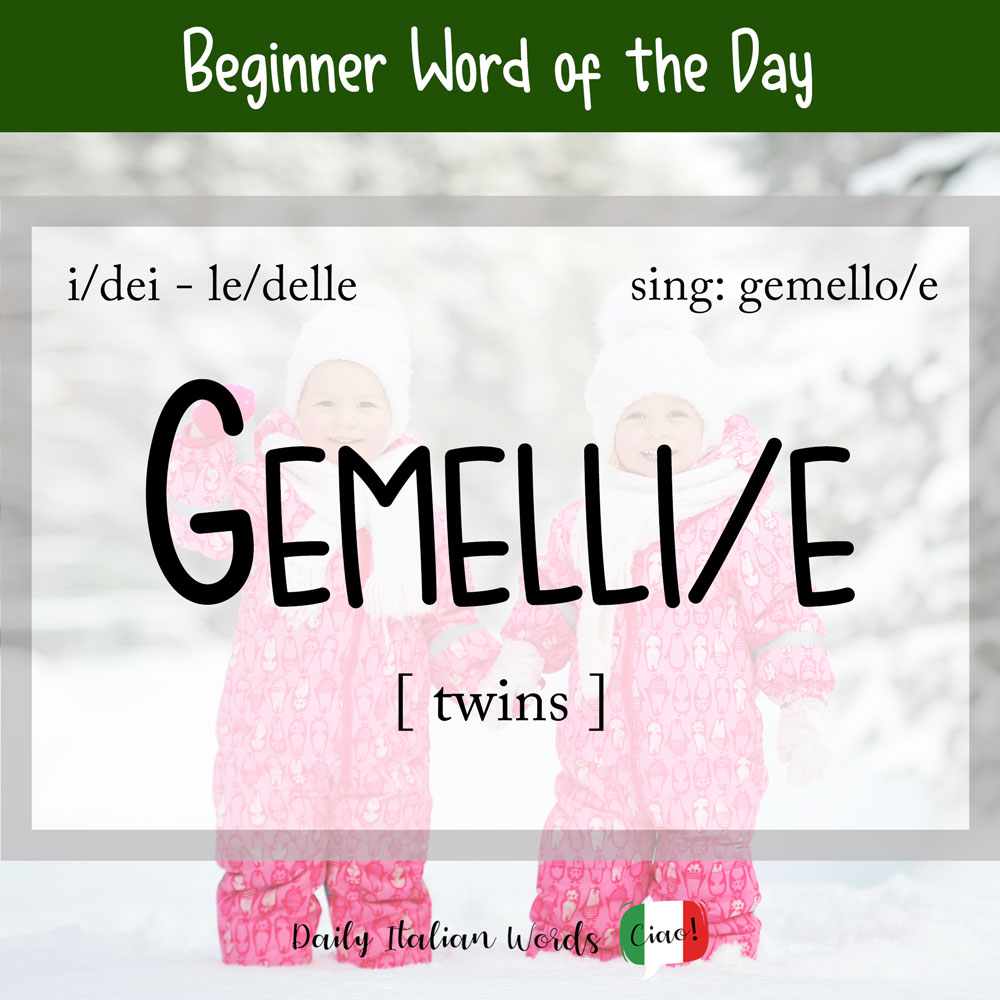
Italian Word of the Day: Gemelli (twins)

The word for twins in Italian is gemelli (masculine, singular: gemello; feminine, singular: gemella). Whereas in English, we have separate terms for offspring in a multiple birth (twins, triplets, quadruplets, quintuplets, sextuplets, septuplets, octuplets, nonuplets and decuplets), Italian applies the blanket term gemelli regardless of the number. In order to be specific, you must add …

Read more

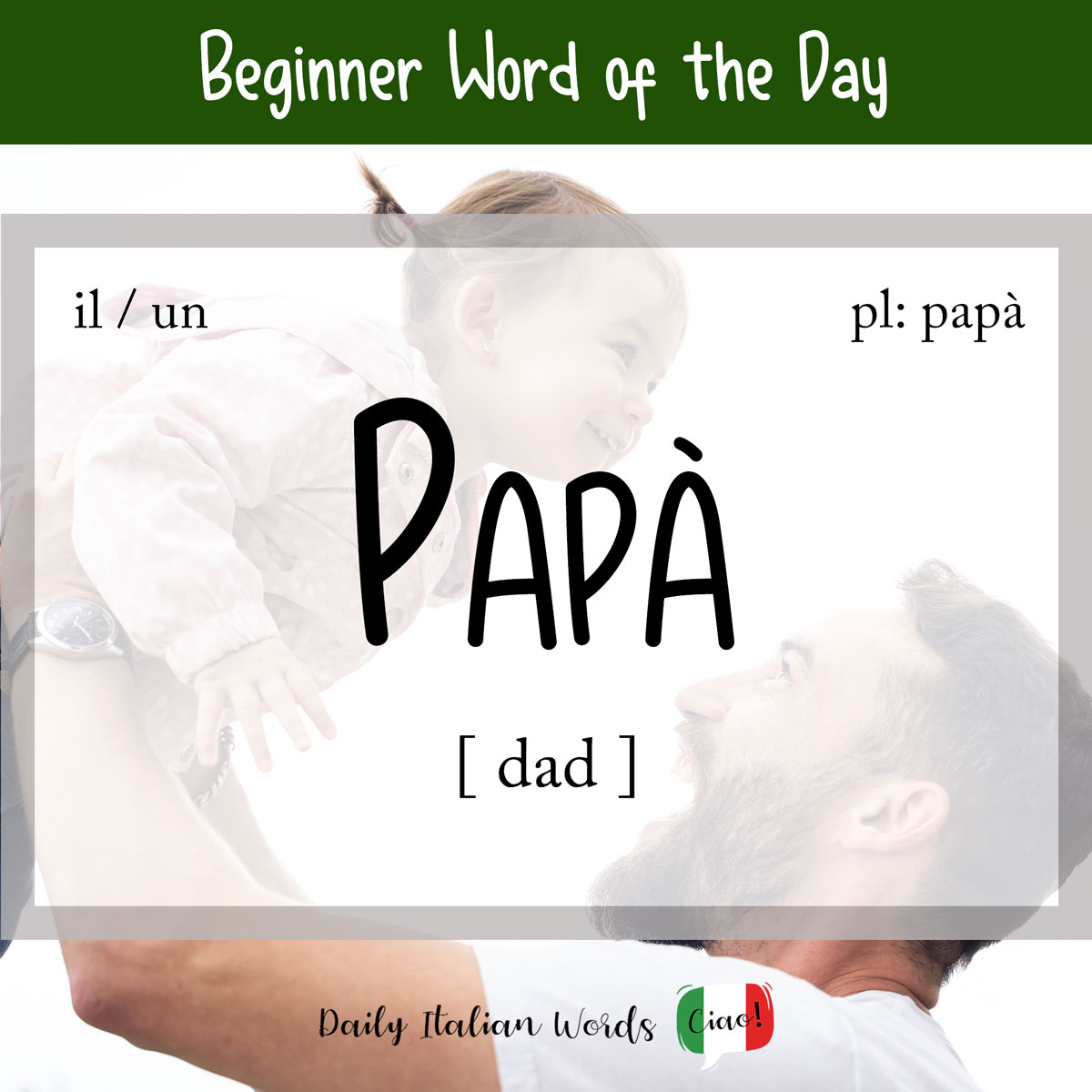
Italian Word of the Day: Papà (dad / daddy)

The affectionate name children use towards their father (padre) in Italian is papà. It is the equivalent of dad, daddy or pa in English. A very easy mistake you might make when you first start learning Italian is to accidentally place the emphasis on the first rather than the last syllable. If you place it …

Read more

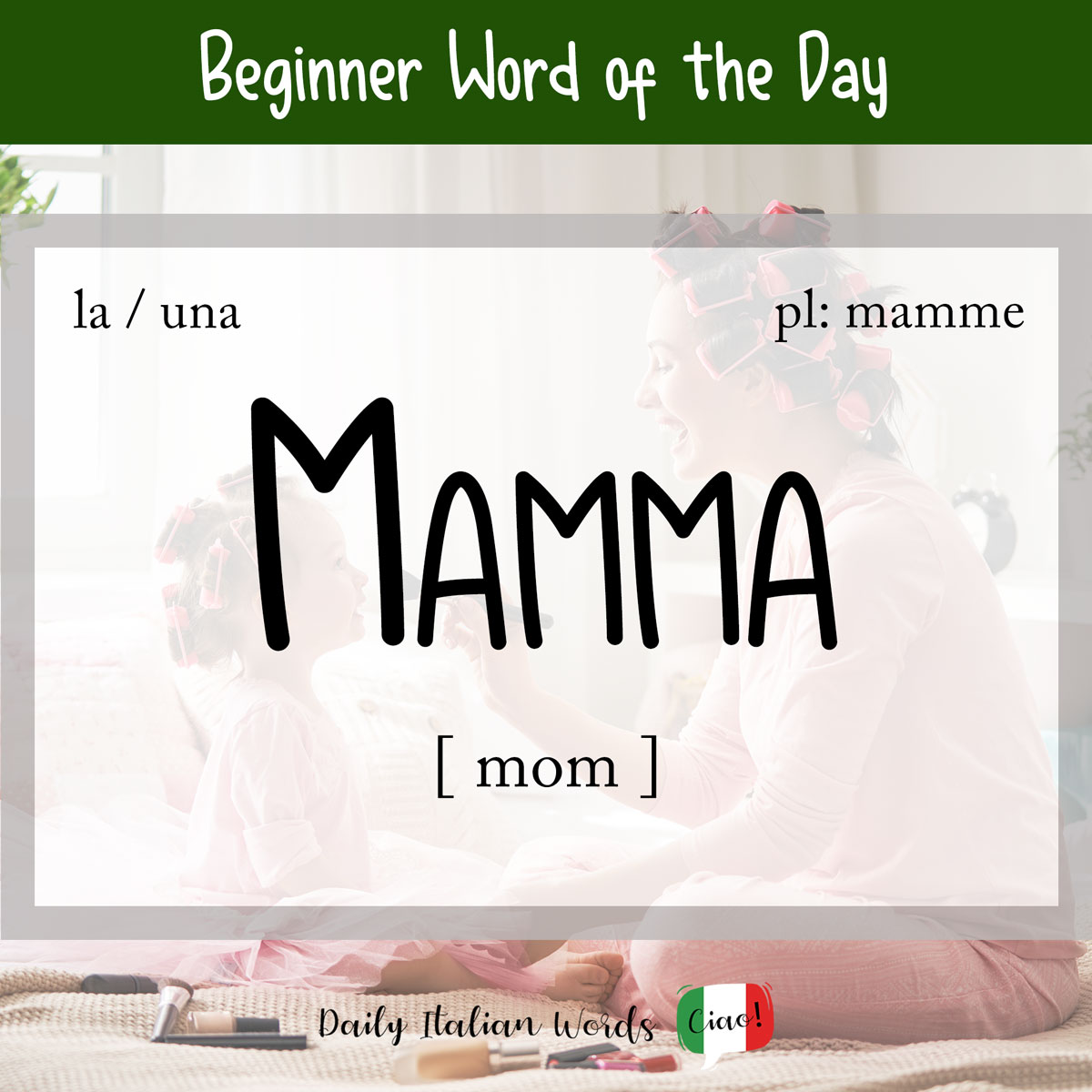
Italian Word of the Day: Mamma (mom / mum)

The name almost all children call their mother (madre) in Italian, no matter their age, is mamma, which translates as mom / mommy in American English or mum / mummy in British English. Three possible variations are the affectionate diminutives mammi, mami and mammina. When using a possessive adjective like mia (my), you have the …

Read more