The word for toothpaste in Italian is dentifricio. It comes from the Latin dentifricium, the compilation of dens dentis “tooth” and the verb fricare “to rub”.
dentifricio
toothpaste
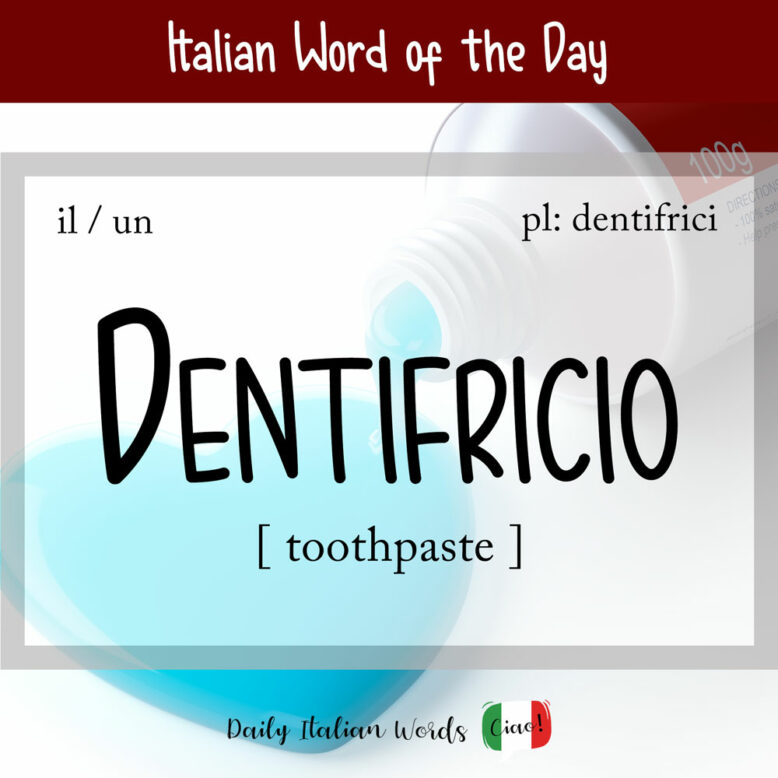
Dentifricio is a masculine noun, so it takes the following definite and indefinite articles:
il dentifricio
the toothpaste
un dentifricio
a toothpaste
i dentifrici
the toothpastes
dei dentifrici
(some) toothpastes
Some different kinds of toothpaste include:
- dentifricio al fluoro = fluoride toothpaste
- dentifricio alla menta = spearmint-flavoured toothpaste
- dentifricio alle erbe = herbal-flavoured toothpaste
- dentifricio in polvere = tooth-powder
You’ll also come across very specific kinds of toothpaste for children, which are free from coloranti sintetici (synthetic dyes) and prodotti chimici aggressivi (harsh chemicals).
Questo dentifricio sa di menta!
This toothpaste tastes like mint!

When used as an adjective instead of a noun, it translates as “for cleaning teeth” or “tooth-cleaning”. In fact, an alternative name for toothpaste is pasta dentifricia (quite literally “tooth-cleaning paste”).
A tube of toothpaste is known as un tubetto di dentifricio, with tubetto meaning “little tube”.
When it comes to dental hygiene, there are other tools that come in handy including lo spazzolino da denti (toothbrush), il filo interdentale (floss), lo stuzzicadenti (toothpick), and il collutorio (mouthwash). As a child, I used to brush my teeth three times a day, but current recommendations now suggest just due volte al giorno (two times a day), for around due minuti (two minutes) each time.

Heather Broster is a graduate with honours in linguistics from the University of Western Ontario. She is an aspiring polyglot, proficient in English and Italian, as well as Japanese, Welsh, and French to varying degrees of fluency. Originally from Toronto, Heather has resided in various countries, notably Italy for a period of six years. Her primary focus lies in the fields of language acquisition, education, and bilingual instruction.